
Blooming
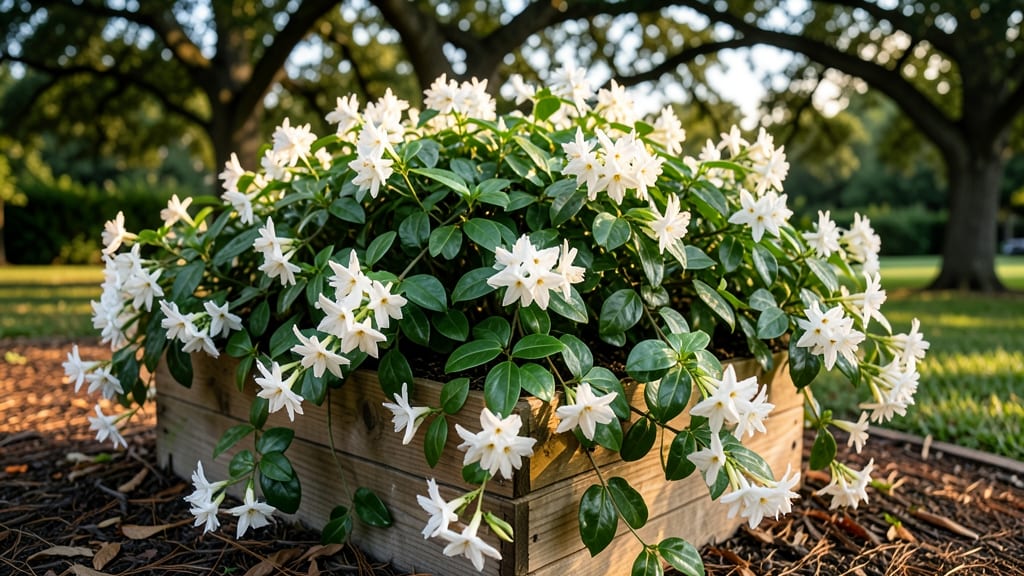
Star jasmine blooms transform your garden into a fragrant nighttime sanctuary—typically between May and September in most temperate zones, but with regional twists that make timing everything. 🌿 I’ve learned the hard way that these delicate white star-shaped flowers thrive when given just the right conditions, and their scent peaks at dusk, filling the air with sweetness that lasts until midnight.
The exact months depend on where you live, but with proper care, you can coax earlier blooms or extend the season well into fall.
Sunlight and pruning are the secret weapons for controlling bloom time. Star jasmine loves 6-8 hours of morning sun but needs afternoon shade in hotter climates to avoid stress.
Prune right after flowering to encourage fresh growth, and avoid cutting back too late in the season—this keeps your plant healthy and ready to bloom again next year.
In warmer zones like USDA 9-11, you might even see year-round blooms if conditions are just right, though they’ll still take a short break during extreme heat or cold snaps.
What you’ll get is a plant that rewards patience with months of intoxicating fragrance and lush, evergreen foliage. The blooms aren’t just pretty—they’re functional too, attracting pollinators and adding a touch of elegance to pergolas, trellises, or even as a ground cover.
With the right soil (well-draining, slightly acidic) and a little deadheading to remove spent flowers, you’ll see stronger, more abundant blooms year after year.
If you’re in a cooler climate, don’t worry—star jasmine is tougher than it looks. A little winter protection (like mulch or a frost cloth) can help it bounce back stronger for next season’s display.
And if you’re in a zone where it blooms year-round, focus on keeping it hydrated during dry spells. The payoff? A garden that smells like heaven every evening, no matter the month.
📚 In This Guide
- What you need
- Instructions
- Tips and common mistakes
- Wrapping up and next steps
What you need
- ● Star Jasmine Plant (Trachelospermum jasminoides): 1–3 mature vines (3–5 years old for best blooming, or younger if propagated from cuttings)
- ● Variety note: Choose from ‘Goliath’ (heavy bloomer), ‘Little Gem’ (compact), or ‘Sum and Substance’ (disease-resistant).
- ● Well-draining potting mix or garden soil: For containers: 5–10 gallons of cactus/succulent mix blended with perlite (50/50 ratio).
- ● For ground planting: Amend native soil with compost (20%) and sand (10%) for aeration.
- ○ Support structure (optional but recommended): Trellis, arbor, or fence (6–10 feet tall for climbing varieties).
- ● Or a large container (15+ gallons) if growing in pots.
- ● Pruning shears (sterilized with rubbing alcohol).
- ● Gloves (to protect from thorns on some varieties).
- ● Watering can or hose with a gentle spray nozzle (star jasmine hates soggy roots!).
- ● Balanced fertilizer (10-10-10 or low-nitrogen formula like 5-10-10 for blooms).
- ● Mulch (2–3 inches of pine bark or gravel to retain moisture).
- ● pH test kit (ideal soil pH: 6.0–7.0).
- ● Slow-release fertilizer pellets (for seasonal blooming boosts).
- ● Epsom salt (1 tbsp/month in water for magnesium, if leaves show yellowing).
- ● Frost cloth (for tender varieties in USDA Zones 7–9).
- ● Pruning paste (to seal cuts after trimming).
- ● Fragrance-friendly seating (a hammock or bench near your star jasmine for maximum enjoyment!).
How to time star jasmine blooms for peak fragrance
Predicting when your star jasmine will burst into fragrant bloom comes down to variety, climate, and a few simple tricks.
🌿 Step 1: Identify Your Variety’s Natural Bloom Window
Star jasmine (Trachelospermum jasminoides) typically blooms in late spring to early summer, but timing varies by type. The classic Trachelospermum jasminoides (common star jasmine) usually opens flowers in May to June in most U.S. climates. Varieties like ‘Little Gem’ bloom slightly earlier (April to May), while ‘Summer Snow’ stretches blooms into July. Check your plant’s tag or local nursery notes—this is your starting point.
Here’s the thing—star jasmine needs 60-90 days of warm weather after dormancy to trigger blooms. If your winters are mild (like in Zones 8-10), you’ll see flowers as early as March. In colder zones (Zones 7 and below), expect blooms to push into June unless you protect the plant from late frosts. Watch for new leaf growth in spring—this is your cue that the plant is waking up and preparing for bloom.
☀️ Step 2: Optimize Light and Temperature for Earlier Blooms
Star jasmine thrives in full sun to partial shade, but 6+ hours of direct sunlight is non-negotiable for reliable blooms. If your plant is in shade and struggling, move it to a sunnier spot gradually—sudden full sun can scorch leaves. I’ve seen star jasmine in morning sun with afternoon shade still produce heavy blooms, but the fragrance is strongest when flowers get direct afternoon sunlight.
Temperature matters just as much. Star jasmine blooms best when daytime highs hit 75-85°F and nights stay above 60°F. If your spring is cool, a frost cloth can shield buds from late frosts and encourage earlier blooms. You’ll know you’re on track when you see buds forming along the stems—these look like tiny green stars before they open. Don’t prune back old wood until after blooms fade, or you’ll cut off next year’s flowers.
💧 Step 3: Adjust Watering to Encourage Longer Bloom Seasons
Consistent moisture is key—star jasmine needs 1-1.5 inches of water per week, but deep watering once a week (instead of frequent shallow watering) encourages stronger roots and more blooms. Water at the base of the plant, not overhead, to prevent fungal issues that can rot buds. I always check soil moisture by sticking my finger 2 inches deep—if it’s dry, it’s time to water. Overwatering is the fastest way to kill blooms, so let the top inch of soil dry out between waterings.
Here’s a pro tip: Reduce watering slightly in late summer to signal the plant it’s time to prepare for dormancy. This helps trigger a second flush of blooms in late summer or early fall, especially in warm climates. You’ll notice new buds forming on current season’s growth—these are your fall blooms. In colder zones, stop watering as much once temperatures drop below 50°F to prevent root rot over winter.
✂️ Step 4: Prune Strategically to Extend the Bloom Season
Pruning isn’t just about shaping—it’s about encouraging more flowers. After the first bloom cycle fades, cut back any dead or leggy stems to just above a leaf node. This redirects the plant’s energy into producing new growth, which will bear more buds. I prune in early summer (right after the first big flush of flowers) and again in late summer to stimulate a second round of blooms. Avoid heavy pruning in fall—you’ll sacrifice next year’s flowers.
Watch for suckers or overly dense growth—these steal energy from blooms. Thin out crowded areas by snipping back 1/3 of the stem to improve airflow. You’ll see a difference in 3-4 weeks: new growth will be bushier, and you’ll get more clusters of those signature star-shaped flowers. If your plant is woody and leggy, a harder prune in late winter (before new growth starts) can rejuvenate it, but this delays blooms by 2-3 weeks—plan accordingly.
⏰ Step 5: Track Bloom Cycles to Predict Future Seasons
Once you know your plant’s rhythm, you can predict blooms like clockwork. Note the first day of blooms each year and adjust care accordingly. For example, if your ‘Little Gem’ blooms in early May, you’ll know to start fertilizing lightly in March to give it a head start. I keep a simple garden journal with dates, weather notes, and bloom observations—it’s amazing how much this helps fine-tune care over time.
Real talk: Star jasmine is not a one-and-done bloomer. With the right care, you’ll get two to three flushes of flowers per year in warm climates. In cooler areas, focus on protecting buds in spring and pruning correctly to maximize the single main bloom season. By next year, you’ll be able to anticipate blooms within a week of their actual appearance—just by reading the plant’s signals.
Tips & tricks for perfect star jasmine bloom timing
Let me save you the guesswork—these are the little details that make all the difference with your star jasmine's fragrance.
Variety-Specific Watch List: The classic star jasmine typically blooms in May-June, but ‘Little Gem’ varieties often start as early as April. If you have ‘Summer Snow’, expect blooms to stretch into July. I’ve learned to check plant tags or nursery notes right after purchase—this gives me my first clue about timing. Confession: I skipped this step for years and wondered why my blooms seemed unpredictable!
Lighting Secret: While star jasmine thrives in full sun to partial shade, I’ve found the fragrance intensity peaks when flowers receive direct afternoon sunlight. If your plant is in morning sun with afternoon shade, you’ll still get blooms, but they won’t be as fragrant. Watch for leaves turning yellow or crispy edges—this means your plant needs more gradual sun exposure, not sudden full sun.
Temperature Troubleshooting: Those 75-85°F daytime highs are critical for peak blooming. In cooler springs, I use frost cloths to protect buds and create a microclimate that mimics warmer conditions. You’ll know you’re on track when you see those tiny green star-shaped buds forming—this is your plant’s way of telling you it’s ready to bloom. Don’t prune back old wood until after blooms fade, or you’ll cut off next year’s flowers.
Watering Wisdom: The 1-1.5 inches of water per week is non-negotiable, but timing matters just as much. I always water at the base of the plant in the morning—this prevents fungal issues that can rot buds. In late summer, I reduce watering slightly to signal the plant it’s time to prepare for dormancy, which often triggers a second flush of blooms in warm climates.
Pro Tips for Star Jasmine Bloom Time
- Let me save you the guesswork—these are the little details that make all the difference with your star jasmine's frag...
- Variety-Specific Watch List: The classic star jasmine typically blooms in May-June, but ‘Little Gem’ varieties often ...
- Lighting Secret: While star jasmine thrives in full sun to partial shade, I’ve found the fragrance intensity peaks wh...
Frequently asked questions
Got questions about when and how star jasmine blooms? You’re not alone! Here are answers to the most common queries about star jasmine bloom time, from timing to troubleshooting.
When does star jasmine bloom?
Star jasmine typically blooms in late spring to early summer (May–July in most U.S. zones), but some varieties may rebloom lightly in fall. Warmer climates (zones 8–10) often see earlier blooms, while cooler regions may delay flowering until June.
How long do star jasmine flowers last?
Individual blooms last 1–2 days, but the plant produces new flowers daily for 4–6 weeks during peak season. For extended fragrance, choose varieties like ‘Grand Duke’, which blooms prolifically.
Why isn’t my star jasmine blooming?
Common reasons include over-fertilizing with high nitrogen (promotes leaves, not flowers), poor sunlight (needs full sun to partial shade), or young plants (they may take 2–3 years to bloom). Prune lightly after flowering to encourage next year’s blooms.
Can I make star jasmine bloom earlier?
While you can’t force early blooms, pruning in late winter (just before new growth) and ensuring well-draining soil may encourage slightly earlier flowering. Avoid heavy pruning after blooming, as it can delay next year’s flowers.
What’s a good alternative if I want year-round fragrance?
For longer blooming periods, consider jasmine ‘Pandora’ (reblooms sporadically) or mock orange (Philadelphus), which blooms in spring and sometimes again in fall. For winter fragrance, try winter jasmine (Jasminum nudiflorum).
Wrapping up and next steps
Now that you’re armed with the exact bloom times for star jasmine varieties and tips to encourage their fragrant displays, you’re ready to transform your garden into a nighttime paradise! 🌙 Whether you’re a first-time grower or a seasoned gardener, the key is patience and care—soon, your space will be filled with intoxicating blooms and sweet memories.
Ready to take the next step? Mark your calendar, plan your planting, and start enjoying those magical evenings under the glow of star jasmine! 🌸