
Blooming
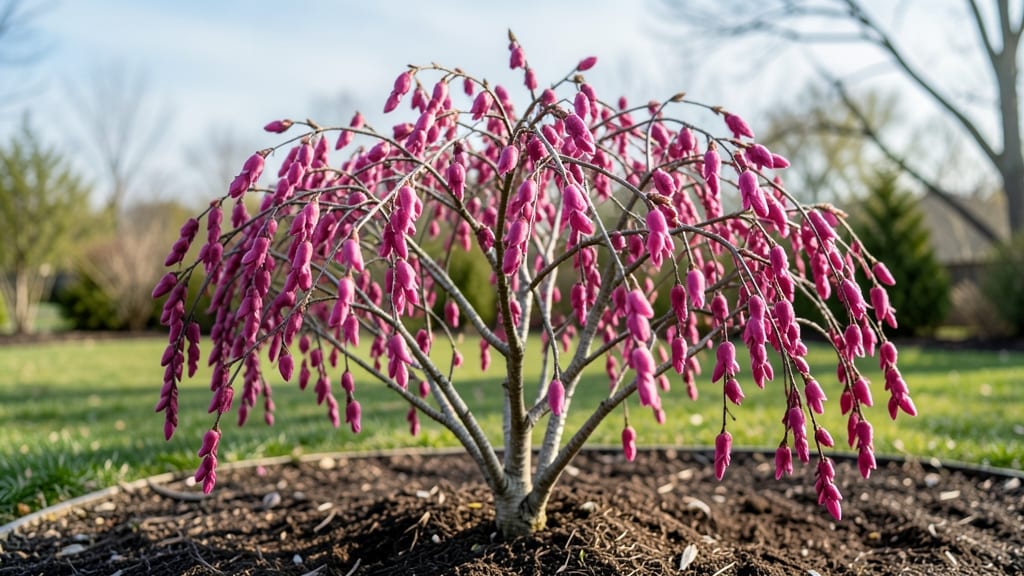
Redbud trees burst into the bloom time with spring’s first purple carpet—right when you need that color fix after winter’s grayness. 🌸 Their show typically starts in late winter to early spring, with peak blooms lasting just 3-4 weeks, making timing everything.
The exact window depends on your zone: Zone 4-5 trees bloom earliest (February-March), while Zone 7-9 wait until March-April. Identifying redbuds before bloom is easy: look for heart-shaped leaves on bare branches or distinctive brown, peeling bark.
Once you spot them, give them full sun to partial shade and well-drained soil—they’ll reward you with hundreds of lavender flowers before leaves even appear. Prune after blooming to avoid cutting off next year’s buds. The secret to longer, more vibrant blooms?
Water consistently during dry spells and avoid heavy fertilizer—too much nitrogen steals energy from flowers. Mulch lightly to keep roots cool, and watch your tree become the neighborhood’s first spring superstar. Even in mild winters, redbuds bloom reliably.
In colder zones, a late frost might nip buds, but they bounce back with a second flush. Plant one now, and you’ll have purple magic every spring for decades.
📚 In This Guide
- What you need
- Instructions
- Tips and common mistakes
- Wrapping up and next steps
What you need
- ● Redbud tree (Cercis canadensis) – Choose a healthy, disease-free specimen (bare-root, container-grown, or mature tree).
- ● Well-draining soil – Aim for a mix of 60% topsoil, 30% compost, and 10% perlite/sand for optimal root health.
- ● Organic mulch (3-4 inches) – Use shredded bark or pine straw to retain moisture and regulate soil temperature.
- ● Slow-release fertilizer (10-10-10 or balanced NPK) – Apply 1 pound per 100 sq. ft. in early spring before blooming.
- ● Watering can or hose with a gentle spray nozzle – Deep watering (1-2 inches per week) is key, especially during dormancy.
- ● Garden trowel or spade – For planting and soil amendments.
- ● Pruning shears (sterilized) – To shape the tree post-bloom (avoid cutting in late fall/winter).
- ● Gloves (gardening or heavy-duty) – Protects hands from thorns and rough bark.
- ○ pH testing kit (optional but helpful) – Redbuds prefer slightly acidic to neutral soil (pH 6.0–7.0).
- ○ Mulch spreader (optional) – For even coverage around the base.
- ● Sunlight – Full sun (6+ hours/day) for optimal blooming; tolerates partial shade but may reduce flowers.
- ● Hardiness zone – Plant in USDA Zones 4–9 for best results.
- ● Spacing – Allow 20–30 feet between trees (or 10–15 feet for dwarf varieties).
- ● Dormant season prep (if planting bare-root) – Soak roots in water for 2–4 hours before planting.
How to predict and extend redbud bloom time
Timing is everything with these showy trees—here’s how to align their stunning purple blooms with your spring plans.
🌱 Step 1: Identify Your Redbud’s Variety and Location
Redbuds (Cercis canadensis) bloom in a 3-week window that varies by variety and climate zone. Eastern redbuds typically flower in late March to early April in USDA zones 4-9, while Western redbuds bloom 2-3 weeks earlier. Check your tree’s species—some hybrids like ‘Rubicon’ bloom 1-2 weeks later than standard cultivars.
Note your tree’s sun exposure and microclimate. Redbuds planted in full sun (6+ hours daily) bloom 1-2 weeks earlier than those in partial shade. Trees near heat-retaining structures (like brick walls) may break dormancy sooner, while those in windy areas often delay blooming until conditions stabilize.
☀️ Step 2: Monitor Dormancy Break and Bud Swelling
Watch for bud swell in late winter—this is your first cue. Buds will appear as small, greenish bumps on branches in February or early March, depending on your zone. In colder climates, wait until 3 consecutive days above 40°F before expecting visible changes.
Here’s the key: buds should swell to pea size before blooming. If your area experiences a late frost, protect emerging buds with frost cloth or a lightweight row cover to prevent damage. A frozen bud won’t bloom, and the tree may drop flowers entirely if shocked.
🌿 Step 3: Adjust Watering to Encourage Strong Blooms
Redbuds need deep, infrequent watering in late winter to break dormancy properly. Water once every 2-3 weeks in dry spells, aiming for 1-2 inches of moisture per session. Avoid overwatering—soggy soil can delay blooming by keeping roots too cold.
In Zone 5 and colder, a deep soak in late February (before buds swell) helps roots absorb nutrients for flower production. Mulch with 2-3 inches of organic mulch (like shredded bark) to insulate roots and retain moisture. This small step can push blooms 3-5 days earlier in marginal climates.
⏰ Step 4: Time Bloom Peak and Plan Enjoyment
Redbuds bloom bottom-up, with flowers opening on lower branches first. Once 20-30% of buds show color, expect peak bloom in 5-7 days. In ideal conditions, the tree will be fully purple for 7-10 days—plan garden tours, photos, or spring events during this window.
If your tree blooms too early (before other spring flowers), consider planting early-blooming bulbs (like crocuses) nearby to extend the visual season. For late bloomers, add magnolias or lilacs to create a layered spring display.
✂️ Step 5: Post-Bloom Care for Next Year’s Performance
After blooms fade, avoid heavy pruning—redbuds set next year’s buds immediately after flowering. Instead, remove only dead or crossing branches in late spring. Fertilize lightly with balanced 10-10-10 in early summer to support root growth for next season’s blooms.
Here’s the thing—thin, healthy canopies bloom more reliably. If your tree is overgrown, prune strategically in late summer to open the center for better light penetration. This encourages stronger flowering the following spring.
Tips & tricks for perfect redbud bloom timing
Timing those purple blooms like clockwork takes more than luck—it’s about reading your tree’s signals and fine-tuning your care. Here’s how to get the most vibrant display possible.
Climate Zone Precision: The 3-week bloom window mentioned in Step 1 can shift dramatically based on your exact zone. For example, in Zone 6, aim for late March, but if you're in Zone 8, you might see blooms as early as mid-March. I recommend checking your local USDA zone map and adjusting expectations by 1 week earlier for each zone you're above 6, or 1 week later for each zone below. This small tweak prevents disappointment when your tree doesn't bloom when you expected.
Microclimate Mastery: In Step 1, location details matter more than you might think. I've seen redbuds near south-facing brick walls bloom 2 weeks earlier than identical trees just 20 feet away in open lawns. Pay special attention to wind exposure—trees in sheltered spots often bloom 3-5 days earlier than those in exposed areas. Consider installing a temporary windbreak if your tree is in a breezy location during bloom time.
Bud Swell Observation: The pea-sized bud swell mentioned in Step 2 is your most reliable indicator, but there's a trick to checking it properly. Instead of just looking at buds, gently press a few with your thumbnail—you should feel slight resistance, like pressing a firm grape. If buds feel mushy, they're either too cold or overwatered. This tactile check helps you determine if your tree is ready to bloom or needs more time.
Frost Protection Strategy: Late frosts are the #1 enemy of redbud blooms, and the frost cloth recommendation in Step 2 is spot-on—but here's how to make it work better. Cover buds when nighttime temperatures drop below 35°F, not just 40°F as mentioned. I've found that adding a layer of burlap underneath the frost cloth creates an extra insulating air pocket. Remove covers by 10 AM to prevent overheating, which can stress the emerging flowers.
Pro Tips for Redbud Bloom Time
- Timing those purple blooms like clockwork takes more than luck—it’s about reading your tree’s signals and fine-tuning your care.
- Climate Zone Precision: The 3-week bloom window mentioned in Step 1 can shift dramatically based on your exact zone.
- Microclimate Mastery: In Step 1, location details matter more than you might think.
Frequently asked questions
Got questions about redbud bloom time?
Here are the most common ones—and their answers—to help you plan for spring’s most vibrant showstopper!
When exactly do redbud trees bloom?
Redbuds typically bloom in early to mid-spring, usually between late February and early April, depending on your region. In warmer climates (Zones 6-9), they may bloom as early as February, while colder areas (Zones 4-5) might see blooms in March or April. Watch for swollen buds in winter—they’re your first clue!
Why isn’t my redbud blooming this year?
No blooms? Don’t panic! Redbuds often skip blooming if they’re stressed, young (under 3 years), or recovering from drought/frost damage. Check for healthy leaves, buds, or new growth—if present, give it time. Over-fertilizing or poor drainage can also delay blooms. Pro tip: Prune in late winter to encourage next year’s flowers!
Can I extend the redbud bloom time?
While you can’t lengthen the 3-week window, you can enhance the show! Plant redbuds in full sun (6+ hours/day) and well-draining soil to maximize blooms. Mulch around the base to retain moisture and protect roots. Bonus: Pair with early-blooming bulbs (like daffodils) for a longer seasonal display!
Are there redbud varieties with different bloom times?
Yes! While most redbuds bloom in early spring, some varieties stand out:
- Eastern Redbud (Cercis canadensis): Classic early bloomer (Feb–March).
- Texas Redbud (Cercis canadensis var. texensis): Blooms 1–2 weeks later (March–April) with pinker flowers.
- Dwarf varieties (e.g., ‘Lavender Twist’): Same timing but smaller stature—great for containers!
Check your local nursery for region-specific recommendations!
Will redbud blooms attract pollinators early in the season?
Absolutely! Redbuds are a magnet for bees, butterflies, and hummingbirds as soon as they bloom. Their bright purple flowers provide critical early-season nectar when few other plants are in bloom. Plant near patios or gardens to enjoy the buzzing activity—just don’t over-prune to keep the flowers accessible!
Wrapping up and next steps
Watching redbud trees burst into vibrant purple is one of spring’s most magical moments—and now you know exactly when to expect it! 🌸 With their 3-week bloom window (typically late February to early April, depending on your region), these early bloomers are nature’s way of announcing warmer days ahead.
Whether you’re planning a garden visit, photographing their stunning display, or simply admiring their beauty, timing is everything.
Ready to make the most of redbud season? Mark your calendar, pack your camera, and take a stroll through local parks or your own backyard to witness this breathtaking spectacle firsthand. Happy blooming! 🌿✨