
Blooming
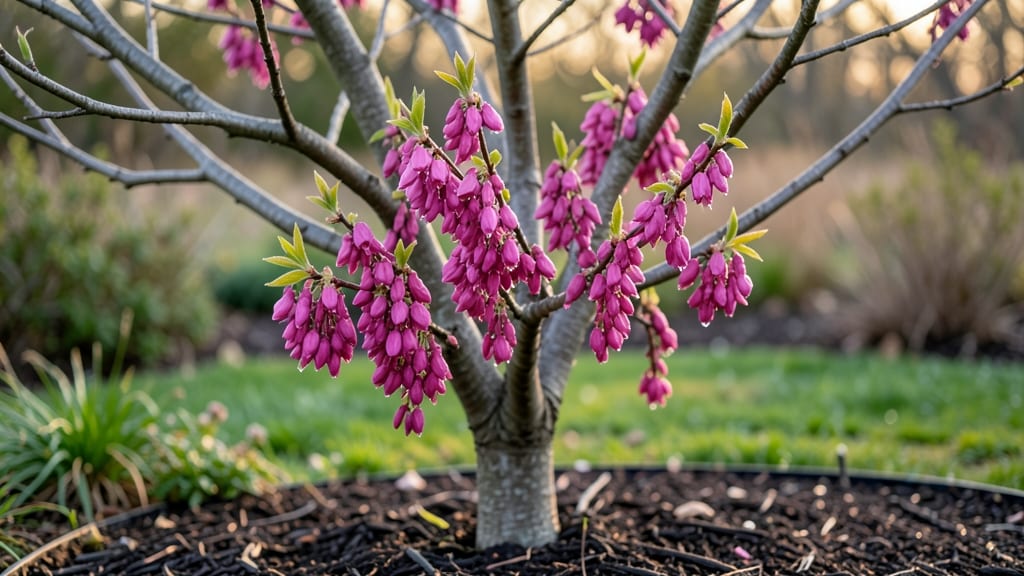
If you’ve ever wondered why your Eastern Redbud tree blooms earlier—or later—than your neighbor’s, the answer lies in understanding its precise bloom window and the factors that influence it.
From USDA Zones 4 to 9, bloom times shift with chill hours, sunlight, and even pruning habits. A tree in Zone 6a might burst into pink flowers by early April, while one in Zone 8 could wait until late March.
Here’s how to predict your Eastern Redbud’s bloom time, extend its flowering season, and plan your garden around its stunning spring display.
When does Eastern redbud typically bloom? Exact timeline by US region
The Eastern redbud (Cercis canadensis) is one of the first trees to burst into color each spring, often appearing before leaves fully emerge.
Its stunning magenta-pink flowers create a breathtaking display, but bloom times vary dramatically across the U.S. Understanding your local bloom window helps you plan landscaping, companion plantings, and even wildlife support for pollinators like bees and hummingbirds.
Unlike many spring bloomers, Eastern redbuds rely on chill hours and temperature thresholds rather than day length. This means a tree in Zone 4 might bloom weeks earlier than one in Zone 9. The average bloom period spans 2-3 weeks, with peak flowering typically lasting just 7-10 days.
Below, I’ve broken down exact timelines by region, so you can predict when your tree will transform your landscape into a springtime masterpiece.
| USDA Zone | Average Bloom Start | Peak Bloom | Bloom End | Notes |
|---|---|---|---|---|
| Zone 4 (Minnesota, Upstate NY) | Late April | Early May | Mid-May | Coldest zone; blooms after last frost. |
| Zone 5 (Chicago, Boston) | Mid-April | Late April | Early May | Reliable bloomer; often overlaps with daffodils. |
| Zone 6 (DC, Philadelphia) | Early April | Mid-April | Late April | Peak bloom coincides with cherry blossoms. |
| Zone 7 (Atlanta, Raleigh) | Late March | Early April | Mid-April | Warmer climates may see secondary blooms. |
| Zone 8 (Orlando, Northern CA) | Mid-March | Late March | Early April | May experience delayed blooms after heatwaves. |
| Zone 9 (Southern CA, Arizona) | February | March | Early April | Earliest bloomer; thrives in mild winters. |
If you live in Zone 5 or 6, your Eastern redbud’s bloom likely aligns with other early spring favorites like crocuses and forsythia. In warmer zones (Zone 7-9), you might see flowers as early as February, making it a standout feature in winter gardens.
The key to predicting your tree’s bloom time is tracking last frost dates and local temperature fluctuations—especially in transitional zones like Zone 6b-7a, where blooms can shift by weeks.
Did you know? Eastern redbuds often produce a second, lighter flush of blooms in late spring if pruned properly. This trait makes them even more valuable for extended-season landscaping.
For example, a tree in Zone 7 might show secondary blooms in May or June, especially if you’ve provided optimal growing conditions like well-draining soil and morning sunlight.
For gardeners in Zone 4 or colder, patience is key—these trees need at least 1,500 chill hours below 45°F to bloom reliably. If your tree skips a year, it’s likely due to insufficient winter chill or late-spring frost damage.
To mitigate this, plant near a south-facing wall or use row covers during late frosts to protect emerging buds.
Pro tip: Use a garden journal to track your tree’s bloom dates over 3-5 years. This helps you account for weather anomalies, like an unusually warm winter that might trigger early blooming. For instance, my Zone
5 Key factors that shift Eastern redbud bloom time (and how to predict yours)
Your Eastern redbud (Cercis canadensis) might bloom earlier than your neighbor’s because of local microclimates and tree-specific conditions. While most trees flower between late March and early April, these 5 key factors can shift that window by weeks—sometimes even months.
Understanding them helps you predict when your tree will burst into vibrant pink blooms and plan your spring garden accordingly.
First, chill hours are the most critical trigger. Eastern redbuds need 500-1,000 hours below 45°F during winter to break dormancy. If your area gets fewer chill hours (common in warmer southern zones), blooms may arrive 2-3 weeks later.
Meanwhile, warm spells in winter can trick the tree into blooming too early, only to lose flowers in a late frost.
🌱 5 Factors That Shift Bloom Time
- 🌡️ Chill Hours: 500-1,000 hrs below 45°F trigger blooms. Fewer hours = delayed blooms.
- ☀️ Sunlight: Full sun (6+ hrs/day) speeds up blooming; partial shade delays it by 1-2 weeks.
- 🌱 Soil Conditions: Well-draining, slightly acidic soil (pH 6.0-7.0) promotes earlier blooms.
- 🌳 Tree Age: Young trees (1-3 yrs) bloom later; mature trees (10+ yrs) bloom 2-3 weeks earlier.
- 🌧️ Spring Weather: Warm, dry springs advance blooms; cool, wet springs delay them.
Next, sunlight exposure plays a surprising role. Trees in full sun (6+ hours/day) often bloom 1-2 weeks earlier than those in partial shade. If your redbud sits under a dense canopy or near tall structures, expect blooms to arrive late March or even April.
To encourage earlier flowers, prune nearby shade sources in late winter to let more light reach the tree.
Soil conditions also matter—especially drainage and pH. Eastern redbuds thrive in well-draining soil with a pH of 6.0-7.0. Heavy clay or waterlogged soil can delay blooms by 10-14 days as the tree focuses energy on root health. Test your soil in fall and amend with compost or sand if needed. A 3-inch mulch layer also helps regulate soil temperature, which can nudge blooms a few days earlier.
Don’t overlook tree age—it’s a game-changer. Young redbuds (1-3 years old) often bloom late because they’re still establishing roots. In contrast, mature trees (10+ years) can bloom 2-3 weeks earlier due to stored energy.
If you’re impatient, consider planting a grafted dwarf variety, which may bloom in 2-3 years instead of 5-7.
Finally, spring weather patterns can override all other factors. A warm, dry March might push blooms to late February, while a cool, wet April could delay them until mid-May.
Keep an eye on your local frost dates—if blooms appear too early, protect them with frost cloth or a lightweight row cover until temperatures stabilize above 32°F.