
Blooming
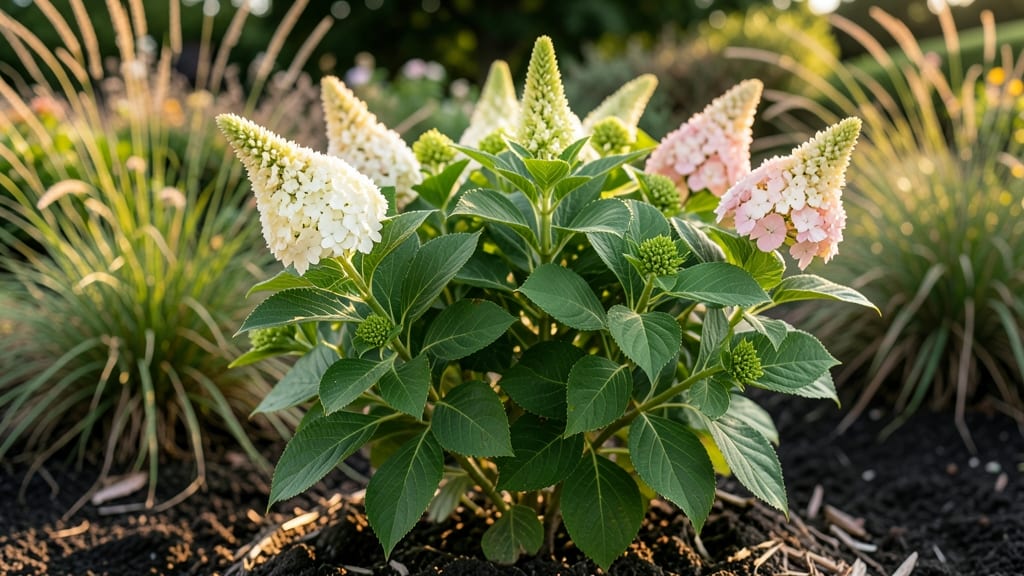
Panicle hydrangeas bloom on new wood because they grow flowers on current-season stems rather than last year's branches. Pruning in late winter or early spring helps stimulate fresh growth and bigger blooms, but avoid cutting back old stems that may still carry flower buds.
The key difference lies in their growth cycle: panicle hydrangeas develop flower buds on brand-new stems each spring, unlike mophead types that rely on last year's wood.
This means aggressive pruning actually boosts their performance by encouraging vigorous new shoots. 🌸 I've found that cutting back about one-third of the plant annually—right after the last frost—gives them the energy boost they need for dramatic summer blooms.
What many gardeners overlook is that these plants can handle more dramatic cuts than their mophead cousins. The secret is timing: prune too early, and you risk losing potential blooms; wait too long, and you'll end up with leggy growth.
I recommend using sharp bypass pruners and sterilizing them between cuts to prevent disease spread.
💡 In This Article
- Why Panicle Hydrangeas Bloom Differently Than Other Varieties
- Best Pruning Techniques for Maximizing Panicle Hydrangea Flowers
Why panicle hydrangeas bloom differently than other varieties
The botanical magic behind panicle hydrangeas lies in their growth hormones and stem development. Unlike mophead varieties that rely on old wood (last year's branches), panicle hydrangeas produce flower buds exclusively on new wood—the current season's growth.
This happens because their flower buds form in late spring/early summer, requiring fresh stems with active growth to support them. The key hormone here is auxin, which promotes cell elongation in young stems, creating the perfect environment for bud formation.
Here's where it gets fascinating: panicle hydrangeas have a two-phase growth cycle. First, they produce vigorous new shoots in spring, then shift energy to flower bud development in late spring. This is why aggressive pruning works—it stimulates more new shoots, which means more potential blooms.
Mophead varieties, however, form buds in the previous summer/fall on last year's wood, making them sensitive to early pruning. The difference is like comparing a bamboo plant (new growth) to a rose bush (old wood blooms).
You'll notice the physical differences too. New wood stems are typically more green and flexible, while old wood appears brown and woody.
The flower clusters on panicle hydrangeas grow at the tips of these new stems, often reaching 8-12 inches long, while mophead flowers grow along the sides of older branches.
This structural difference explains why panicle varieties often have lighter, airier blooms that sway in the breeze, while mopheads create dense, rounded clusters.
The timing of bud formation is equally critical. Panicle hydrangeas begin developing flower buds about 6-8 weeks after new growth emerges, which is why late winter pruning gives them the perfect head start.
The buds remain dormant through winter, then burst into color when temperatures consistently stay above 50°F. This biological timing is why you can prune panicle hydrangeas more aggressively—they're designed to recover and bloom from fresh growth each season.
What most gardeners miss is how light exposure affects this process. Panicle hydrangeas need full sun to partial shade (6-8 hours of direct sunlight) for optimal bud formation. Too much shade reduces flower production, while too much intense afternoon sun can stress the new stems.
The ideal spot balances sunlight with afternoon shade, especially in hot climates where stems can scorch. This is why you often see panicle hydrangeas thriving in morning sun/afternoon shade locations.
Consider this comparison: A panicle hydrangea is like a perennial herb that regrows annually, while a mophead is more like a shrub that relies on its established structure.
The difference explains why panicle varieties often grow taller (up to 6-10 feet) and have more flexible stems designed for new growth each season. 🌿 This growth habit makes them perfect for modern gardens where dramatic vertical elements are desired.