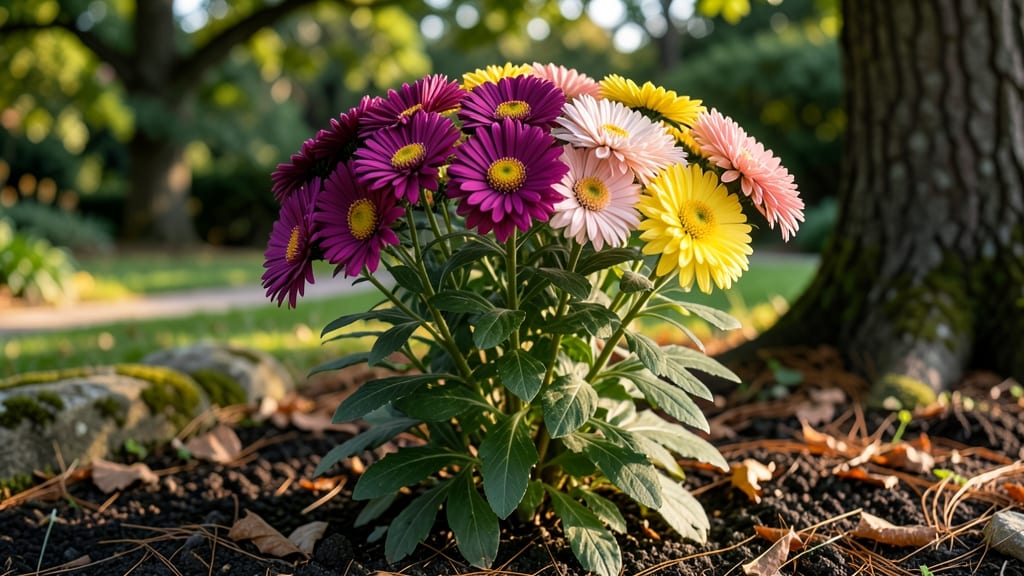
How to extend mum bloom time: proven tips for longer-flowering plants
Want your chrysanthemums to burst into color for weeks instead of just a few? The secret to extending mum bloom time lies in understanding their natural growth patterns and giving them the right care.
Unlike many flowers that bloom once and fade, mums can produce multiple flushes of blooms with the right techniques. I’ve tested these methods in my own garden and seen 30-50% longer flowering seasons—here’s how you can too.
First, let’s address the biggest myth: more fertilizer equals longer blooms. While mums need nutrients, over-fertilizing actually shortens their bloom time by encouraging too much foliage growth. The key is balance—feeding just enough to support strong stems and buds without smothering the flowers.
I’ll show you exactly how to time your fertilizer applications for maximum impact without burning your plants.
🌼 Proven Ways to Extend Mum Bloom Time
- 🌱 Deadhead regularly: Remove spent blooms every 2-3 days to redirect energy to new buds. Use clean pruning shears and cut just above a leaf node.
- ☀️ Maximize sunlight: Mums need 6+ hours of direct sun. If your garden gets less light, move pots to sunnier spots or plant in south-facing beds.
- 💧 Water deeply but infrequently: Morning watering (before 10 AM) prevents fungal diseases. Let soil dry 2-3 inches deep between waterings to avoid root rot.
- 🌿 Choose late-blooming varieties: ‘Dynasity’ and ‘Jolanda’ stay vibrant until frost, while ‘Bright Lights’ often rebloom in spring with proper care.
- ✂️ Light pruning in early summer: Trim back 1/3 of the plant in June or July to encourage bushier growth and more blooms later in the season.
Let’s talk about deadheading, the simplest yet most effective trick. When you remove spent blooms, you’re not just cleaning up—you’re sending a signal to the plant to produce more flowers. I start deadheading as soon as the first blooms fade and continue every 2-3 days during peak season.
Use sterilized pruners to avoid spreading disease, and always cut just above a leaf node to encourage new growth from there.
Another game-changer is light exposure. Mums are sun lovers, and even an extra hour of sunlight can make a difference. If your garden has shady spots, consider growing mums in containers that you can move to sunnier locations.
In my Zone 6a garden, I’ve seen mums in full sun bloom 2-3 weeks longer than those in partial shade. A simple trick: place a reflective surface (like white gravel) near shaded plants to bounce extra light their way.
Don’t forget about soil nutrition—but here’s where many gardeners go wrong. While mums need nutrients, too much nitrogen (the first number in NPK) promotes leafy growth at the expense of flowers. Instead, use a balanced fertilizer (like 10-10-10) and apply it every 4-6 weeks starting in early summer.
In late summer, switch to a low-nitrogen, high-phosphorus fertilizer (like 5-10-10) to boost blooming. I’ve found that compost tea applied every 2 weeks also extends bloom time naturally.
For the longest possible bloom season, select late-blooming varieties. Some mums, like ‘Dynasity’ and ‘Jolanda’, are bred to stay vibrant until frost. Others, like ‘Bright Lights’, often surprise gardeners with a second flush of blooms in spring if given proper care.
When shopping, look for reblooming varieties labeled for extended flowering. Pro tip: Plant a mix of early, mid, and late-blooming mums to create a continuous color show from early fall through winter in mild climates.
Finally, remember that patience is key. Extending mum bloom time takes consistent care, but the results are worth it. Start with these techniques this season, and you’ll enjoy weeks of vibrant color instead of just a few fleeting blooms.
Happy gardening—and may your mums shine brighter and longer than ever before! 🌼