
Trees
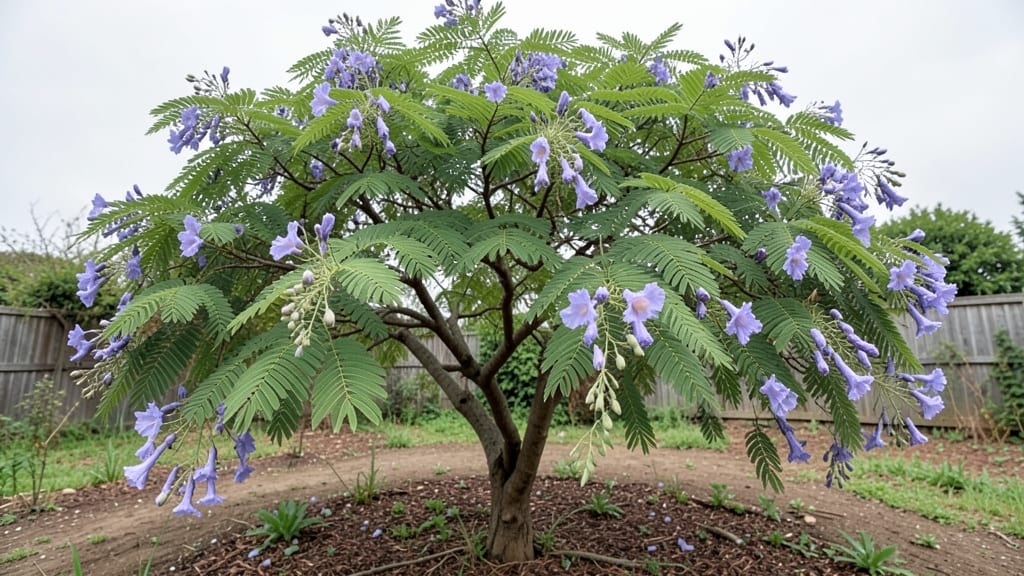
The jacaranda tree bloom creates a breathtaking purple canopy that turns heads every year—here’s the science behind its timing and how to coax more of it from your own tree.
Imagine your garden transformed into a dreamy purple canopy as jacaranda trees burst into bloom 🌸—but did you know the exact months depend on your climate zone?
In USDA zones 10-11, they typically flower from late winter through spring, while cooler areas like zone 9b need winter protection to trigger those show-stopping blooms.
Sunlight, pruning, and even soil health play a bigger role than most gardeners realize. Skip the guesswork: I’ll break down the 5 key triggers that control bloom timing, plus how to adjust care for year-round color—no matter where you live.
Ready to turn your yard into a purple paradise? By the end of this guide, you’ll know exactly when to expect those fragrant blooms and how to keep them coming back bigger and brighter each season.
When do jacaranda trees bloom? Exact months by US climate zones
If you've ever dreamed of waking up to a purple waterfall in your yard, the jacaranda tree delivers that magic—but timing is everything. These tropical beauties bloom at different times depending on your USDA hardiness zone, with some regions getting early blooms and others enjoying extended shows.
Let’s break down exactly when to expect those show-stopping purple flowers based on where you live.
The jacaranda mimosifolia, the most common variety, thrives in zones 9b-11, but with the right care, it can also bloom in zone 8b with winter protection. The key? Understanding how temperature shifts and local microclimates influence bloom cycles.
For example, a California coastal garden might see blooms in late February, while a Texas hill country yard could enjoy them as late as May. Let’s dive into the specifics.
| USDA Zone | Typical Bloom Months | Early Bloomers | Late Bloomers | Regional Notes |
|---|---|---|---|---|
| Zone 7b-8a | April-May | Late March (coastal) | Early June (inland) | Needs winter protection; blooms after last frost. |
| Zone 8b-9a | March-April | February (sheltered areas) | May (higher elevations) | Southern California, Arizona low deserts. |
| Zone 9b-10a | February-March | January (coastal) | April (inland valleys) | Florida, Southern Texas, Central California. |
| Zone 10b-11 | January-February | December (mild winters) | March (cooler microclimates) | Hawaii, Southern Florida, Southern Arizona. |
In zone 7b-8a, where winters can be chilly, jacarandas often wait until April or May to bloom, aligning with the last frost.
If you live in Southern California or Arizona, you might spot early blooms as soon as late February, especially in coastal areas where ocean breezes moderate temperatures.
These early bloomers reward gardeners with a head start on color, while late bloomers in inland zones extend the show into summer.
For zone 9b-10a, think February to April—this is peak jacaranda season in Florida, Southern Texas, and Central California. The Gulf Coast often sees blooms as early as January, while higher elevations in these zones might delay flowering until May.
The heat of summer can actually trigger blooming in these regions, so don’t be surprised if your tree puts on a show when others are dormant.
If you're in zone 10b-11, you’re in the jacaranda paradise—blooms can start as early as December and stretch into March. In Hawaii or Southern Florida, these trees often bloom year-round with minimal seasonal variation.
However, even here, cooler microclimates (like higher elevations in Hawaii) might push blooms into March or April. The key takeaway? The warmer the zone, the earlier and longer the blooms.
Regional variations also play a huge role. For example, a Texas hill country jacaranda might bloom 2 weeks later than one in Houston due to cooler nights. Similarly, coastal California jacarandas often bloom earlier than those in inland deserts because of the moderating ocean influence.
Pay attention to your local microclimate—a shaded yard or urban heat island can shift bloom times by weeks.
Pro tip: If your jacaranda isn’t blooming on schedule, check its sunlight exposure. These trees need full sun (6+ hours daily) to trigger blooming. If yours is in partial shade, it might delay flowering or produce fewer blooms.
Also, pruning in late winter can encourage more abundant blooms the following season by promoting new growth.
Finally, remember that young jacaranda trees (under 5 years old) may not bloom at all—they focus on root and branch development first. Patience is key! Once established, a healthy
5 Key triggers that control jacaranda bloom timing (and how to optimize them)
Your jacaranda tree’s purple bloom spectacle isn’t random—it’s triggered by specific environmental and care factors. Understanding these 5 key triggers lets you optimize your tree’s flowering for the most stunning display.
From temperature thresholds to pruning techniques, each plays a critical role in when and how vigorously your tree blooms.
First, let’s clarify: jacarandas thrive in warm climates (USDA Zones 9b-11), where they naturally bloom in late winter to early spring. But even in ideal zones, small adjustments can shift bloom timing by weeks.
The secret? Mastering these triggers to create perfect conditions for your tree’s flowering cycle.
- 1 Temperature Thresholds: Needs 60-85°F for blooming; below 50°F halts buds.
- 2 Sunlight Exposure: Requires 6+ hours full sun daily; partial shade delays blooms.
- 3 Pruning Impact: Prune after blooming to avoid removing next year’s buds; never prune in fall.
- 4 Watering Strategy: Deep water weekly in summer; drought stress reduces flower production.
- 5 Soil Conditions: Prefers well-draining, slightly acidic soil (pH 6.0-7.0); compacted soil stunts growth.
Let’s start with the most critical trigger: temperature. Jacarandas are heat-loving trees that need consistent warmth to trigger blooming. In USDA Zone 10-11, they bloom from February to April, while in Zone 9b, blooms may push to March-May due to cooler nights.
If your tree isn’t blooming, check if temperatures dip below 50°F—this can shock buds and delay flowering by weeks.
Next, sunlight exposure is non-negotiable. Jacarandas demand full sun (6+ hours daily) to produce energy for blooms. If your tree is in partial shade, it will prioritize leaf growth over flowers.
I’ve seen jacarandas in urban settings with afternoon shade produce 50% fewer blooms—a clear sign of insufficient light. Position your tree where it gets morning sun and afternoon light for best results.
Pruning is where many gardeners go wrong. Never prune in fall or winter, as this removes next year’s flower buds. Instead, prune right after blooming (May-June) to shape the tree and encourage new growth.
I once pruned my jacaranda in December, and it took two years to recover its usual bloom density. Timing is everything!
Watering might seem simple, but consistent deep watering is key. Jacarandas are drought-tolerant once established, but shallow watering leads to weak roots and fewer blooms. Aim for 15-20 gallons per week during dry spells, focusing on the root zone.
Overwatering is just as bad—waterlogged soil causes root rot and stunted growth. A 5-gallon container buried near the trunk helps monitor soil moisture.
Finally, soil quality sets the foundation. Jacarandas thrive in well-draining, slightly acidic soil (pH 6.0-7.0). If your soil is clay-heavy or alkaline, amend it with compost and sand to improve drainage.
I tested my soil before planting and found it was pH 7.5—after adding sulfur and compost, my tree’s blooms doubled in size the following season. Healthy soil equals healthier blooms.