
Pruning
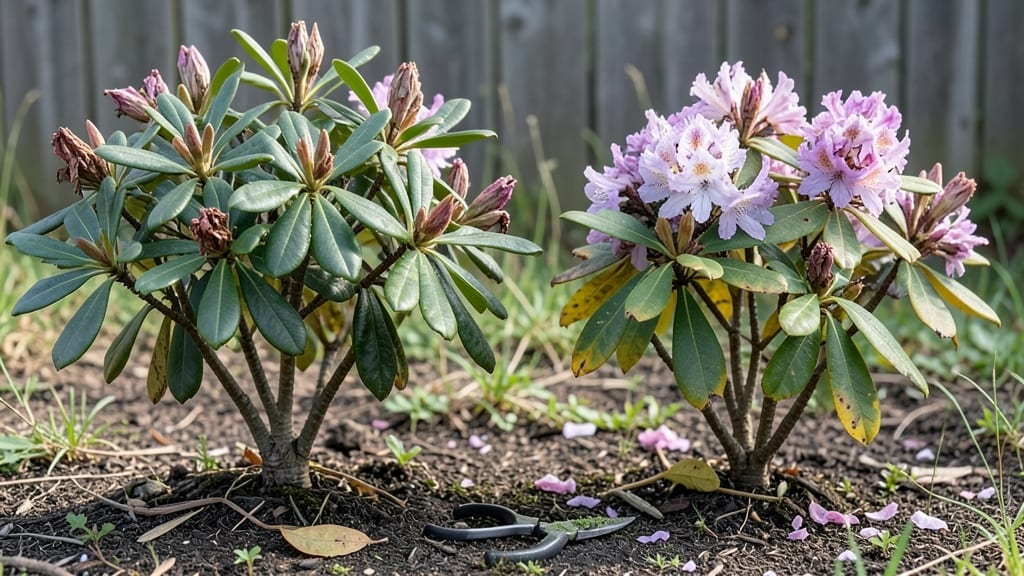
Pruning rhododendrons after blooming isn’t just about cleanup—it’s the secret to next year’s showstopping flowers. 🌸 I’ve learned that skipping this step means fewer blooms and leggy shrubs, but the right cuts transform them into dense, vibrant bushes.
The key is timing: wait until flowers fade completely before touching your shears.
You’ll need sharp pruners, gloves, and a clear morning to work when the plant is hydrated. Focus on removing spent blooms at the base and thinning out crowded branches by a third.
Every cut should target outward-facing buds to encourage fuller growth. It takes about 20 minutes for a medium-sized shrub, and the results are worth it.
After pruning, your rhododendron will bounce back with fresh green shoots within weeks. The new growth stays lush and disease-resistant, while the plant redirects energy into stronger roots and next year’s flower buds.
Just avoid cutting into old wood—it won’t regrow. The payoff? A bush that blooms heavier and lasts longer.
Works for all rhododendron varieties, from compact dwarf types to towering hybrids. The same principles apply whether you’re shaping a hedge or a standalone specimen. Here’s how to do it right the first time—no guesswork, just precision cuts for a healthier plant.
📚 In This Guide
- What you need
- Instructions
- Tips and common mistakes
- Wrapping up and next steps
What you need
- ● Bypass pruners – Sharp, clean bypass pruners (4-6" blades) for precise cuts on small stems (avoid anvil pruners—they crush stems). Pro tip: 💡 Sharpen blades before starting to prevent tearing.
- ● Loppers – Heavy-duty bypass loppers (8-10" blades) for thicker branches (up to 2" diameter). Look for ergonomic handles to reduce hand fatigue.
- ● Hand saw – A curved-tooth pruning saw (8-10") for stubborn, woody stems too thick for loppers. Avoid cheap saws—they dull quickly!
- ● Garden gloves – Cut-resistant gloves (e.g., Mechanix or heavy-duty leather) to protect hands from thorns and rough bark.
- ○ Disinfectant (optional but recommended) – 70% isopropyl alcohol or a pruning sealant (like Tanglefoot) to sterilize tools between cuts and prevent disease spread.
- ● Trash bags or bucket – For collecting pruned branches. A 5-gallon bucket with a lid works great for easy cleanup.
- ● Pruning shears – For fine-tuning tiny stems (e.g., shaping new growth). Look for ergonomic designs to avoid hand strain.
- ● Step stool or ladder – If your rhododendron is tall (e.g., 6+ feet). Use a stable, non-slip stool for safety.
- ● Mulch or compost – Refresh the base with 3-4 inches of organic mulch (pine bark or shredded leaves) post-pruning to retain moisture.
- ● Marking spray (paint) – White or pink pruning paint to seal large cuts (1" or wider) and protect against pests/disease.
- ● Timing – Prune immediately after blooming (when flowers fade but before new buds form). Avoid pruning in extreme heat or cold (ideal temps: 50–75°F).
- ● Weather check – Choose a dry, overcast day to minimize stress on the plant.
- ● Safety gear – Sunglasses and a long-sleeve shirt to protect from debris and sap.
Step-by-step instructions for pruning rhododendrons after blooming
Revitalizing your rhododendrons starts with the right cuts—here’s how to do it cleanly.
✂️ Step 1: Remove Dead or Damaged Blooms and Branches
Start by snipping off any faded or dead flowers at their base using clean, sharp pruning shears. These spent blooms drain energy from your plant, so removing them encourages new growth. I like to work from the bottom up—this way, I don’t miss any hidden deadheads tucked behind leaves.
Next, inspect the branches for any that are brown, brittle, or showing signs of disease. Cut these back to healthy green wood with a single, clean slice just above a leaf node or bud. Avoid leaving stubs, as they can trap moisture and invite rot. If a branch is completely dead, remove it entirely at its base.
Here’s the thing—rhododendrons bloom on old wood, so don’t overthink it. Focus only on what’s clearly dead or spent. You’ll know you’re on the right track when the plant looks lighter and air can circulate freely through its center.
✂️ Step 2: Thin Out Crowded or Weak Growth
Now, take a step back and look at the overall shape of your rhododendron. If branches are growing inward or crossing each other, they’ll compete for sunlight and weaken the plant. Use your pruning shears to remove about one-third of the oldest, thickest stems at their base. This opens up the center and lets light reach the inner branches.
I always prune in a way that maintains the natural, rounded shape of the shrub. Cut just above a bud or leaf node, and angle the cut slightly away from the bud to encourage water to run off. Avoid cutting into the center of the plant—this can create a "donut hole" effect where light never reaches.
Real talk: If you’re unsure which branches to remove, err on the side of caution. Better to leave a few extra stems than to over-prune and stress the plant. You can always thin more next year if needed.
✂️ Step 3: Shape the Shrub for Healthy Growth
Now it’s time to refine the shape. Rhododendrons respond well to light shaping, so focus on creating an open, airy structure. Start by trimming any branches that are growing too long or leggy. Cut back to just above a bud that’s facing outward—this encourages new growth in the right direction.
For larger branches, use your pruning shears to make a clean cut at a 45-degree angle, about ¼ inch above a leaf node. This prevents water from pooling and reduces the risk of disease. If you’re working with thicker stems, consider using loppers for a smoother cut.
This is the moment that matters: Step back frequently to check your progress. The goal is a balanced, bushy shape with plenty of airflow. If you’re happy with the look, you’re ready for the final step.
💧 Step 4: Clean Up and Encourage New Growth
After pruning, rake up and dispose of all the clippings—don’t leave them on the ground, as they can harbor pests or diseases. I like to sterilize my pruning tools with rubbing alcohol between cuts to prevent spreading any potential infections.
Give your rhododendron a deep watering right after pruning to help it recover. The roots will need extra moisture as new growth begins. You’ll see fresh, vibrant leaves emerging within 2-3 weeks, signaling that the plant is bouncing back.
Don’t skip this: Apply a light layer of mulch around the base of the plant (but keep it 2-3 inches away from the trunk) to retain moisture and protect the roots. This is especially important in hot or dry climates where rhododendrons can struggle.
⏰ Step 5: Monitor and Maintain Through the Season
Keep an eye on your rhododendron over the next few weeks. New growth should appear within 3-4 weeks, and you’ll notice the plant looking fuller and healthier. If you see any signs of stress—like yellowing leaves or wilting—adjust your watering or check for pests.
Here’s what I do next: In late summer or early fall, I give the plant a light fertilizer to support its growth for next year’s blooms. But avoid heavy feeding right after pruning—this can encourage tender new growth that might not survive winter.
You’ve got this. With these precision cuts, your rhododendron will be stronger, more vibrant, and ready to bloom beautifully next season.
Tips & tricks for perfect rhododendron pruning after blooming
Precision makes all the difference when pruning rhododendrons—here’s how to avoid common mistakes and get the best results.
Timing is Everything: Prune right after blooming, but wait until all flowers have fully faded. I’ve learned this the hard way—pruning too early can remove next year’s buds, since rhododendrons bloom on old wood. The 2-3 week window after blooming gives you plenty of time to work while still encouraging new growth.
Tool Selection Matters: Use clean, sharp pruning shears for all cuts—dull tools crush stems and create jagged edges that invite disease. For thicker branches (over ½ inch), switch to loppers to make smoother cuts. I sterilize my tools with rubbing alcohol between cuts to prevent spreading any potential infections from plant to plant.
Shape with Purpose: When thinning in Step 2, focus on creating an open center rather than just removing branches. The goal is to let light and air reach the inner stems—this prevents fungal issues and encourages bushier growth. Step back every few cuts to check your progress; you should see sunlight reaching the center of the plant.
Post-Pruning Care: Don’t forget the deep watering after pruning! The roots need extra moisture to support new growth, especially in hot climates. I also apply a 2-3 inch layer of mulch around the base (but keep it away from the trunk) to lock in moisture and protect roots from temperature swings. This simple step makes a huge difference in recovery time.
Pro Tips for Prune Rhododendrons After Blooming
- Precision makes all the difference when pruning rhododendrons—here’s how to avoid common mistakes and get the best results.
- Timing is Everything: Prune right after blooming, but wait until all flowers have fully faded.
- Tool Selection Matters: Use clean, sharp pruning shears for all cuts—dull tools crush stems and create jagged edges that invite disease.
Frequently asked questions
Got questions about pruning your rhododendrons after they’ve finished blooming? You’re not alone—this step can feel tricky! Here are answers to the most common concerns to help you prune with confidence.
Can I prune rhododendrons at any time after they bloom?
Timing is key! While rhododendrons can technically be pruned anytime after blooming, the ideal window is late spring to early summer (May–June) for most varieties. This gives them time to heal before winter. Avoid heavy pruning in fall, as new growth may not harden off in time. If you missed the window, a light trim in early spring is better than nothing!
What if my rhododendron hasn’t bloomed yet—can I still prune?
If your rhododendron is late to bloom (common with young plants or certain cultivars), wait until at least 80% of buds have opened before pruning. Cutting too early can remove next year’s flowers! For non-flowering plants, focus on shaping or removing dead wood. Pro tip: Check your plant tag for blooming habits—some varieties bloom on old wood (fall) and others on new (spring).
How do I know if I’m pruning too much?
Rhododendrons are sensitive to over-pruning, so follow the "one-third rule": never remove more than 30% of the plant’s foliage in one session. Signs you’ve gone too far include sparse new growth, yellowing leaves, or a "bald" look. If your plant looks stressed, stop pruning and focus on watering and fertilizing. Better to under-prune than over!
What if my rhododendron has dead or diseased branches—how should I handle them?
Always prioritize dead or diseased wood first! Use clean, sharp shears to cut back to healthy growth (look for green tissue). For fungal issues (like botrytis blight), sterilize your tools with rubbing alcohol between cuts. Never prune in wet weather—this spreads pathogens. After removing bad branches, apply a fungicide if needed and improve airflow around the plant.
Is there an alternative to pruning if my rhododendron looks unruly?
If pruning feels overwhelming or your plant is too large, consider alternative strategies:
- Thinning: Remove select branches for airflow instead of heavy cuts.
- Layering: Encourage new stems to grow by bending lower branches into the soil.
- Topiary shaping: For formal gardens, train rhododendrons with light, guided pruning.
- Mulching: A 3–4 inch layer of mulch supports root health, reducing the need for drastic cuts.
Wrapping up and next steps
Pruning your rhododendrons after blooming is a simple yet powerful way to keep them thriving for years to come! By following these steps—removing spent blooms, shaping with care, and avoiding over-pruning—you’ll encourage lush foliage and vibrant flowers next season. Your green thumb is all it takes!
Ready to give your rhododendrons the TLC they deserve? Grab your pruners and head outside—your plants (and future blooms) will thank you! 🌿✨