
Blooming
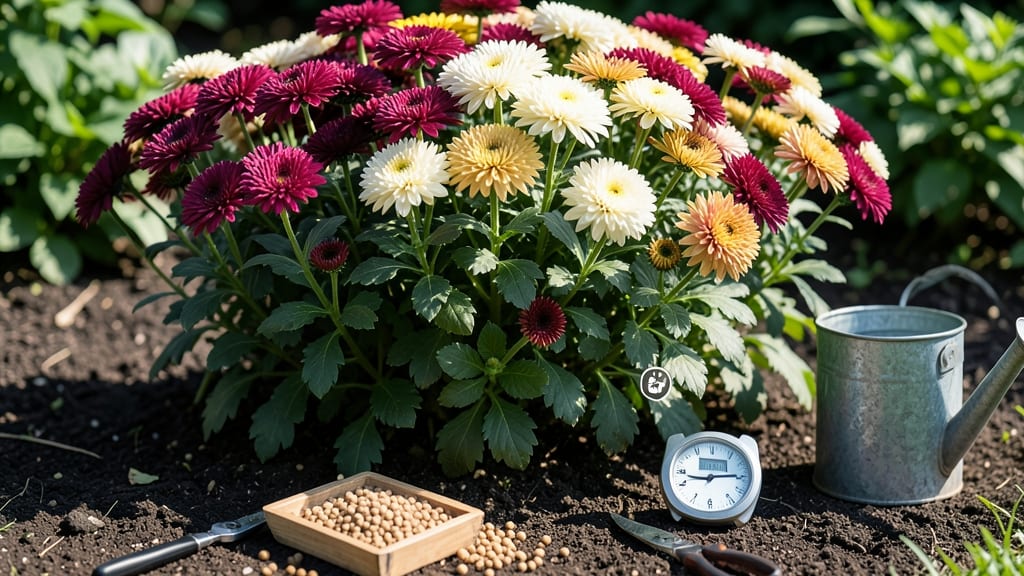
To get mums to bloom faster, you don’t need to wait for fall—just tweak a few key factors like light, water, and deadheading to cut weeks off their timeline.
Chrysanthemums (or 🌼 mums) are the showstoppers of fall gardens—but why wait months for their blooms when you can coax them into flowering weeks earlier with the right tricks?
Most gardeners miss the 12-week pre-bloom window that starts in early summer, and that’s when the magic happens. With the right light exposure, pruning, and feeding schedule, you can push those buds open 2-3 weeks ahead of the usual timeline.
Here’s how to accelerate blooming with simple, science-backed steps—whether your mums are in containers or planted in the ground.
Light and temperature secrets to trigger faster mum blooming
Mums (chrysanthemums) thrive when you manipulate their light exposure and temperature cues—two factors that directly control their blooming timeline. Most gardeners miss the 12-week pre-bloom window where these triggers make the biggest difference.
By understanding how sunlight duration and temperature shifts signal your plants to flower, you can cut weeks off the waiting game. Think of it like teaching your mums when to "go to school"—they need the right classroom conditions!
Here's the secret: shortening daylight hours in late summer tricks mums into thinking fall is coming, prompting them to bloom faster. This works because chrysanthemums are short-day plants, meaning they flower in response to decreasing daylight rather than specific temperatures.
Pair this with cool nighttime temps (55-65°F), and you've created the perfect recipe for accelerated blooming. The key is starting these adjustments 8-12 weeks before your target bloom date.
| Factor | Optimal Condition | Action Steps |
|---|---|---|
| Sunlight | 6-8 hours daily (full sun) | Place in south-facing beds or use reflective surfaces |
| Daylength | Progressively shorten to <12 hours | Use shade cloth (30-50%) for 2-3 hours afternoon |
| Night Temp | 55-65°F (13-18°C) | Move containers to shaded spots at night if too warm |
| Morning Temp | 60-75°F (16-24°C) | Use row covers for early spring planting |
| Soil Temp | 60-70°F (16-21°C) | Mulch with straw to maintain consistent temps |
For container-grown mums, I recommend moving them to a protected location (like a porch or patio) during the day when outdoor temps exceed 85°F (29°C). Heat stress delays blooming by up to 3 weeks.
At night, bring them into a garage or shed if temps drop below 50°F (10°C)—this mimics the natural temperature shifts that trigger flowering. Pro tip: Group containers together to create a microclimate that retains more stable temperatures.
One common mistake is assuming all mums respond the same to light. Dwarf varieties need at least 4 hours of direct sun, while standard types thrive with 8+ hours. If your mums are stretching toward light or producing fewer blooms, they're likely light-deprived.
Try rotating containers weekly so all sides get equal exposure, or supplement with a grow light for 2-3 hours daily if natural light is limited.
The 12-week pre-bloom window starts when you first notice bud formation. During this time, I focus on three key adjustments: reducing afternoon sunlight by 1-2 hours weekly, ensuring nighttime temps stay cool, and avoiding any heavy fertilization.
Too much nitrogen now will encourage leafy growth over flowers. Instead, switch to a low-nitrogen, high-phosphorus fertilizer (like 5-10-10) to support bud development.
Temperature fluctuations are just as critical as sunlight. Mums need a 10°F (5.5°C) difference between day and night temps to bloom optimally. In hot climates, use white shade cloth to filter sunlight while maintaining cooler temps.
In cooler regions, extend the growing season by using black plastic mulch to absorb and radiate heat back to the plants. This simple trick can advance blooming by 2-3 weeks in spring-planted mums.
If you're planting mums in late summer for fall blooms, prioritize afternoon shade during the hottest weeks (July-August). This prevents heat stress while still giving them enough morning sun to photosynthesize.
For example, I plant my fall mums near my house's east side where they get morning sun but afternoon shade from the roof. By mid-August, I gradually remove shade structures to increase light exposure, signaling the plants to bloom.
Don't overlook the power of reflective surfaces like white walls or gravel paths. These can increase light intensity by up to 30%, helping mums produce 20-30% more blooms. Place containers on reflective surfaces or position them near light-colored fences.
Even something as simple as a white plastic tray under pots can make a noticeable difference in bloom speed and quantity.
Remember, consistency is key. Mums need 2-3 weeks of stable conditions before they respond to light and temperature changes. If you move them frequently or let temps fluctuate wildly, you'll delay blooming.
Create a dedicated mum zone in your garden where you can control these factors year after year. Over time, your mums will learn the routine and bloom 2-4 weeks earlier than average!
Deadheading and pruning techniques that double flower production
One of the fastest ways to get your chrysanthemums blooming weeks earlier is through strategic deadheading and pruning. These techniques redirect the plant's energy from seed production to creating more vibrant flowers.
The key is timing—cut too early or too late, and you risk stunting growth or delaying blooms entirely.
Start by understanding the difference: deadheading removes spent blooms, while pruning shapes the plant. Both encourage bushier growth and more flowers. For mums, the best time to begin is 6-8 weeks before your first expected frost, when new growth is actively forming.
⚠️ STEP LIST: How to Prune & Deadhead Mums for Faster Blooms
- Step 1
- Step 2
- Step 3
- Step 4
- Step 5
For container-grown mums, prune slightly more aggressively since they have limited space. Trim stems to half their length in early summer to encourage compact, bushy growth. Just remember: less pruning = fewer but larger blooms, while heavy pruning = more but smaller flowers.
Watch for signs of over-pruning, like yellowing leaves or stunted growth. If this happens, reduce pruning and focus on watering and fertilizing to recover. The goal is balance—encourage growth without stressing the plant.
With consistent deadheading and pruning, your mums can produce 2-3 times more blooms than unpruned plants. The secret lies in redirecting energy to where it matters most: those showstopping fall flowers.