
Blooming
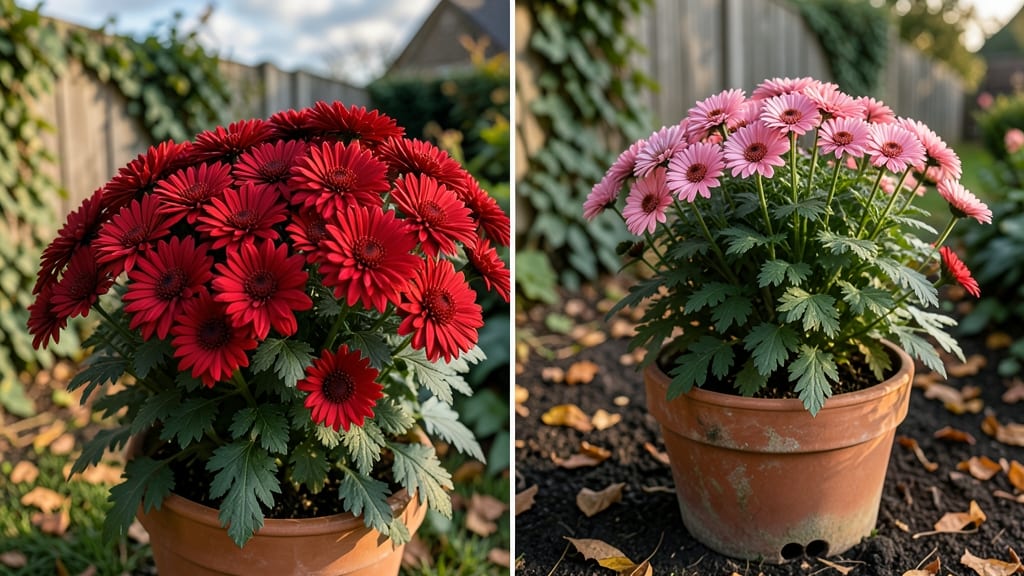
Summer-blooming mums do exist, but most chrysanthemums prefer late summer through fall for their peak flowering. Heat-tolerant varieties like 'Summer Snow' or 'Harmony' can produce blooms earlier with proper care, while traditional mums thrive in cooler temperatures.
Most chrysanthemums (mums) are programmed to bloom when days grow shorter and temperatures cool down—typically in late summer or fall. 🌸 This natural cycle is tied to their botanical needs, as they require 12-14 hours of daylight and cooler nights to trigger flowering.
That said, breeders have developed heat-resistant varieties like 'Summer Snow' that can push blooms into early summer with consistent moisture and partial shade. The key difference? Traditional mums may struggle in consistent 80°F+ heat, while summer-blooming types are bred to handle warmer conditions better.
If you're eager to see summer color from mums, focus on these varieties and adjust your care routine: water deeply twice weekly (they hate drought stress), use a balanced fertilizer every 4-6 weeks, and provide afternoon shade in hot climates. 🌞 The trade-off?
Summer-blooming mums might not last as long as their fall counterparts, but they'll give you vibrant color when other flowers are fading.
💡 In This Article
- Why Most Mums Prefer Cool Weather for Blooming
- Best Summer-Blooming Mum Varieties for Warm Climates
Why most mums prefer cool weather for blooming
Chrysanthemums (mums) are short-day plants, meaning their flowering is triggered by decreasing daylight hours—a process called photoperiodism. When days shorten to around 12-14 hours of sunlight, these plants detect the shift and begin producing florigen, a hormone that signals blooming.
This natural cycle explains why most mums peak in late summer or fall when temperatures drop. 🌿 Think of it like a biological clock: cooler nights and shorter days act as the perfect cue for them to bloom, similar to how poinsettias respond to long nights.
The science gets even more interesting when you consider temperature's role. Mums thrive when daytime highs stay between 60-75°F, while nighttime temperatures should dip to 50-65°F. Heat stress above 85°F can delay or even prevent blooming entirely by disrupting hormone production.
This is why traditional mums often struggle in summer—excessive heat causes them to go dormant or focus energy on leaf growth instead of flowers. For example, a mum planted in July in a 90°F+ climate might not bloom until October, if at all, without careful care.
Daylight hours also play a critical role.
In regions with long summer days (like the Midwest or Pacific Northwest), mums may not bloom until late August or September because they need those shorter days to trigger flowering. 🌞 In contrast, areas with shorter summer days (like the Southeast) might see mums bloom earlier.
This explains why gardeners in different zones often have varying success with the same mum varieties—it's not just about heat, but also the precise balance of light and temperature.
What most gardeners don't realize is that mums actually store energy during their growing season. They build up carbohydrates in their roots and stems, which they later use for blooming. If summer heat stresses the plant, it diverts energy away from flower production and toward survival.
This is why well-established mums (planted the previous fall) often bloom better in summer than newly planted ones—they've already stored more energy. For instance, a 3-year-old mum in a cool microclimate might produce blooms in June, while a 1-year-old plant in full sun might wait until September.
There's also a genetic component. Traditional mums were bred for fall blooming, so their DNA is hardwired to respond to cooler temperatures. Even heat-tolerant varieties like 'Summer Snow' still rely on some temperature cues—they just handle warmth better.
For example, 'Summer Snow' can bloom in 75-85°F conditions, while 'Bonanza Yellow' might need 65-75°F to perform optimally. This genetic difference is why some mums thrive in summer while others don't, even with identical care.
One practical takeaway is that if you're in a hot climate, you can trick mums into blooming earlier by providing afternoon shade (like with a 50% shade cloth) and consistent moisture. This mimics cooler conditions and can encourage earlier flowering.
The key is understanding that mums are following an ancient biological rhythm—one that's been fine-tuned over centuries to ensure they bloom when conditions are ideal for pollination and seed production.