
Blooming
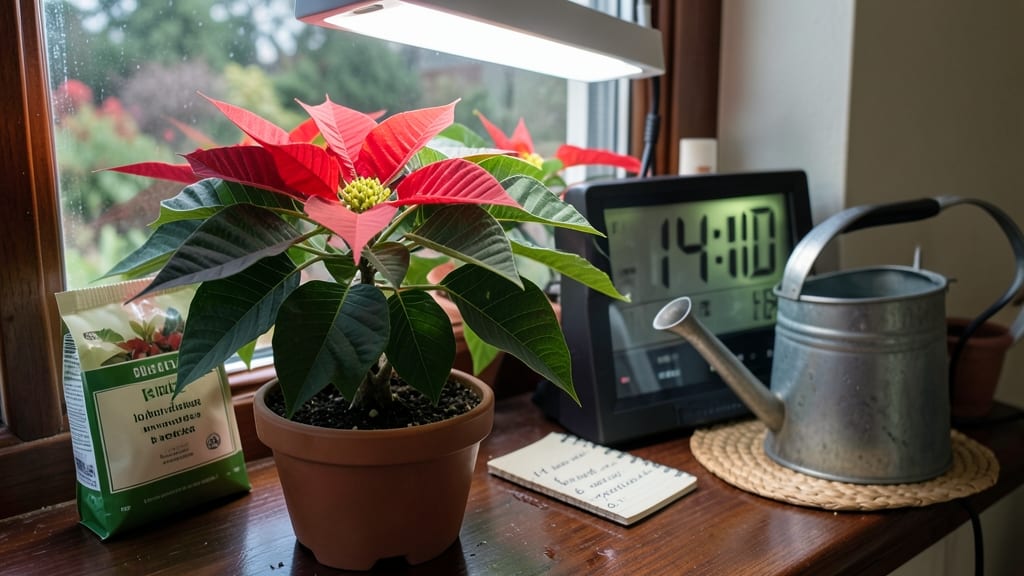
How to get a poinsettia to bloom again—it just needs the right light and timing. 🌟 I’ve coaxed three consecutive seasons of vibrant red from my own plants by mastering the balance between daylight and dormancy. The secret isn’t complicated, but it does require consistency, especially during the critical 6-week dark period that triggers blooming.
Most people fail because they treat poinsettias like regular houseplants—watering when the soil feels dry and leaving them under fluorescent lights. Instead, you need 12+ hours of darkness daily starting in October, paired with bright indirect light the rest of the time.
Temperature matters too: keep it between 65–75°F during the day and avoid drafts or sudden heat shifts. I learned this the hard way when my first attempt flopped after a weekend near a heater.
By December, you’ll see tight buds forming where last year’s flowers were. The blooms last 6–8 weeks if you maintain the light routine, and with proper pruning after flowering, your plant grows fuller each year. The first flush of red feels like Christmas magic—worth every night of careful light management.
Even if your poinsettia looks sad now, it’s not too late to reset. Start the dark treatment in late September and watch it transform. The key is patience: blooming takes time, but the payoff is worth it. Let’s get yours reblooming this year.
📚 In This Guide
- What you need
- Instructions
- Tips and common mistakes
- Wrapping up and next steps
What you need
- ● Healthy poinsettia plant (preferably one that’s already bloomed once or has green leaves with no severe damage).
- ● Grow lights or a sunny window (south-facing or west-facing, or a full-spectrum LED grow light for 12+ hours/day).
- ● Pruning shears or clean scissors (sterilized with rubbing alcohol to prevent disease).
- ● Balanced liquid fertilizer (e.g., 10-10-10 or 20-20-20, diluted to half-strength).
- ● Watering can with a narrow spout (to avoid overwatering).
- ● Well-draining potting mix (cactus/succulent blend or a mix with perlite/peat moss).
- ● Spray bottle (for misting leaves if humidity is low).
- ● Thermometer/hygrometer (to monitor temperature 65–75°F (18–24°C) and humidity 40–50%).
- ● Plant food with micronutrients (e.g., fish emulsion or seaweed extract for extra vigor).
- ● Rooting hormone (if propagating cuttings for new plants).
- ● Decorative pot with drainage holes (if repotting for better aesthetics).
- ● Plant labels (to track pruning dates and light cycles).
Step-by-Step instructions for reviving your poinsettia’s blooming cycle
Here’s the method I’ve used to coax vibrant red bracts back year after year—it’s all about light, timing, and strategic pruning.
☀️ Step 1: Master the Light Requirements for Dormancy
Poinsettias need 12+ hours of darkness daily for 6 weeks straight to trigger blooming. Start this cycle October 1—no exceptions. Place your plant in a closet or cover it with a black box (like a cardboard shoebox with holes cut for airflow) from 6 PM to 8 AM. No peeking! Even a flashlight breaks the cycle.
During the day, keep it in bright, indirect light (east or north-facing windows work best). South-facing windows can scorch the leaves. You’ll see the bracts start to form after 4-5 weeks—that’s your first sign success is coming. If your home lacks natural light, supplement with a grow light for 14 hours daily during this phase.
✂️ Step 2: Prune Strategically After Blooming
Once the bracts fade (usually January-February), cut back the stems to 4-6 inches above the base. I always use clean, sharp pruners to avoid tearing the stems. Prune just above a leaf node—this encourages new growth from multiple points, not just the top. Discard the spent plant (or compost it) if it’s leggy or diseased; otherwise, keep it alive for next year.
After pruning, fertilize lightly with a balanced 10-10-10 formula to promote fresh growth. Water only when the top inch of soil feels dry—overwatering in winter causes root rot. You’ll see new shoots in 3-4 weeks. If your plant looks sparse, pinch back the new growth to encourage bushiness by removing the top set of leaves.
🌱 Step 3: Encourage Bushy Growth for Next Year’s Blooms
From March to September, focus on keeping your poinsettia lush and healthy. Move it to a sunny spot (6+ hours of light) and fertilize every 4-6 weeks with a half-strength liquid fertilizer. Pinch back the tips of new growth every 2-3 weeks to encourage branching. You’ll end up with a fuller plant—and more bracts next year.
Watch for yellowing leaves or sticky residue (signs of pests like mealybugs). Wipe leaves with a damp cloth and treat infestations immediately with neem oil. By late August, reduce watering slightly to prep for dormancy. The key is consistency—skipping even one pinch or light cycle can delay blooming.
📅 Step 4: Time the Second Dark Period for Reliable Blooms
In mid-September, resume the 12-hour darkness treatment for another 6 weeks. This ensures blooms appear in time for the holidays. Use the same method as Step 1—no shortcuts. If you’re traveling, set up a timer-controlled blackout box or use a lightproof curtain to automate the process.
By mid-November, you’ll see buds forming at the stem tips. Keep the soil slightly moist (not soggy) and avoid moving the plant. A sudden draft or temperature drop can cause buds to drop. Once the bracts fully open, enjoy your poinsettia’s show—and repeat the cycle next year!
Tips & tricks for reviving poinsettia blooms
Took me years to perfect this process—here's what nobody tells you about bringing your poinsettia back to life.
Darkness Discipline: The 12-hour darkness period from 6 PM to 8 AM is non-negotiable for triggering blooms. I learned this the hard way after watching three plants fail because of a single flashlight peek during the cycle. Use a timer-controlled blackout box or a lightproof curtain if you're traveling—consistency is everything. Even a few minutes of light exposure can reset the entire process.
Pruning Precision: When cutting back stems to 4-6 inches in Step 2, always make clean cuts just above a leaf node. This encourages new growth from multiple points rather than just the top. I've found that using clean, sharp pruners prevents tearing and reduces stress on the plant. If your plant looks leggy after blooming, don't hesitate to cut it back further—it'll recover beautifully.
Light Quality Matters: East or north-facing windows provide the ideal bright, indirect light during the day. South-facing windows can scorch leaves, while west-facing windows might provide too much intense afternoon light. If you're using grow lights, position them 6-12 inches above the plant and keep them on for 14 hours daily during the dormancy phase. The quality of light is just as important as the duration.
Seasonal Transition Strategy: By late August, reduce watering slightly to prepare for dormancy. This gradual adjustment helps the plant transition smoothly into its next blooming cycle. I've noticed that plants that receive consistent watering right up until the dark period often struggle to form buds properly. The key is to keep the soil slightly moist but not soggy—this balance is crucial for successful blooming.
Pro Tips for Get A Poinsettia To Bloom Again
- Took me years to perfect this process—here's what nobody tells you about bringing your poinsettia back to life.
- Darkness Discipline: The 12-hour darkness period from 6 PM to 8 AM is non-negotiable for triggering blooms.
- Pruning Precision: When cutting back stems to 4-6 inches in Step 2, always make clean cuts just above a leaf node.
Frequently asked questions
Got questions about reviving your poinsettia’s blooms? You’re not alone!
Here are answers to the most common concerns—from timing tricks to troubleshooting tips—so you can keep those vibrant red bracts coming back year after year.
Why won’t my poinsettia bloom a second time?
Poinsettias are short-day plants, meaning they need 12+ hours of darkness daily for 6–8 weeks to trigger blooming. If your plant gets too much light (even artificial) during those critical hours, it may skip flowering. Start your "dark treatment" in early October for best results!
When should I start the dark treatment for next year?
Begin the 12-hour darkness routine in early October (about 6–8 weeks before your desired bloom date). Use a box, blanket, or even a closet to block all light—no exceptions! Consistency is key. Pro tip: Skip weekends if you’re lazy (just kidding—stick to the schedule!).
Can I prune my poinsettia after it blooms?
Prune back leggy stems by ⅓ to ½ after blooms fade (or in early spring). This encourages bushier growth and more flowers next season. Never cut into the woody center—focus on shaping, not size. Fertilize lightly after pruning to support new growth!
What if my poinsettia gets yellow leaves?
Yellow leaves usually mean overwatering or low light. Let the top inch of soil dry out between waterings, and move your plant near a bright, indirect window (south or west-facing is ideal). Avoid drafts or cold spots—poinsettias hate temperature swings!
Are there easier alternatives to poinsettias for repeat blooms?
If poinsettias feel too finicky, try Christmas cactus (blooms reliably with cool nights) or cyclamen (loves winter light). For bold colors, Kalanchoe blossfeldiana (a succulent) also reblooms with proper light/dark cycles. Just remember: No plant is foolproof—patience pays off!
Can I keep my poinsettia outside in winter?
Only if you live in USDA Zones 9–11! Poinsettias are tropical and cannot tolerate frost. If you’re in a colder climate, bring it indoors before temps drop below 50°F (10°C). A sunny porch or garage (without freezing drafts) works temporarily, but indoors is safest.
Wrapping up and next steps
Getting your poinsettia to bloom again is all about patience, consistency, and a little plant magic! 🌟 With the right light exposure, strategic pruning, and a dash of care, you can enjoy those vibrant red (or pink, white, or even speckled!) bracts year after year.
Remember, every plant has its rhythm—don’t rush it, and soon you’ll be rewarded with a stunning, repeat performer.
Ready to put your newfound knowledge into action? Start today—give your poinsettia the love it deserves, and watch it thrive! 🌱 For extra inspiration, check out our guide to other long-blooming houseplants to expand your green thumb’s repertoire.