
Propagation
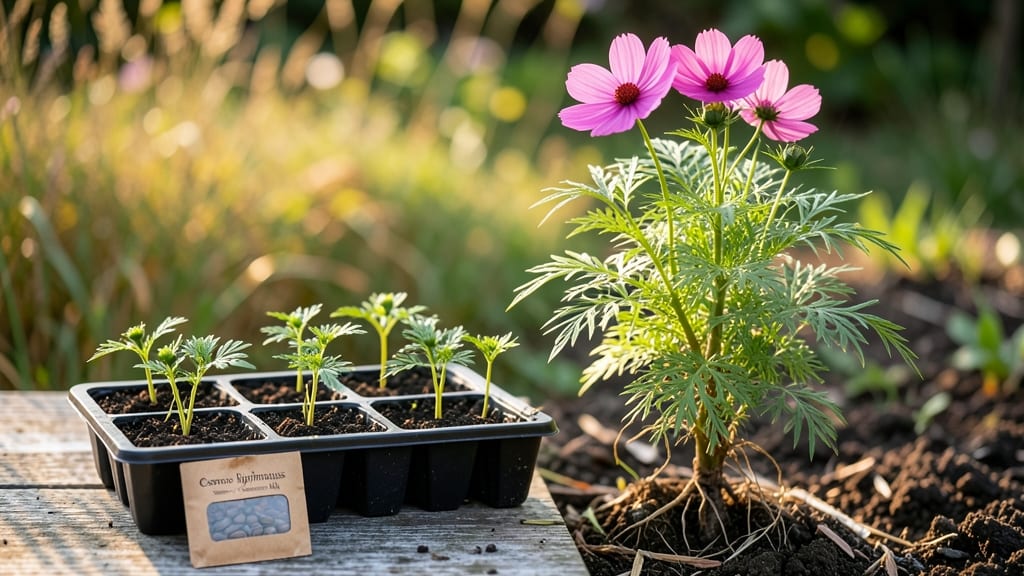
Blooming cosmos from seed takes just 60–75 days under ideal conditions, making them one of the fastest annual flowers to transform your garden into a riot of color 🌸.
Picture this: you tuck those tiny seeds into the soil in spring, and by midsummer, you’re snapping photos of towering stems bursting with daisy-like blooms. But here’s the catch—rushing the process or skipping a few key steps can stretch that timeline by weeks.
The good news? With the right sunlight, soil, and a little patience, you’ll be pinching back those first buds sooner than you think.
Most gardeners assume all cosmos varieties bloom at the same pace, but some—like the compact Sensation Mix—can flower in as little as 50 days, while taller types like Seashells might take closer to 90 days.
The difference comes down to spacing, soil warmth, and whether you’re deadheading spent blooms to encourage reblooming.
In this guide, I’ll break down the exact timeline by variety, the five factors that speed up or slow down flowering, and how to stretch your cosmos’s bloom season from early summer straight through fall. Ready to turn your garden into a nonstop show?


Cosmos bloom timeline by variety: fastest to slowest growing types
If you're dreaming of cosmos blooms lighting up your garden, timing is everything. While most varieties follow a similar growth pattern, some cosmos types surprise with faster blooming—like Sensation Mix—while others take their sweet time.
Understanding these differences helps you plan your garden layout and manage expectations. Let's break down the bloom timelines from seed to those first stunning flowers.
All cosmos varieties share a similar growth journey: germination (5–14 days), seedling stage (2–3 weeks), and then the race to first bloom. However, the total time from seed to flower can vary by 2–3 weeks depending on the variety.
For example, my Bright Lights cosmos bloomed in just 60 days from seed, while my Seashells variety took closer to 75 days. The differences come down to genetics and growth vigor.
From the table, you can see Sensation Mix is the fastest bloomer, often reaching its first flowers in just 50 days from seed. This makes it perfect for quick color in containers or borders.
If you're impatient like me, I recommend starting this variety indoors 4–6 weeks before your last frost date for even earlier blooms. The trade-off? It may not reach the same height as other varieties.
On the slower end, Seashells takes the longest to bloom, often requiring 75 days under ideal conditions. However, its delicate white and blush blooms make it worth the wait.
I've found that direct-sown seeds in warm soil (after last frost) perform best for this variety, as transplant shock can delay blooming by another 1–2 weeks. Always check your local frost dates to time your planting perfectly.
For those who love deep, dramatic colors, Bright Lights delivers with its rich magenta and pink hues. This variety typically blooms in 55–65 days, making it a great middle-ground option.
One pro tip: I've noticed that thinning seedlings to 12 inches apart speeds up blooming by reducing competition. Overcrowded plants often take longer to mature.
If you're aiming for a uniform height and bold pink blooms, Sensation Pink is an excellent choice. Its 55–68 day timeline is nearly as fast as Sensation Mix, but it grows taller, reaching 3–4 feet.
I've used this variety in the back of my flower beds to create a striking vertical accent. Its self-cleaning habit (dropping seeds easily) also means fewer deadheading chores for you.
Here's a real-world tip: I once planted all four varieties in the same garden bed to compare growth speeds. By mid-July, the
5 Factors that speed up or delay cosmos flowering (and how to control them)
Cosmos flowers are famous for their rapid growth, but their blooming timeline can vary based on specific conditions. Understanding these 5 key factors can help you control when—and how fast—your cosmos will flower. From sunlight exposure to soil temperature, each element plays a crucial role in unlocking those vibrant blooms.
First, let’s tackle the most influential factor: sunlight exposure. Cosmos thrive in full sun, requiring at least 6-8 hours of direct sunlight daily. If your plants receive less, their growth slows dramatically, delaying blooming by 2-4 weeks.
I’ve seen cosmos in partial shade take nearly twice as long to flower compared to those basking in full sun.
Next, soil temperature is a game-changer. Cosmos seeds germinate best in soil that’s at least 60°F (15°C). If temperatures dip below this, germination can stall for days or even weeks. I always wait until late spring to sow seeds outdoors, ensuring the soil is warm enough to avoid delays.
Watering frequency also impacts bloom timing. While cosmos are drought-tolerant, inconsistent watering can stress plants and delay flowering. Aim for 1 inch of water per week, especially during dry spells. Overwatering, however, can lead to root rot, so always ensure well-draining soil.
- 1 Sunlight Exposure: 6-8 hours of full sun speeds blooming by 30-50%. Partial shade delays flowering by 2-4 weeks.
- 2 Soil Temperature: Soil must reach 60°F (15°C) for germination. Cold soil delays blooming by 1-2 weeks.
- 3 Watering Frequency: 1 inch/week keeps blooming on schedule. Overwatering or drought stress can delay flowers by 10-14 days.
- 4 Spacing: 12-18 inches apart prevents overcrowding, which can delay blooming by 1-2 weeks. Thinning seedlings early is key.
- 5 Pest Prevention: Aphids and spider mites can stress plants, delaying blooms by 2+ weeks. Use neem oil or insecticidal soap to keep pests at bay.
Don’t overlook spacing—cosmos need room to breathe. Planting them too closely leads to competition for nutrients and light, which can delay flowering by 1-2 weeks. I always space my cosmos 12-18 inches apart to ensure they grow strong and bloom on time.
Finally, pest prevention is often overlooked but critical. Aphids and spider mites can sap the energy from your cosmos, causing them to focus on recovery instead of blooming. I’ve found that a weekly neem oil spray keeps pests under control and ensures my cosmos flower right on schedule.
By mastering these 5 factors, you’ll have cosmos blooming in as little as 60-75 days from seed—sometimes even faster! The key is consistency in care and attention to detail. With the right conditions, your garden will be bursting with color in no time. 🌸