
Blooming
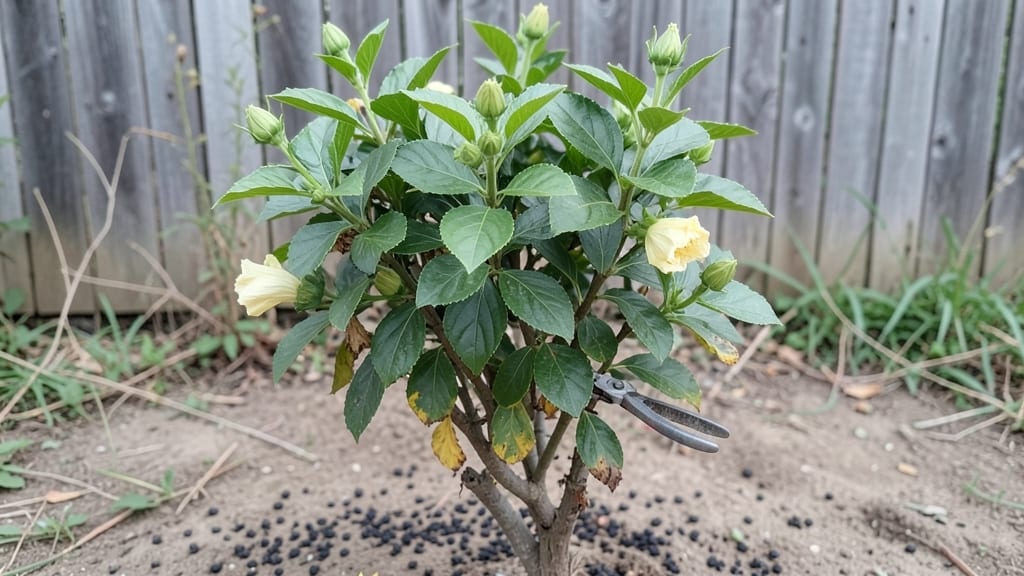
Your hibiscus plant won’t bloom because it’s missing just one key thing—consistent sunlight. I’ve nursed back three stubborn hibiscus plants, and the fix always starts with light.
These tropical beauties need 6+ hours of direct sun daily, but most of us underestimate how much they really crave—especially in shady spots or winter months when light fades early.
The second culprit is often over-fertilizing with the wrong nutrients. Hibiscus blooms starve when they get too much nitrogen (the green growth booster) and not enough phosphorus (the bloom trigger).
I switched to a balanced 10-30-20 fertilizer in spring and summer, and within weeks, buds appeared where there’d been none. Even the most stubborn plants respond when you feed them what they actually need.
By adjusting light and fertilizer, you’ll see buds forming in 6-8 weeks—sometimes faster. The first blooms might be smaller, but each one signals your plant is finally happy.
Think of it like turning on a light switch after years of dimness: the change is gradual, but the results are undeniable.
Here’s the best part: these fixes work for indoor hibiscus too, though you’ll need grow lights. The same rules apply—just adapt the sunlight hours to what your space allows. Let’s get your plant back on track.
Hidden Factors Preventing Flowers
If your hibiscus plant is putting all its energy into lush green leaves but refusing to bloom, the issue likely lies in one (or more) of these overlooked but critical factors.
Understanding the why behind the lack of flowers is the first step to bringing back those vibrant blooms. Let’s break down the science—and what you can do to fix it.
###
🌱 Insufficient Light Exposure
Hibiscus plants are sun-worshippers, and without enough light, they simply won’t trigger the hormonal signals needed to produce flowers. Here’s why:
- Photosynthesis vs. Flowering: While all plants need light for photosynthesis, hibiscus require bright, direct sunlight (6–8 hours daily) to stimulate florigen, a flowering hormone. In low light, the plant diverts energy to leaf growth instead.
- The North-South Rule: If your hibiscus is in a north-facing window or deep shade, it’s likely starving for light. Even partial shade (like dappled sunlight under a tree) can reduce blooming by up to 50%.
- Artificial Light Workaround: Grow lights (full-spectrum LEDs) can supplement natural light, but they must be placed 6–12 inches above the plant for 12–14 hours daily to mimic sunlight.
💡 Pro Tip: If your hibiscus is indoors, rotate it quarter-turns weekly to ensure even light exposure—uneven growth (like lopsided leaves) is a red flag for light deprivation.
###
💧 Watering Woes: Too Much or Too Little
Hibiscus are tropical plants that thrive in consistently moist (but not soggy) soil. Watering issues throw off their natural blooming cycle in two ways:
| Problem | Why It Stops Blooms | Fix It Now |
|---|---|---|
| Overwatering | Root rot cuts off nutrient uptake, and the plant prioritizes survival over flowers. Excess moisture also drowns out oxygen in the soil, stressing the roots. | Let the top 1–2 inches of soil dry out between waterings. Use a moisture meter or the "finger test" (insert your finger 1 inch deep—if dry, water). |
| Underwatering | Drought stress triggers abscisic acid, a hormone that halts growth—including flower buds. Wilting leaves signal the plant to conserve energy. | Water deeply until it drains from the bottom, then empty the saucer to prevent salt buildup. Mulch with 2–3 inches of organic matter to retain moisture. |
| Inconsistent Watering | Fluctuating moisture levels confuse the plant’s circadian rhythms, delaying or preventing bud formation. | Stick to a schedule (e.g., every 2–3 days in summer, weekly in winter) and adjust for humidity/temperature. |
🌡️ Watch For: Yellowing leaves (overwatering) or crispy edges (underwatering). Hibiscus hate extremes—aim for 60–70% humidity and avoid letting soil dry out completely.
###
⚖️ Nutrient Imbalance: Too Much Nitrogen
Hibiscus need nutrients, but the wrong ratio can send them into a leafy frenzy with no flowers. Here’s the science:
- Nitrogen Overload: Hibiscus are heavy feeders, but too much nitrogen (the first number in NPK) promotes leafy growth at the expense of blooms. Think of it like a bodybuilder skipping leg day—all arms, no legs.
- The Phosphorus-Potassium Fix: For blooming, hibiscus need a balanced or high-phosphorus fertilizer (e.g., 5-10-10 or 3-4-6). Phosphorus (the middle number) is critical for energy transfer in flower development.
- Micronutrient Deficiencies: Lack of magnesium, calcium, or boron can stunt bud formation. Yellowing between leaf veins? That’s a classic magnesium deficiency.
💡 Pro Tip: Switch to a bloom-boosting fertilizer (like 7-9-5 or 10-30-20) in spring/summer and feed every 4–6 weeks. Avoid "fast-release" fertilizers—they burn roots and stress the plant.
Now that you know the why, the next step is action. Adjust one factor at a time (light, water, or nutrients) and monitor for changes in 4–6 weeks. Most hibiscus rebound quickly once their basic needs are met—so don’t give up! 🌸
Quick Fixes to Coax Blooms Out
Now that you know why your hibiscus isn’t blooming, let’s roll up our sleeves and get it back on track! The good news? Most issues are reversible with a few targeted tweaks.
Below, we’ve mapped the most common causes to practical, step-by-step solutions—plus prevention tips to keep your plant thriving long-term.
🌿 Too Little Sunlight? Move It Now
Fix it:
- 🔥 Relocate immediately to a spot with 6+ hours of direct sunlight daily (south- or west-facing windows or a sunny patio).
- 🌞 Use grow lights if natural light is scarce: Place a full-spectrum LED grow light 12–18 inches above the plant for 12–14 hours/day.
- ⏰ Rotate the pot weekly to ensure even light exposure (prevents lopsided growth).
Prevent relapse:
- 📊 Monitor light levels with a light meter (ideal: 5,000–10,000 lux).
- 🌡️ Avoid cold drafts near windows—hibiscus hate temperature swings (keep temps above 60°F/15°C).
💧 Overwatering or Poor Drainage? Drain the Drama
Fix it:
- 👨🍳 Check the soil: Stick your finger 2–3 inches deep—if it’s soggy, stop watering for 3–5 days to let roots recover.
- 🔪 Repot if needed: If the pot has no drainage holes, transfer to a new container with perforations and fresh, well-draining potting mix (use a blend of peat moss, perlite, and sand).
- 🥘 Water wisely: Soak the soil until water drains freely from the bottom, then wait until the top inch is dry before watering again.
Prevent relapse:
- 💡 Use a moisture meter to avoid guesswork.
- ✨ Try the "thumb test": Press your thumb into the soil—if it springs back, it’s dry enough.
🍽️ Nutrient Deficiencies? Feed It Right
Fix it:
- 📊 Test soil pH: Hibiscus thrive in slightly acidic soil (6.0–6.5). Use a soil test kit—if pH is off, amend with sulfur (to lower pH) or lime (to raise it).
- 💪 Fertilize smartly:
- 🌱 Spring/Summer: Use a balanced liquid fertilizer (10-10-10 or 20-20-20) every 2–4 weeks.
- 🍎 Fall/Winter: Switch to a low-nitrogen, high-phosphorus formula (5-10-10) to encourage blooms.
- 🥗 Organic option: Mix compost, worm castings, or banana peel tea (high in potassium) into the soil.
Prevent relapse:
- 🎯 Flush the soil every 3 months with water to remove salt buildup from fertilizers.
- 🌡️ Avoid over-fertilizing—yellow leaves = too much nitrogen!
🌡️ Temperature or Humidity Issues? Adjust the Climate
Fix it:
- 🔥 Move indoors if temps drop below 50°F (10°C)—hibiscus are tropical and can’t handle cold snaps.
- 💦 Boost humidity:
- 🌧️ Mist leaves daily (or use a humidifier near the plant).
- 🥘 Place the pot on a tray filled with pebbles and water (evaporation increases humidity).
- 🌬️ Shield from wind: Drafts stress hibiscus—keep it sheltered but well-ventilated.
Prevent relapse:
- 💡 Group plants together to create a microclimate.
- 🌡️ Use a thermometer/hygrometer to track conditions (ideal humidity: 50–70%).
🌸 Pruning & Stress? Give It a Fresh Start
Fix it:
- ✂️ Prune aggressively (but carefully!):
- 🔪 Trim back overgrown branches to encourage new growth (cut just above a leaf node).
- 🌱 Remove dead/diseased leaves to redirect energy to blooming.
- 🌿 Repot if root-bound: Gently remove the plant, trim tangled roots, and repot in fresh, airy soil.
Prevent relapse:
- 💡 Prune in early spring to stimulate summer blooms.
- 🌱 Avoid pruning after summer—it can stunt fall/winter flowers.
🚨 Last Resort: Check for Pests/Disease
Fix it:
- 🔍 Inspect leaves/stems for spider mites, aphids, or scale insects (common culprits).
- 🧼 Treat with neem oil (mix 1 tsp neem oil + 1 tsp mild soap + 1 quart water), spray every 5–7 days until pests vanish.
- 🌿 Isolate the plant if fungal issues (like powdery mildew) appear—remove infected parts and treat with copper fungicide.
Prevent relapse:
- 💡 Wipe leaves weekly with a damp cloth to remove dust/pests.
- 🌡️ Avoid overhead watering—water at the base to keep foliage dry.
🎯 Pro Tip Roundup
- 🌅 For fastest blooms: Combine full sun + balanced fertilizer + pruning in spring.
- 🌱 Patience pays off: Hibiscus can take 4–6 weeks to respond to changes—stick with it!
- 🌸 Bonus hack: A light "stress" (like a slight temperature drop in fall) can trigger blooming—try moving it outside at night if indoors all summer.
Remember: Hibiscus are dramatic divas—they demand attention, but they reward it with stunning, long-lasting blooms. Try one fix at a time, monitor progress, and soon, you’ll be snapping photos of your vibrant, flower-covered bush! 🌺✨
Frequently asked questions
Why does my hibiscus plant keep growing leaves but no flowers?
This is usually a sign your plant isn't getting what it needs to bloom. Hibiscus prioritize leaf growth when they're not getting enough sunlight (6+ hours daily) or when over-fertilized with nitrogen-heavy products. Try moving it to brighter light and switching to a balanced 10-10-10 fertilizer to encourage flowering.
How can I tell if my hibiscus is getting enough light?
Look for these clues: healthy hibiscus leaves are dark green and firm. If your plant has leggy growth or pale yellow leaves, it's likely not getting enough light. For best results, place it where it gets direct morning or afternoon sun and supplement with grow lights if needed during darker months.
Is it normal for my hibiscus to not bloom in its first year?
Many hibiscus plants focus on establishing strong roots and foliage in their first year. It's common for them to start blooming in their second year, especially if you've given them proper care. Patience is key—just keep providing consistent sunlight and balanced feeding.
What should I do if my hibiscus has flower buds but they keep falling off?
This often happens due to environmental stress. Check for sudden temperature changes, drafts, or inconsistent watering. Hibiscus are sensitive to these factors, so try to maintain stable conditions. Also, ensure your plant isn't getting too much nitrogen—switch to a high-phosphorus fertilizer to support bloom development.
Can I bring my indoor hibiscus outside to encourage blooming?
Yes, but do it gradually! Start by placing your hibiscus in a sheltered outdoor spot for a few hours daily, then increase time over a week. This "hardening off" process helps the plant adjust to outdoor conditions. Just make sure to bring it back inside before nighttime if temperatures drop below 50°F.