
Blooming
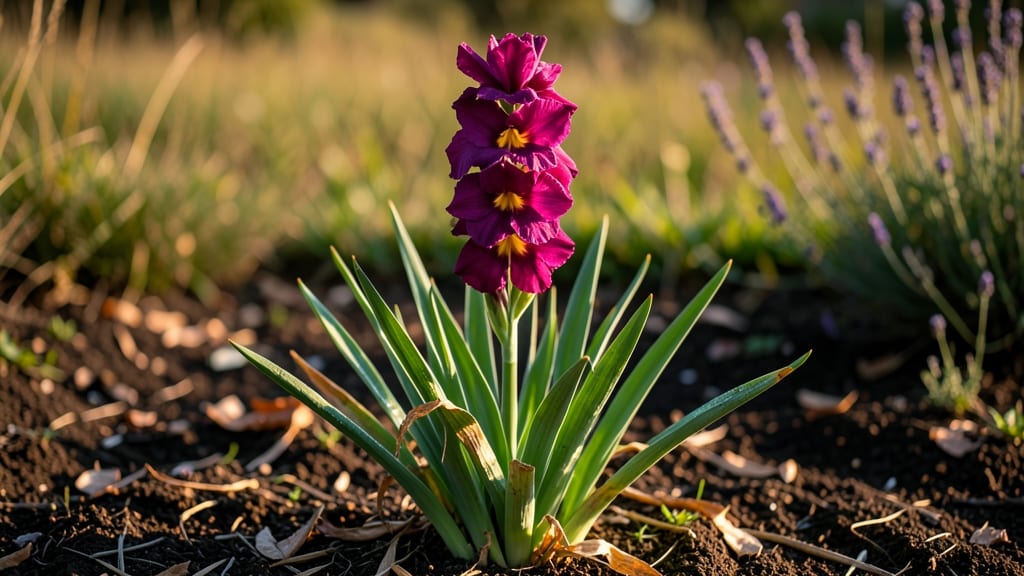
Gladiolus bloom time depends on when you plant those dramatic spikes, but with the right timing, you’ll get bold, towering blooms from midsummer through fall. 🌸 I’ve learned that cooler climates need an early start—plant corms in late spring (after frost) for blooms by July, while warmer zones can wait until early summer for flowers in August or September.
The key is matching your variety to your last frost date, because gladiolus are finicky about temperature shifts.
Sunlight is non-negotiable—these plants demand full sun (6+ hours daily) to produce their signature vertical drama. My first year, I planted mine in partial shade, and the stems stretched weak and leggy, with blooms so sparse they barely covered a dollar bill.
Rich, well-draining soil packed with compost makes all the difference too; gladiolus hate soggy roots but love deep, fertile ground where they can send those roots down 12-18 inches for stability.
With proper care, you’ll see those sword-like leaves emerge first, followed by buds that unfurl like fireworks over 2-3 weeks. The payoff? Stems that reach 3-5 feet tall, packed with blooms that last 7-10 days per stem when cut.
Pro tip: Stake them early—wind or rain can snap those heavy flower spikes before they even open.
Regional tweaks matter: Northern gardeners should plant 6-8 weeks before first frost for summer blooms, while Southern growers can extend the season by planting in early spring and again in fall.
And if your blooms flop or fade fast, check your watering—gladiolus need 1-2 inches weekly, but never let them sit in puddles. The result? A garden showstopper that keeps giving all season long.
📚 In This Guide
- What you need
- Instructions
- Tips and common mistakes
- Wrapping up and next steps
What you need
- ● Gladiolus corms: Choose healthy, firm corms (size 2–3 inches in diameter) from a reputable nursery. Aim for 5–10 corms per planting area, depending on desired density.
- ● Well-draining soil: Mix 1 part garden soil with 1 part compost or sand (for sandy soil) to improve drainage. Gladiolus hates soggy roots!
- ● Sunlight: A full-sun location (6+ hours of direct sunlight daily)—think south- or west-facing spots.
- ● Watering can or hose: With a gentle spray nozzle to avoid damaging corms.
- ● Fertilizer: Balanced fertilizer (10-10-10 or 20-20-20): Apply 1 tbsp per corm at planting.
- ● Low-nitrogen bloom booster (e.g., 5-10-10): Use every 4–6 weeks during the growing season.
- ● Mulch: 2–3 inches of organic mulch (straw, shredded leaves, or pine needles) to retain moisture and suppress weeds.
- ● Stakes or trellis: 6–12 inch stakes (or a small trellis) to support tall varieties (4–5 feet) and prevent flopping.
- ● Cactus/succulent soil mix: For extra-dry climates to prevent rot.
- ● Slow-release fertilizer spikes: Convenient for hands-off nutrient delivery.
- ● Plant labels: To track varieties (especially if testing multiple colors!).
- ● Glove: For easy handling of corms (they can be prickly!).
- ● Pruning shears: To deadhead spent blooms and encourage reblooming.
How to time gladiolus blooms for stunning season-long color
Gladiolus delivers jaw-dropping vertical impact—but timing is everything. Here's how I guarantee blooms from midsummer through fall.
🌱 Step 1: Select Corms Based on Your Target Bloom Window
Gladiolus corms bloom in sequence based on their color codes. For early summer blooms, choose corms labeled 1-3 (typically whites, pinks, and lavenders). These need planting 4-6 weeks before your last frost date—around early April in most climates. I mark my calendar because planting too early leads to premature sprouting in cold soil.
For mid-to-late summer color, select corms labeled 4-6 (reds, oranges, and deep purples). These go in the ground 2-3 weeks after your last frost, roughly mid-May. The key is matching corm numbers to your frost dates—check your local extension service if unsure. I've learned the hard way that rushing early-season corms leads to weak stems and floppy blooms.
☀️ Step 2: Plant in Full Sun with Well-Draining Soil
Gladiolus demands 6+ hours of direct sun daily—no exceptions. I plant mine in raised beds or mounded soil to ensure proper drainage, since soggy roots cause rot before blooms even appear. Work in 2 inches of compost mixed into the top 6 inches of soil to provide nutrients without compacting the root zone.
Plant corms 4-6 inches deep with the pointed end up—this is critical. I use a dibble or pencil to make holes, then place 2-3 corms per hole spaced 6 inches apart. The deeper planting prevents wind rock and keeps corms from drying out. Water immediately after planting to settle the soil around them.
💧 Step 3: Water Strategically During the Growth Phase
Once shoots reach 4-6 inches tall, begin watering 1 inch per week, increasing to 1.5 inches as flower spikes emerge. The secret is consistency—gladiolus hate moisture stress. I water deeply every other day during dry spells, focusing on the base of the plant rather than overhead spraying. Wet foliage invites fungal diseases like botrytis, which can ruin blooms before they open.
Stop watering entirely once the first flower bud opens—this forces the plant to focus energy on the existing bloom rather than producing more. I mark this moment with a small stake near each plant to avoid overwatering. Too much moisture at this stage causes buds to split open prematurely or develop poorly.
✂️ Step 4: Fertilize for Strong Stems and Bold Blooms
Apply a balanced 10-10-10 fertilizer at planting, then again when shoots reach 6 inches tall. I use a low-nitrogen formula to prevent excessive foliage at the expense of blooms. Side-dress with a low-phosphorus fertilizer (5-10-10) when flower spikes appear to encourage robust blooming. Never fertilize after the first bloom opens—this disrupts the plant's natural cycle.
Remove lower leaves as they yellow to redirect energy upward. I prune with clean shears, cutting just above the next healthy leaf node. This practice prevents disease entry points and improves air circulation. The result? Stems that stay upright under heavy bloom loads instead of flopping over.
⏰ Step 5: Extend the Bloom Season with Successive Plantings
For continuous color, stagger plantings every 2-3 weeks through early summer. Each new batch will bloom 6-8 weeks after planting, creating a cascading effect. I keep a planting schedule in my garden journal, noting which varieties perform best in my climate. Some gladiolus, like 'Green Star,' even rebloom if given proper care.
Deadhead spent blooms immediately to encourage more flowers on the same stem. I snip each faded spike back to the next healthy bud, which often produces 2-3 additional blooms. This simple practice extends each plant's display by 3-4 weeks. Plus, it prevents seed formation, which drains energy from future blooms.
Tips & tricks for perfect gladiolus bloom timing
Mastering the bloom sequence of these dramatic flowers takes a little strategy—but these pro insights will help you create a stunning vertical display that lasts all season.
Color Code Strategy: The numbered corms (1-6) are your secret weapon for staggered blooms. I always plant corms labeled 1-3 first, then follow with 4-6 two weeks later. This creates a natural progression from soft pastels to bold jewel tones as summer progresses. The key is tracking your frost dates—plant early corms 4-6 weeks before your last frost, and mid-season corms 2-3 weeks after. I use a garden journal to map out the timeline each year.
Soil Prep Secret: Gladiolus roots demand excellent drainage, so I never plant them in heavy clay soil. Instead, I create raised beds or mound regular garden soil with 2 inches of compost mixed into the top 6 inches. This prevents rot while providing the nutrients these hungry plants crave. For container growing, use a fast-draining mix with perlite or sand—standard potting soil will waterlog the corms and kill them before they bloom.
Watering Wisdom: The transition from 1 inch to 1.5 inches per week happens when you see flower spikes emerging—don't wait for buds to appear. I test soil moisture by sticking my finger 2 inches down; if it's dry, it's time to water. The critical moment comes when the first bud opens: that's when you stop watering entirely. Too much moisture at this stage causes buds to split open prematurely, ruining their dramatic impact.
Fertilizer Timing: That second application of 5-10-10 fertilizer when shoots reach 6 inches is non-negotiable. I've seen gladiolus with lush foliage but tiny blooms because gardeners skipped this step. The low-phosphorus formula directs energy to flower production rather than leaf growth. And remember—never fertilize after the first bloom opens. This disrupts the plant's natural cycle and can cause buds to develop poorly or not at all.
Pro Tips for Gladiolus Bloom Time
- Mastering the bloom sequence of these dramatic flowers takes a little strategy—but these pro insights will help you c...
- Color Code Strategy: The numbered corms (1-6) are your secret weapon for staggered blooms. I always plant corms label...
- Soil Prep Secret: Gladiolus roots demand excellent drainage, so I never plant them in heavy clay soil. Instead, I cre...
Frequently asked questions
Got questions about gladiolus bloom time?
You’re not alone! Whether you’re a first-time gardener or a seasoned pro, timing and care can feel tricky. Here are answers to the most common questions—so you can enjoy those stunning vertical blooms without the guesswork.
When is the best time to plant gladiolus for summer blooms?
For peak summer blooms, plant gladiolus corms in early spring (2–3 weeks after your last frost date) or late summer (6–8 weeks before your first frost). This gives roots time to establish before winter—so they burst into color the following season! Pro tip: Use a soil thermometer to aim for 60°F (15°C) ground temps.
How long does it take for gladiolus to bloom after planting?
From planting to bloom, gladiolus typically take 80–100 days, depending on variety and climate. Early-blooming types (like ‘Picasso’) may flower in 70 days, while late varieties (e.g., ‘Green Star’) can take 110+ days. Check your seed packet for days-to-maturity guidelines!
Why aren’t my gladiolus blooming—what am I doing wrong?
Missing blooms often stem from light, nutrients, or timing. Common culprits:
- Not enough sun: Gladiolus crave 6+ hours of direct sunlight daily.
- Overcrowding: Space corms 4–6 inches apart for airflow.
- Poor soil: Amend with compost and a balanced fertilizer (10-10-10) at planting.
- Late planting: Corms need 6–8 weeks of warm soil before blooming.
Fix it: Trim spent flower stalks (but leave foliage!) to redirect energy to next year’s blooms.
Can I extend the gladiolus bloom time in my garden?
Yes! To prolong blooms, try these tricks:
- Succession planting: Plant new corms every 2–3 weeks for staggered blooms.
- Deep watering: Keep soil consistently moist (but not soggy) to prevent bud drop.
- Reflective mulch: Use white gravel around plants to boost light exposure.
- Deadhead wisely: Remove faded blooms to encourage new flower spikes.
For container gardens, choose dwarf varieties (like ‘Attraction’) to maximize space and light.
Are there gladiolus varieties that bloom earlier or later than others?
Gladiolus varieties are grouped by bloom time to fit your season:
Bloom Time
Popular Varieties
Best For
Early Summer (June–July)
‘Picasso’, ‘Black Star’, ‘Green Star’
Spring planting; cooler climates
Mid-Summer (July–August)
‘Attraction’, ‘Swan Lake’, ‘Dalmatian’
Classic cut flowers; heat tolerance
Late Summer/Fall (August–September)
‘White Friendship’, ‘Pink Parfait’, ‘Telephone’
Fall weddings; extended season
Pro tip: Mix early and late varieties in the same bed for a non-stop color show!
Wrapping up and next steps
Timing your gladiolus blooms is all about patience, precision, and a little sunshine magic! 🌱 By choosing the right varieties, preparing the soil, and following seasonal planting cues, you’ll unlock those stunning vertical spikes—perfect for cutting gardens, borders, or bold summer displays.
Whether you’re a first-time gardener or a seasoned pro, the key is observation: watch your local frost dates, adjust planting windows, and don’t hesitate to experiment with succession planting for nonstop color.
Ready to transform your garden into a floral masterpiece? Grab your gloves, pick a few corms from your favorite nursery, and get planting! Start here for a step-by-step roadmap to gladiolus glory. Happy gardening! 🌸