
Blooming
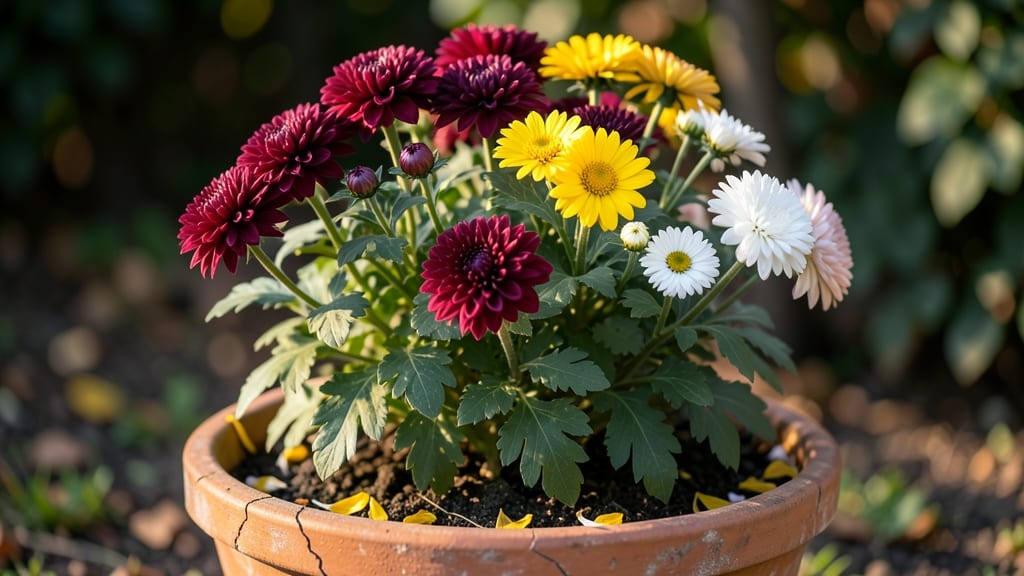
Flowers that bloom in autumn feature resilient varieties such as chrysanthemums (September–November), asters (August–October), and goldenrod (August–October), which thrive in cooler temperatures and bring bold colors to gardens as summer fades.
These late-season bloomers have evolved to capitalize on autumn's unique conditions, often responding to shorter daylight hours and crisp air. 🌼 Chrysanthemums, for instance, come in over 400 varieties and can even bloom into early winter with proper care, while asters provide a daisy-like charm that attracts pollinators.
The key to their success lies in their ability to store energy during summer heat, then burst into color when temperatures drop—making them perfect for extending your garden's season.
For gardeners in cooler climates, these flowers offer both beauty and practical benefits. Many autumn bloomers like sedum and Russian sage require minimal water once established, making them ideal for drought-prone areas.
The color palette shifts dramatically from summer's bright hues to deep purples, fiery oranges, and golden yellows that create stunning autumnal displays.
💡 In This Article
- Why Autumn Flowers Thrive in Cool Weather
- Best Autumn-Blooming Flowers by Month and Region
Why autumn flowers thrive in cool weather
Autumn-blooming flowers have evolved a clever survival strategy: they respond to shorter daylight hours and cooler temperatures through a process called photoperiodism.
Unlike spring/summer flowers that trigger blooming with longer daylight, these varieties detect the decreasing light duration of autumn (typically 12-14 hours of daylight) and shift into flower production mode. This adaptation allows them to capitalize on a season when many other plants have already slowed down or gone dormant.
The temperature drop also plays a crucial role. Many autumn flowers, like chrysanthemums, actually require cooler nights (50-60°F) to initiate blooming. Their roots store energy during summer heat, then convert that stored starch into flower buds when temperatures dip.
This energy reservoir explains why some varieties can bloom well into November or even December with proper care. 🌬️ The cooler air also reduces pest pressure, giving these flowers a natural advantage over summer bloomers that often battle aphids and spider mites.
Drought resistance is another key adaptation. Many autumn flowers develop deep root systems during summer heat, allowing them to access moisture from lower soil layers.
Species like sedum and Russian sage can survive with only 1 inch of water per month once established, making them perfect for autumn gardens where rainfall often decreases. Their waxy leaf coatings also help reduce water loss through evaporation, a trait that becomes increasingly valuable as autumn air becomes drier.
What makes these flowers particularly fascinating is their color chemistry. The deep purples and fiery reds of autumn blooms come from anthocyanin pigments that actually become more stable in cooler temperatures.
These pigments act like natural antifreeze, protecting flower tissues from autumn's temperature fluctuations while creating that iconic seasonal color palette. Compare this to summer flowers that rely on carotenoids (like yellows and oranges) which are more temperature-sensitive.
There's also a fascinating pollinator strategy at play. Autumn flowers often produce more nectar per bloom than their summer counterparts, compensating for the reduced number of active pollinators. Bees and butterflies that might have migrated or gone dormant are attracted by the concentrated nectar rewards, ensuring cross-pollination.
This is why you'll often see asters and goldenrod buzzing with activity even in October when many gardens seem quiet.
One particularly interesting adaptation is found in woolly thyme, which actually blooms better when exposed to light frosts. The flowers develop a protective woolly coating that insulates them from cold snaps, allowing them to continue blooming even when temperatures dip to 28°F.
This hardiness explains why woolly thyme often remains in bloom through November in many northern climates.
The contrast with spring/summer flowers couldn't be more striking. While spring bloomers like tulips rely on rapid growth during warm soil temperatures, and summer flowers like zinnias thrive on long daylight hours (14+ hours), autumn flowers have mastered the art of delayed gratification.
Their entire lifecycle is timed to take advantage of autumn's unique conditions, making them the unsung heroes of the garden's final act. 🌿