
Blooming
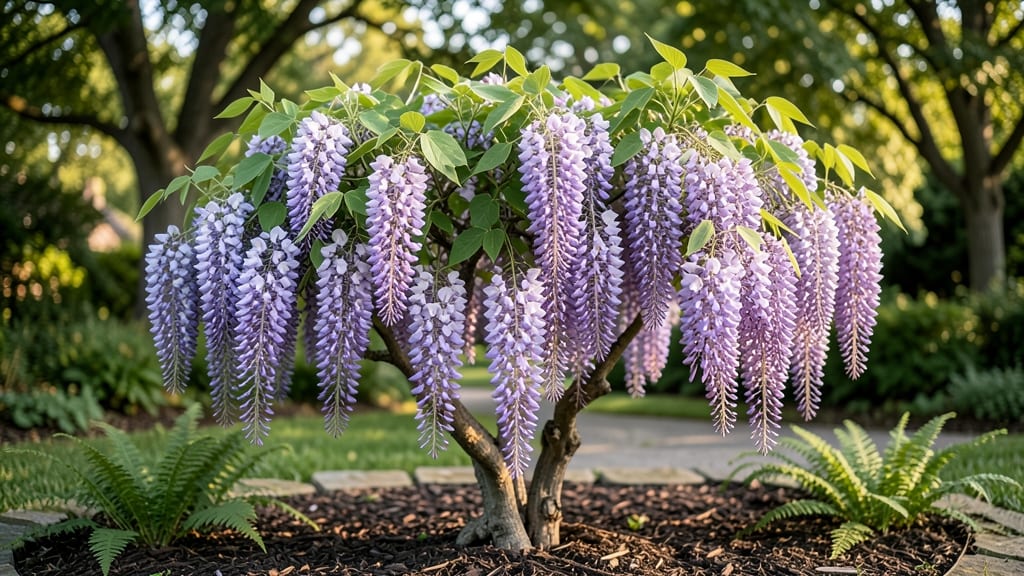
Wisteria blooms all summer only in reblooming varieties like Wisteria floribunda or Wisteria sinensis ‘Amethyst Falls,’ which require strategic pruning and care. Most wisteria varieties bloom once in spring, with flowers lasting 2-3 weeks unless trained to rebloom.
Most wisteria plants focus their energy on one spectacular spring bloom because they're prioritizing seed production—nature's way of ensuring the next generation. 🌸 The trade-off is that after those 2-3 weeks of vibrant flowers, the plant shifts resources to growing new wood and preparing for dormancy.
That's why you'll see many gardeners with wisteria that puts on a show in spring but then goes dormant for the rest of the year. The reblooming varieties I mentioned earlier break this cycle through careful cultivation, but even they need consistent care to maintain their extended flowering season.
What makes these summer-blooming varieties special is their ability to produce multiple flushes of flowers when given the right conditions. The key factors are pruning at the right time—typically right after the last spring bloom—and providing balanced fertilization to support continuous growth.
I've found that wisteria thrives when you mimic its natural growing patterns while giving it just enough encouragement to keep flowering. The result? Those cascading purple or white blooms that can last from late spring through summer.
💡 In This Article
- Why Most Wisteria Varieties Bloom Only Once
- How to Encourage Reblooming Wisteria for Summer Flowers
Why most wisteria varieties bloom only once
Wisteria's single-bloom cycle is a survival strategy rooted in its botanical priorities. After the 2-3 week spring flowering period, the plant shifts its energy from reproduction to growth and storage.
This is because wisteria flowers are followed by seed pods that require significant resources—up to 30% of the plant's energy reserves—to develop. The plant essentially trades short-term beauty for long-term survival, prioritizing seed production over extended blooming. 🌿
Climate plays a crucial role in this cycle. Wisteria is native to temperate regions where summer heat triggers dormancy. The plant's leaves begin to yellow and drop around late June to July, signaling the start of its growth pause.
This natural dormancy period helps wisteria conserve energy for winter survival. In warmer climates, some varieties may attempt a second bloom, but without proper care, these efforts often result in weak, sparse flowers rather than the lush displays seen in spring.
The trade-off becomes clear when comparing single-bloom wisteria to reblooming varieties. While standard types like Wisteria sinensis 'Blue Moon' put all their energy into one spectacular show, rebloomers like 'Amethyst Falls' distribute their resources more evenly.
This requires careful cultivation—think of it like training an athlete to maintain peak performance rather than burning out in one competition. The key difference is in how the plant's energy is allocated throughout the growing season. 🌸
What most gardeners don't realize is that even reblooming wisteria needs help overcoming this natural tendency. The plant's hormonal system is wired to produce flowers in response to specific environmental cues—primarily the transition from winter dormancy to spring growth.
For summer blooming to occur, you need to essentially "trick" the plant into thinking it's still spring by maintaining consistent growth conditions throughout the season. This involves precise pruning to remove old wood while encouraging new growth, and providing balanced nutrition to support continuous flowering.
The science behind this involves the plant's photoperiodism—the way it responds to daylight length. Wisteria flowers in response to increasing daylight in spring, then naturally enters a refractory period where it won't produce more flowers until the following year.
Reblooming varieties have been selectively bred to reduce this refractory period, allowing them to respond to secondary growth cues later in the season. However, this genetic modification only works when combined with proper cultural practices that support the plant's energy needs throughout the growing season.
Consider this comparison: A single-bloom wisteria is like a sprinter who gives everything in one burst, while a reblooming variety is more like a marathon runner who maintains steady performance. The difference isn't just in the plant's genetics but in how you manage its growth cycle.
Understanding this fundamental energy allocation helps explain why most wisteria in gardens bloom only once—it's not a failure of the plant, but rather its natural biological strategy at work. 🌱