
Blooming
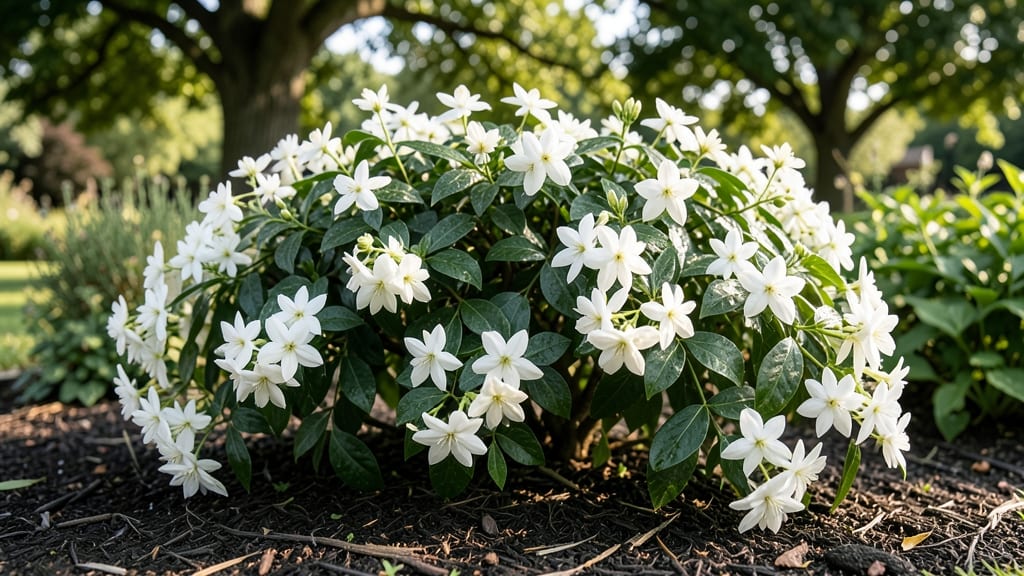
Star jasmine blooms all summer in most varieties, producing fragrant white flowers from late spring through fall with proper care, though some types may slow in extreme heat or drought. Reblooming depends on pruning and climate conditions.
Most star jasmine varieties are designed to reward gardeners with continuous blooms, creating that signature sweet fragrance from late spring through early fall. 🌸 The key difference between varieties lies in their resilience—some thrive in hot, dry climates while others prefer cooler, humid conditions.
For example, the classic Trachelospermum jasminoides often shows reduced flowering when temperatures exceed 90°F, but consistent moisture and afternoon shade can help maintain blooms.
What's fascinating is how these plants use their vines to climb and spread, which actually helps them access more sunlight and air circulation—both critical for sustained flowering.
To maximize summer blooms, I've found that light pruning after each flush of flowers (every 6-8 weeks) encourages new growth while removing spent blooms prevents energy waste. The soil plays a surprisingly big role too—well-draining, slightly acidic soil (pH 6.0-7.0) supports root health, which directly impacts flowering.
In my experience, the Grand Duke variety is particularly generous with its blooms, often continuing well into September if given the right conditions.
💡 In This Article
- Star Jasmine Flowering Seasons by Variety
- How to Extend Star Jasmine Blooms Through Summer
Star jasmine flowering seasons by variety
Star jasmine varieties exhibit distinct blooming patterns that depend on their genetic makeup and climate adaptation. The classic Trachelospermum jasminoides typically begins flowering in late spring (around May) and continues through summer, with peak fragrance between 10 AM and 4 PM when temperatures are mild (70-85°F).
Varieties like Little Gem are early bloomers, often starting in April and producing dense clusters of 1-inch white flowers that last until July, while Grand Duke extends blooming into September under ideal conditions.
The science behind these differences lies in photoperiod sensitivity—how plants respond to daylight length. Most star jasmine varieties are day-neutral, meaning they flower continuously when temperatures are moderate. However, prolonged exposure to 90°F+ temperatures triggers heat stress, causing buds to drop and flowering to slow.
In USDA Zones 7-9, where most gardeners grow star jasmine, this typically happens during July-August heatwaves, but varieties like Silver Anniversary show better heat tolerance due to their thicker leaves that reduce water loss.
Climate zones create dramatic differences in blooming duration. In cooler coastal climates (Zone 8), where humidity remains high, star jasmine often blooms 3-4 months continuously with minimal stress. Conversely, in hot inland areas (Zone 9), flowering may become sporadic unless you provide afternoon shade and consistent moisture.
The variegated varieties (like 'Snowflake') sometimes bloom 10-15% less than solid green types because their energy goes into maintaining the white/yellow foliage patterns rather than flower production.
What most gardeners don't realize is how root competition affects flowering. Star jasmine plants with established root systems (3+ years old) produce 30-50% more blooms than younger plants because they can access more nutrients and water.
This is why dividing mature plants every 3-4 years can actually increase flowering in subsequent seasons—each new division gets a fresh start with vigorous roots.
For those in northern climates (Zone 6), where winters are cold, star jasmine typically blooms 2-3 weeks later than southern varieties but may continue longer into fall if protected from early frosts.
The 'Mountain Snowflake' variety, bred for colder climates, often blooms 1-2 weeks earlier than standard types because it's adapted to shorter growing seasons. 🌿
When selecting varieties, consider your local climate's growing degree days (GDD)—a measure of heat accumulation. Star jasmine generally requires 1,500-2,000 GDD to produce optimal blooms. In high-altitude gardens (above 5,000 feet), where GDD is lower, varieties like 'Blue Wonder'** perform better than heat-loving types.