
Blooming
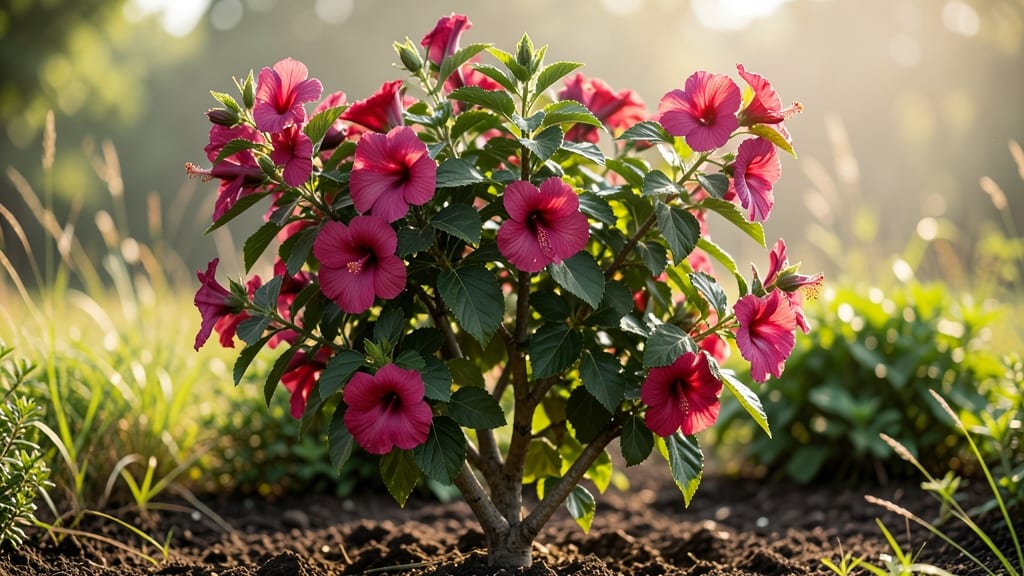
Rose of Sharon blooms all summer only in certain varieties like 'Uselful' or 'North Star,' which produce continuous flowers if deadheaded regularly and grown in full sun with consistent moisture. Other types may bloom seasonally or just once per year.
Not all Rose of Sharon bushes thrive as summer-long bloomers—it depends on their genetic makeup and care routine. 🌸 The continuous-flowering varieties ('Uselful,' 'North Star') have been bred to ignore seasonal cues, while others follow nature's rhythm, producing one big show in spring or fall.
I've seen 'Summer Wine' keep blooming from June through September with proper deadheading, but even then, heatwaves can cause temporary dormancy. The key difference lies in their response to daylight length and temperature shifts, which we'll explore in the botanical breakdown.
For those wanting nonstop color, pruning strategy becomes critical. These shrubs bloom on new wood, so regular trimming encourages fresh growth. I recommend cutting back by one-third after each flush of flowers to maintain that lush, flowering form. 💫 The trade-off?
Some varieties sacrifice their first spring bloom to focus on summer reblooming—so timing matters if you want early color too.
💡 In This Article
- How Rose of Sharon Flowering Cycles Work
- Best Rose of Sharon Varieties for Year-Long Color
How Rose of Sharon flowering cycles work
The continuous blooming in varieties like 'Uselful' or 'North Star' comes from their genetic resistance to photoperiodism—the natural response to daylight length that triggers dormancy in many plants.
Most Rose of Sharon shrubs (Hibiscus syriacus) follow seasonal cues, producing one major bloom cycle in spring or fall when days are shorter. 🌿 However, reblooming cultivars have been bred to minimize this sensitivity, allowing them to produce flowers throughout the growing season.
This happens because their growth hormones remain active longer, even as daylight hours change.
Temperature plays a critical role too. These shrubs typically need daytime temperatures above 70°F to initiate flowering, while nights below 60°F can trigger dormancy. In hot climates like the southern U.S., continuous bloomers may struggle during summer heatwaves, sometimes pausing until temperatures moderate.
The key is maintaining consistent moisture—drought stress can cause buds to drop, while overwatering may lead to root rot, both of which disrupt flowering cycles.
Pruning technique directly impacts reblooming potential. Since these shrubs flower on new wood, aggressive pruning in late winter or early spring stimulates fresh growth that will produce flowers later.
I've found that cutting back by one-third after each bloom cycle keeps the plant compact and encourages continuous flowering. 💫 The trade-off is that heavy spring pruning may delay the first flush of flowers, but it ensures stronger summer reblooming.
Varieties like 'Summer Wine' demonstrate this perfectly—they may bloom less in spring but compensate with vibrant summer color.
Another factor is the plant's energy allocation. Continuous bloomers divert more resources to flower production rather than seed development, which is why deadheading spent blooms is crucial. Removing faded flowers prevents the plant from wasting energy on seed formation, redirecting it instead to new buds.
Without this practice, even reblooming varieties may produce fewer flowers over time.
Regional growing conditions also matter. In cooler climates (USDA zones 5-7), continuous bloomers perform best with afternoon shade during peak summer heat. In warmer zones (8-9), they may need more frequent watering to maintain consistent moisture levels.
The right balance of sun exposure—typically 6-8 hours daily—helps prevent stress that could halt flowering.
What most gardeners don't realize is that even continuous bloomers have limits. After 3-4 years of heavy flowering, the plant may need rejuvenation pruning to remove older wood and stimulate new growth.
This is particularly important for varieties like 'Alba' that can become woody over time if not properly maintained. 🌟 The secret to summer-long blooms lies in understanding these botanical triggers and adapting care practices accordingly.