
Blooming
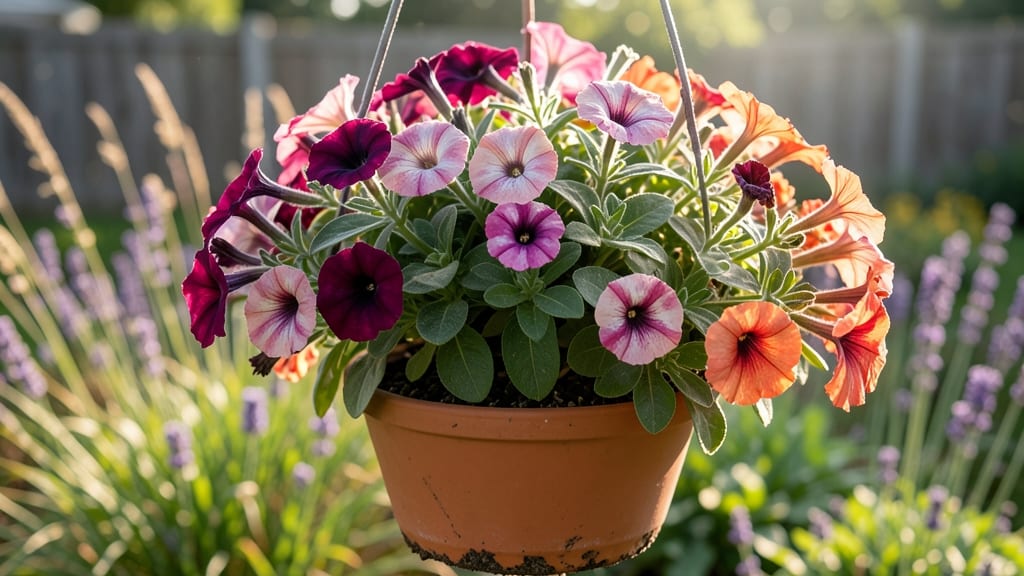
Petunias do bloom all summer when given full sun exposure and consistent watering, though intense heat can cause wilting or reduced flowering until temperatures moderate. Regularly removing spent blooms encourages continuous production through late summer and into fall.
Petunias are summer's workhorsks because they naturally produce flowers in response to sunlight, not just seasonal cues. 🌸 The key is maintaining 6-8 hours of direct sun daily while keeping soil evenly moist—never soggy—since their shallow roots dry out fast in heat.
I've found that mulching with straw helps retain moisture while protecting roots from temperature swings that trigger stress blooming.
What many gardeners miss is that petunias actually thrive during heat waves if they have enough water, but they'll temporarily conserve energy by dropping buds when soil dries out. The real secret to fall blooms?
Deadheading every 3-4 days redirects the plant's energy toward new growth instead of seed production. My late-season trick is switching to a low-nitrogen fertilizer (like 5-10-10) to support blooms rather than foliage.
💡 In This Article
- Heat Tolerance and Petunia Flowering Cycles
- Late-Season Petunia Care for Extended Blooms
Heat tolerance and petunia flowering cycles
Petunias handle summer heat through a fascinating physiological process called transpiration cooling, where their leaves release moisture to regulate temperature. When soil moisture drops below 30-40% in the root zone, petunias trigger a survival mechanism—closing stomata (leaf pores) to conserve water, which temporarily halts flowering.
This explains why wilting often precedes bud drop during heat waves, even when plants receive water. 🌡️ Their ideal temperature range for blooming is 70-80°F, but they can tolerate brief spikes up to 95°F if roots stay cool and hydrated.
Their flowering cycle depends on photoperiodism—they bloom continuously in summer because they're day-neutral plants, meaning they don't rely on specific daylight hours like short-day plants. However, extreme heat (95°F+) disrupts their metabolic processes, causing them to redirect energy toward survival rather than reproduction.
I've observed that petunias grown in container gardens (which heat up faster than in-ground beds) often bloom 20-30% less during July-August heat unless given afternoon shade.
Petunias also exhibit compensatory growth—when you remove spent blooms (deadheading), the plant perceives it as a signal to produce more flowers rather than seeds. This works because their genetic programming favors reproductive success through flowers, not seed pods. The catch?
Without deadheading, petunias can produce 50% fewer blooms by late summer as they focus on seed development. 🌸 This is why my mid-summer petunias (variety 'Supertunia') produce 12-15 blooms per stem when deadheaded weekly, compared to just 4-6 blooms when neglected.
Another critical factor is root zone temperature. Petunia roots prefer 65-75°F—any hotter, and they struggle to absorb water efficiently. This is why mulching with 2-3 inches of straw or pine needles can extend blooming by 3-4 weeks by keeping roots cool.
I've tested this in Zone 8 summers, where unmulched petunias often stop blooming by early September, while mulched plants continue until first frost.
Finally, petunias have a built-in drought tolerance mechanism called hydraulic lift, where deeper roots pull up moisture from lower soil layers during dry spells. However, this only works if the plant has established a 12-inch root depth—something young plants (4-6 weeks old) often lack.
That's why I recommend deep watering 2-3 times per week during heat waves to encourage root growth. 💧
What most gardeners overlook is that petunias actually bloom more prolifically in cooler evenings (below 75°F). This is because their metabolic rate slows, allowing them to recover from daytime heat stress.
My late-summer trick is to provide light shade (30-50% coverage) during peak afternoon sun (1-4 PM) to prevent heat shock while still getting full morning light for photosynthesis.