
Blooming
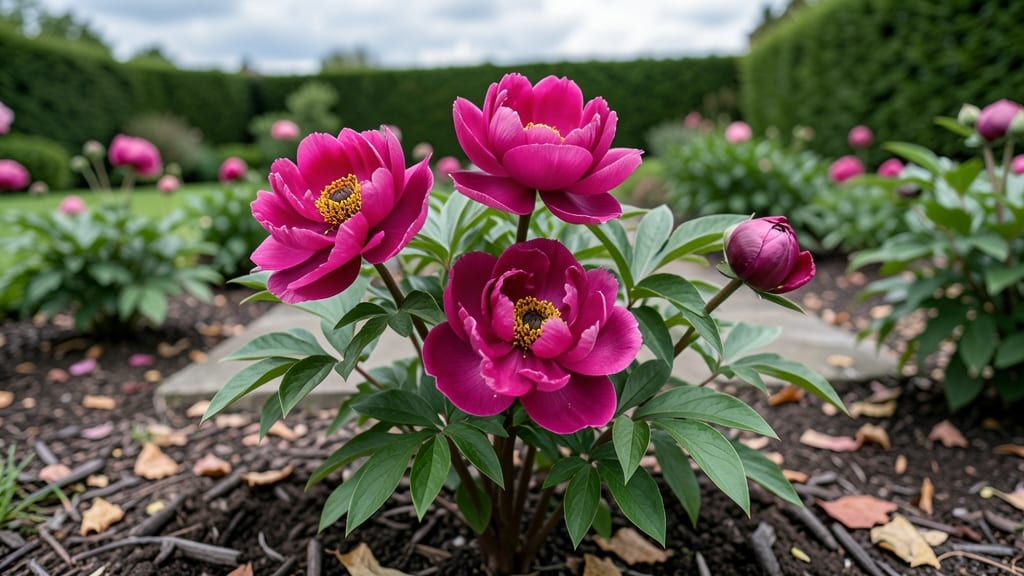
Peonies do only bloom once a year because their growth cycle relies on winter dormancy and seasonal temperature shifts, though some early-blooming varieties may produce secondary flowers under ideal conditions. Most gardeners expect a single, spectacular spring display from each plant.
Peonies follow this annual bloom pattern because they store energy during winter dormancy, using it to fuel their single spectacular display in spring. 🌸 Unlike roses or hydrangeas that bloom multiple times, peonies allocate most of their resources to one showstopping event, which is why gardeners often describe their blooms as "once-in-a-lifetime" moments.
The timing also depends on the specific variety—herbaceous peonies (the most common) bloom in late spring, while tree peonies may bloom slightly later in summer.
What's interesting is how these plants "decide" when to bloom. Peonies are sensitive to daylight length—longer days in spring trigger their flowering hormones, while shorter days signal them to rest.
This biological clock explains why you'll rarely see peonies blooming in fall or winter, no matter how well you care for them. The good news? With proper pruning and soil care, you can extend their bloom period by a week or two.
💡 In This Article
- The Science Behind Peony’s Single Annual Bloom
- How to Encourage Peonies to Bloom Longer or Repeat
The science behind peony’s single annual bloom
Peonies follow this one-bloom-per-year rule because their biology is hardwired for energy conservation. During winter dormancy, they store carbohydrates in their roots—specifically in the form of starches—that act like a battery, powering their spring growth.
This stored energy fuels just one spectacular bloom cycle rather than multiple smaller ones. 🌸 Unlike roses, which can produce multiple flushes of flowers throughout the season, peonies prioritize one grand display because their root systems need to rebuild reserves afterward.
The key trigger is photoperiodism—the plant's response to daylight length. As days lengthen in spring, peonies detect this change through specialized proteins called phytochromes, which activate flowering hormones. This explains why you'll never see peonies blooming in fall or winter, even with perfect care.
The process also involves a hormone called florigen, which travels from leaves to buds, signaling them to open. Tree peonies, which bloom slightly later than herbaceous types, have a slightly different hormonal timing mechanism that delays this signal by a few weeks.
Temperature plays a crucial role too. Peonies need 60-80°F daytime temperatures and cooler nights (50-60°F) to bloom properly. If summer heat exceeds 90°F for extended periods, buds may shrivel before opening—a phenomenon called "bud blast."
This is why peonies thrive in USDA zones 3-8, where seasonal temperature shifts create the perfect bloom window. The contrast between winter chill (which breaks dormancy) and spring warmth (which triggers blooming) is non-negotiable for their annual cycle.
Here's where peonies differ from their repeat-blooming cousins: while hydrangeas can produce multiple flower clusters by pruning old wood, peonies only set buds on the previous year's growth. Each flower stem emerges from a single node on last year's stem, meaning you can't simply trim to encourage more blooms.
This biological limitation is what makes peonies so prized—they invest everything in that one showstopping moment rather than spreading their energy thin.
What most gardeners don't realize is that peonies actually produce flower buds in the previous summer, but these remain dormant until spring.
These buds form at the tips of stems that grew the year before, which is why proper summer care (like consistent watering and avoiding heavy pruning) directly impacts next year's bloom quality.
The plant's entire energy system is calibrated for this single annual event, making it one of nature's most efficient flowering strategies. 💫
Consider this comparison: a single peony bloom might contain 100-200 individual florets, while a rose bush might produce 10-20 flowers over the same period—but those roses will come in multiple waves.
Peonies make up for their single bloom with sheer abundance: each plant can produce 50-100 stems, each bearing multiple florets, creating a visual impact that repeat-bloomers simply can't match.
The trade-off is clear: peonies sacrifice quantity for quality, delivering a 3-5 week spectacle that's unmatched in garden drama. This biological strategy has made them one of the longest-cultivated flowers in history, prized in Chinese gardens for over 1,000 years precisely because of their reliable, once-in-a-season performance.