
Blooming
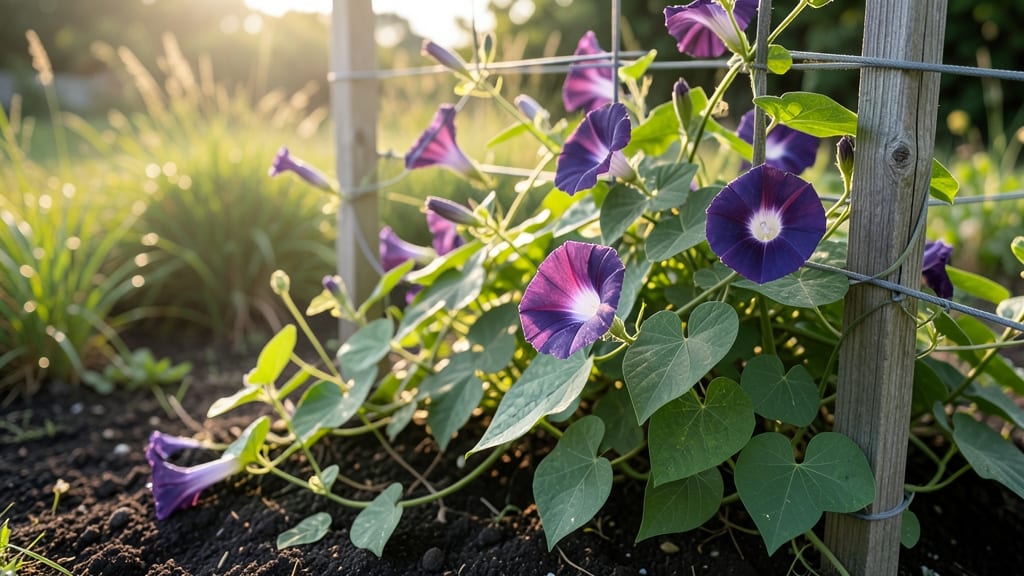
Morning glories don’t only bloom in the morning—most varieties open during daylight hours and close by evening, but tropical species like Ipomoea alba can stay open well into the night or even bloom after dark. Their blooming patterns are controlled by light sensitivity and genetic traits.
This daily rhythm is actually tied to a plant mechanism called photoperiodism, where blue light receptors called cryptochromes detect sunlight and trigger the opening and closing process. 🌿 Most morning glories follow a strict 24-hour cycle, but warmer climates and specific varieties can disrupt this pattern.
For example, tropical types often bloom later in the day or even at night, especially in humid conditions.
What’s fascinating is how temperature plays a role—cooler nights can cause flowers to close earlier, while consistent warmth may keep them open longer. If you’re growing morning glories in a region with mild winters, you might notice some varieties defying the "morning-only" rule entirely.
💡 In This Article
- Light Sensitivity and Circadian Rhythms in Morning Glory Flowers
- Morning Glory Varieties That Defy the ‘Morning-Only’ Rule
Light sensitivity and circadian rhythms in morning glory flowers
Morning glories rely on a biological clock called photoperiodism, where specialized proteins called cryptochromes act as blue light receptors. When sunlight hits these receptors, they trigger a cascade of chemical signals that cause the flower buds to open within 1-3 hours of dawn.
This process is tightly linked to the plant's circadian rhythm, a 24-hour internal clock that synchronizes with environmental light cycles. 🌅 The opening mechanism involves rapid water uptake in petal cells, causing them to expand and unfurl—similar to how a blooming tulip responds to sunlight.
The closing cycle begins when light intensity drops in the late afternoon, typically around 4:00-6:00 PM depending on the variety. This closure is triggered by the reduction in blue light, which stops the cryptochrome activation.
Most common morning glories, like the Ipomoea purpurea variety, follow this strict pattern because their genetics are optimized for temperate climates where daylight hours are more predictable. However, the timing can vary by ±1 hour based on factors like cloud cover or seasonal light changes.
Temperature acts as a secondary regulator—cooler nights (55°F or below) accelerate the closing process by slowing metabolic activity, while warmer conditions (> 70°F) may delay closure.
This is why tropical varieties often bloom later or stay open longer: their genetic adaptations allow them to thrive in environments where temperature fluctuations are minimal. For example, the moonflower (Ipomoea alba) can remain open for 12-24 hours in humid, tropical climates, defying the traditional morning-only pattern.
Here's what's actually happening at the cellular level: The petals contain specialized cells called motor cells that regulate turgor pressure (water content). When cryptochromes detect blue light, potassium ions flood these cells, increasing water uptake and causing the petals to expand.
At dusk, the opposite occurs—ions are pumped out, reducing turgor and causing the petals to wilt and close. This process is so precise that some varieties can reset their blooming cycle even if exposed to artificial light at night.
What most gardeners don't realize is that artificial lighting can disrupt this natural rhythm. Grow lights or street lamps emitting blue wavelengths can trick morning glories into opening prematurely or staying open longer than their natural cycle.
This is particularly noticeable in urban gardens where light pollution extends the effective "daylight" hours. For best results, avoid placing morning glories near lights that stay on after sunset, as this can cause stress and reduce bloom quality.
Consider these key factors when growing morning glories:
- Light exposure: Provide 6-8 hours of direct sunlight for optimal blooming, but avoid prolonged evening light exposure
- Temperature range: Ideal daytime temps are 65-85°F, with cooler nights (60-65°F) promoting natural closing cycles
- Humidity levels: Higher humidity (60-70%) can extend bloom duration in tropical varieties
- Soil moisture: Consistent moisture helps maintain cellular turgor pressure for vibrant blooms
The science behind morning glories' blooming patterns reveals why they're such fascinating plants—they're essentially living clocks, perfectly attuned to their environment. Understanding these mechanisms helps gardeners create ideal conditions for longer blooming periods, especially when working with varieties that defy the traditional morning-only rule. 🌟