
Blooming
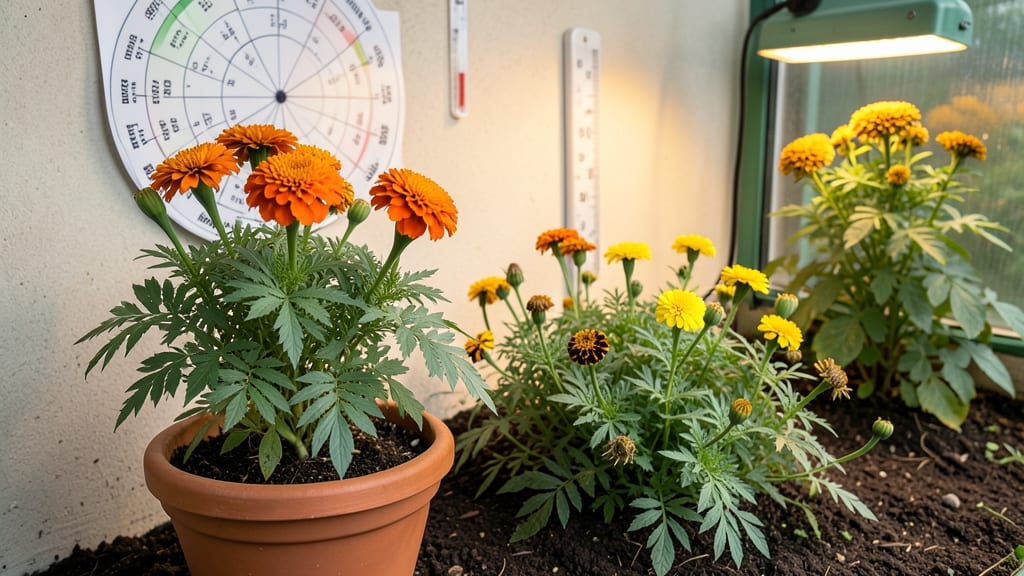
Marigolds don't bloom all year naturally, since most varieties follow seasonal cycles—typically spring through fall—though warmer climates or controlled environments like greenhouses can stretch their flowering periods. Selecting heat-tolerant or perennial types helps maintain blooms longer.
Marigolds are sensitive to temperature shifts and daylight changes, which trigger their natural dormancy in cooler months. 🌸 In regions with mild winters, like USDA zones 9-11, you might see sporadic blooms year-round, but true continuous flowering requires either tropical varieties or greenhouse conditions.
I've found that French marigolds, for example, handle cooler temperatures better than African types, which prefer consistent warmth.
For gardeners in colder climates, the key is choosing the right variety. Perennial marigolds like 'Bonanza' or 'Tangerine' can rebloom if deadheaded regularly, while annuals like 'Crackerjack' produce nonstop flowers until frost.
Pruning spent blooms encourages new growth, but timing matters—cutting too late in the season can stunt next year's performance.
💡 In This Article
- Climate Zones That Influence Marigold Blooming Seasons
- Best Marigold Varieties for Extended Flowering
Climate zones that influence marigold blooming seasons
Marigolds rely on temperature and daylight cues to regulate their blooming cycles. Most varieties enter dormancy when nighttime temperatures drop below 50°F (10°C), as cold triggers physiological changes that halt flower production.
In temperate climates (USDA zones 3-8), this typically means blooms stop by late fall and resume in spring when days lengthen and soil warms to 60°F (15°C). The transition between seasons is critical—marigolds need 12-14 hours of daylight to stimulate flowering, which explains why summer blooms are most abundant.
Tropical varieties, like African marigolds (Tagetes erecta), are particularly sensitive to frost and will bolt (produce flowers prematurely) if exposed to temperatures below 45°F (7°C).
French marigolds (Tagetes patula), however, are more cold-tolerant and can survive light frosts (28°F/-2°C), though they'll stop blooming until warmer weather returns.
The key difference lies in their genetic adaptation: tropical types prioritize heat tolerance, while French marigolds optimize for cooler climates by focusing energy on root survival rather than continuous flowering.
Daylight hours create another critical threshold. Marigolds are short-day plants, meaning they flower in response to decreasing daylight—not increasing. This is why blooms peak in late summer when days begin shortening.
In regions with long summer daylight (like the Pacific Northwest), marigolds may produce fewer blooms unless you supplement with artificial light or choose varieties bred for neutral-day conditions. 🌿 For example, 'Jumbo' African marigolds thrive in 10+ hours of sunlight daily but may require shade cloth in 90°F+ (32°C+) heat to prevent stress-induced dormancy.
Greenhouse cultivation can extend blooming by maintaining 70-80°F (21-27°C) temperatures year-round and providing 14-16 hours of artificial light during winter. Without these controls, marigolds in colder zones will naturally enter a resting phase, where energy shifts from flowering to root and stem development.
Even in mild climates, sudden cold snaps can trigger this response—like the 2018 European cold wave that caused mass dormancy in marigold crops despite typically warm Mediterranean conditions.
Regional variations also play a role. In Florida's USDA zone 10, marigolds may bloom sporadically year-round, while in California's zone 9, they'll pause only during rare winter chills. The difference? Florida's humidity and consistent warmth create a more stable microclimate.
For gardeners in transitional zones (like zone 8), mulching with 3-4 inches of straw can insulate roots and delay dormancy by 2-4 weeks, giving you extra blooms before frost.
Understanding these climate interactions helps explain why some marigolds in your garden might bloom year-round while others don't. The secret often lies in microclimates—like a south-facing wall that traps heat—or the specific variety's tolerance thresholds.
For instance, 'Tangerine Gem' French marigolds can handle 32°F (0°C) frosts but will still pause flowering until soil temperatures rise above 55°F (13°C) in spring.