
Blooming
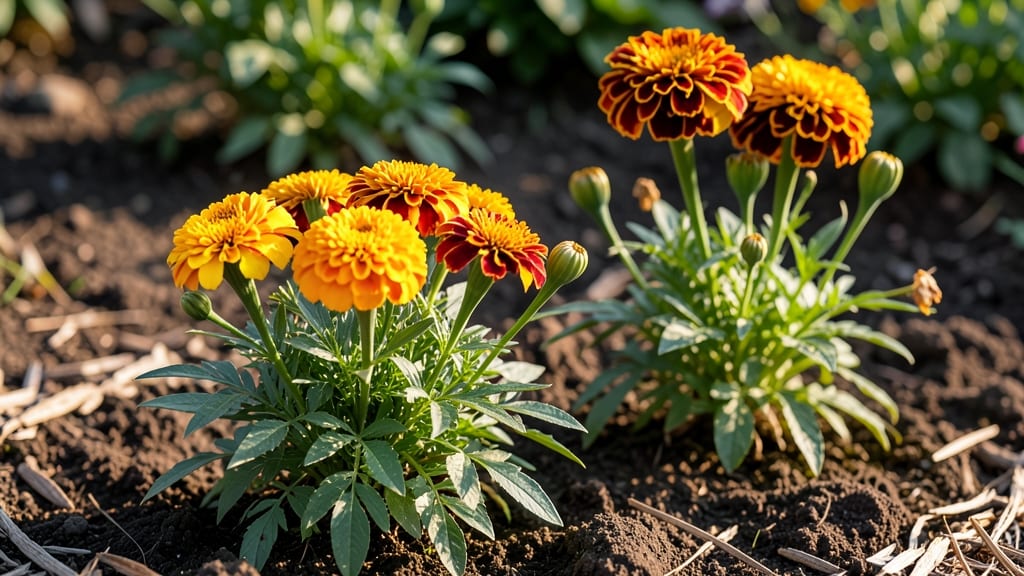
Marigolds bloom all summer long when you deadhead spent blooms consistently and provide ideal growing conditions, though French marigolds typically offer continuous flowering while African varieties may produce blooms in bursts. Planting early and ensuring full sun exposure helps sustain their vibrant displays.
Marigolds are summer garden workhorses, but their blooming habits depend heavily on variety and care. 🌼 French marigolds (Tagetes patula) are the superstars of continuous blooming, producing fresh flowers from early summer until frost if you keep removing faded blooms.
Meanwhile, African marigolds (Tagetes erecta) tend to bloom in cycles, with bursts of flowers followed by brief rests. The key to extending their season lies in proper deadheading—removing spent blooms redirects the plant's energy to new growth, while consistent watering and balanced fertilizer (especially phosphorus) keeps them thriving.
For maximum performance, plant marigolds in well-draining soil with at least 6-8 hours of direct sunlight daily. Many gardeners swear by a mid-season pruning to encourage bushier growth, which in turn produces more blooms.
The secret to year-round color isn't just about the flowers themselves—it's about creating the right conditions for the plant to keep producing them consistently.
💡 In This Article
- Why Marigold Blooming Patterns Vary by Type
- Year-Round Marigold Care for Nonstop Flowers
Why marigold blooming patterns vary by type
Marigolds exhibit distinct flowering patterns due to their genetic makeup and growth habits. French marigolds (Tagetes patula) are bred for compact growth and continuous blooming, producing flowers from the base upward in a staggered fashion.
This variety typically blooms from early summer until frost if deadheaded consistently, with each flower lasting about 7-10 days before wilting. 🌼 Their smaller stature (12-18 inches tall) allows them to produce flowers densely along their stems, creating a nonstop display when properly maintained.
African marigolds (Tagetes erecta), on the other hand, grow taller (2-4 feet) and bloom in cycles. These varieties produce large, showy flowers that appear in clusters at the stem tips.
The key difference lies in their growth pattern: African marigolds allocate energy to vertical growth first, then produce flowers in bursts followed by brief rest periods.
Mexican marigolds (Tagetes erecta 'Mexican' types) fall somewhere in between, with moderate height (2-3 feet) and a tendency to bloom continuously but with slightly larger flowers than French types.
The science behind these patterns involves photoperiodism—the plant's response to daylight length. French marigolds have been selectively bred to ignore seasonal cues, continuing to flower as long as conditions remain favorable.
African varieties, however, may respond to temperature shifts or daylight changes, triggering their intermittent blooming cycles. 🌞 In cooler climates, African marigolds might produce fewer blooms in late summer when nights grow longer, while French varieties remain more consistent.
Light exposure plays a crucial role in these differences. French marigolds thrive with 6-8 hours of direct sunlight and can tolerate partial shade better than their taller counterparts.
African marigolds demand full sun (8+ hours daily) to maintain their robust flowering cycles, as their larger blooms require more energy to produce. The intensity of sunlight affects chlorophyll production, which in turn influences how efficiently the plant converts energy into flower production.
Temperature also factors into blooming patterns. French marigolds generally tolerate cooler nights better (down to 50°F), while African varieties may struggle below 60°F, which can trigger their rest periods.
This temperature sensitivity explains why African marigolds often produce their most abundant blooms during the hottest summer months when daylight is longest. The interplay between these factors creates the distinct blooming behaviors we observe across marigold varieties.
What most gardeners don't realize is that these patterns aren't fixed—they can be influenced by cultural practices. For example, providing African marigolds with consistent moisture and balanced fertilizer (high in phosphorus) can help maintain more continuous blooming.
The key is understanding each variety's natural tendencies and working with them rather than against them. 🌿 This knowledge allows you to choose the right marigold for your specific climate and gardening goals, whether you want nonstop summer color or dramatic seasonal displays.