
Blooming
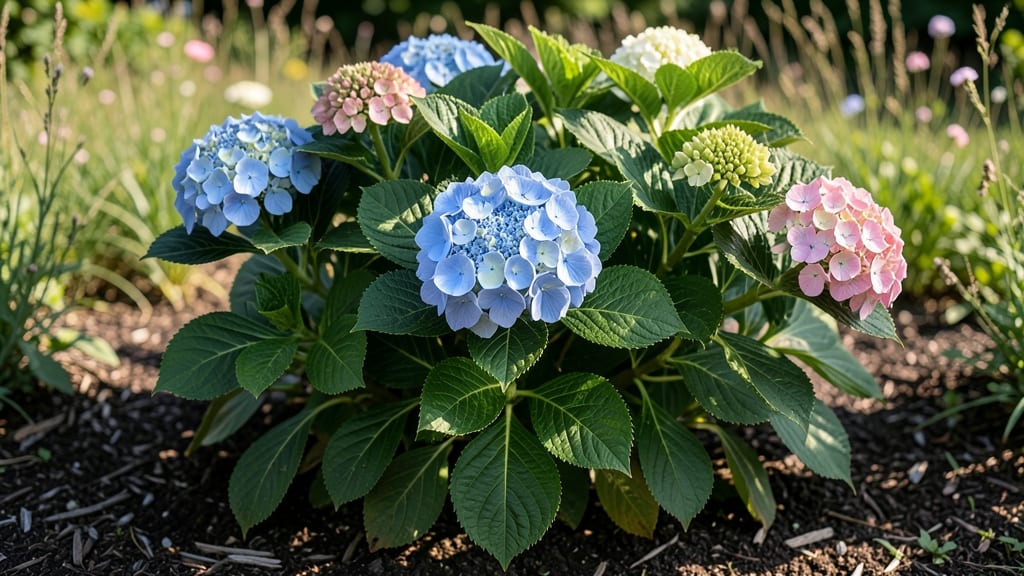
Hydrangeas don't bloom all summer unless you're growing the right varieties and pruning them correctly. 🌸 I've learned that mophead hydrangeas typically produce one big flush of blooms in early summer, while panicle types like 'Limelight' can stretch their show into fall—but only with the right care.
The secret lies in understanding your hydrangeas' blooming habits and pruning at the right time. For mopheads, prune right after they finish blooming to encourage next year's flowers. Panicle types, however, bloom on new growth, so you can prune them in late winter without missing a beat.
With proper deadheading and occasional feeding, you can extend those vibrant blooms for weeks longer than you'd expect. My 'Endless Summer' hydrangeas now put on a show from June through September—something I never thought possible when I first planted them.
Climate plays a role too: cooler northern regions get longer bloom times than hot southern areas. But with the right variety and care, you can enjoy hydrangeas in full color for most of the growing season—no matter where you live.
What Triggers Hydrangeas Short Blooms
Hydrangeas are famous for their lush, long-lasting blooms—but why do some varieties fade before summer’s end? The answer lies in a mix of biological timing, environmental stress, and human habits. Let’s break down the science behind why your hydrangeas might not stay in bloom all season.
Hydrangeas produce flowers in two distinct ways, and this affects their bloom duration:
- Old Wood vs. New Wood Bloomers - Old wood bloomers (like Hydrangea macrophylla) set buds on last year’s growth in late summer/fall. If pruned too late or in winter, you risk cutting off next year’s flowers before they form.
These types often bloom in one flush (spring/early summer) and may not rebloom unless given the right care. - New wood bloomers (like Hydrangea paniculata) produce flowers on current season’s growth.
They can rebloom if pruned correctly in late winter/early spring, but heat or drought can still cut their season short.
- Dormancy & Bud Formation Hydrangeas need cool temperatures (below 60°F/15°C) for 4–6 weeks to trigger bud formation. If winters are too mild (like in Zone 8+), buds may not develop properly, leading to sparse or early blooms.
Similarly, sudden heat waves in spring can shock buds into opening too soon, exhausting the plant before summer’s end.
Hydrangeas are sensitive to their surroundings, and extreme conditions can halt blooming:
- Heat & Drought
- High temperatures (above 90°F/32°C) cause flowers to wilt or drop prematurely. Hydrangeas need consistent moisture—drought stress forces them to conserve energy, prioritizing leaf growth over blooms.
- Solution: Mulch heavily (3–4 inches) and water deeply 2–3 times per week during heatwaves.
- Sunlight Imbalance
- Too much direct sun (especially in hot climates) can scorch blooms and reduce flowering. Conversely, too little light weakens the plant, limiting energy for flowers.
- Ideal light: Morning sun + afternoon shade (or dappled shade in hot zones).
- Poor Soil & Nutrition - Low phosphorus (the "P" in NPK) is critical for blooming. If your soil lacks it, hydrangeas will produce fewer, smaller flowers. - pH matters too! Macrophylla hydrangeas need acidic soil (pH 5.2–6.0) for vibrant blooms.
If pH is off, flowers may be pale, sparse, or short-lived. - Solution: Test soil and amend with bone meal (for phosphorus) or sulfur (to lower pH).
Pruning is make-or-break for hydrangea blooms. Common errors include:
- Pruning at the Wrong Time
- Old wood bloomers: Prune right after blooming (late summer) to avoid cutting off next year’s buds.
- New wood bloomers: Prune in late winter/early spring to encourage new growth.
- Mistake: Pruning in fall or winter can remove potential blooms before they form.
- Over-Pruning or Under-Pruning
- Too aggressive? You may remove all flower buds.
- Too little? Crowded stems compete for nutrients, leading to smaller, shorter-lived blooms.
- Solution: Trim 1/3 of the oldest stems (for old wood types) or lightly shape in spring (for new wood types).
Unseen threats can drain your hydrangeas’ energy:
- Aphids, Spider Mites, or Scale These sap-suckers weaken the plant, reducing bloom quality and duration.
- Fix: Spray with neem oil or introduce ladybugs for natural control.
- Powdery Mildew or Leaf Spot Fungal infections stress the plant, causing early bloom drop.
- Prevent: Space plants for airflow, avoid overhead watering, and apply fungicide if needed.
Not all hydrangeas are created equal—some are naturally short-season bloomers:
- End-of-Season Faders
- Hydrangea arborescens (Oakleaf) and some macrophylla varieties (like ‘Nikko Blue’) may bloom heavily in spring but fade by midsummer.
- Workaround: Choose reblooming cultivars like ‘Limelight’ (paniculata) or ‘You & Me’ (macrophylla), bred for extended blooms.
Hydrangeas can bloom all summer—but it requires matching their biology to your climate, pruning strategically, and minimizing stress. Start with soil prep, smart pruning, and consistent care, and you’ll enjoy season-long color! 🌸
Revive & Extend Blooming Season
If your hydrangeas are struggling to bloom all summer long, don’t panic! With the right care, you can coax them back to life and keep those vibrant blooms going strong.
Below, we’ve mapped out practical fixes for common issues—plus tips to prevent future flops. Let’s get those hydrangeas back in full glory! 🌸💦
Cause: Cutting back too late, too hard, or at the wrong time removes next year’s flower buds (or this year’s, depending on the type).
How to Fix It:
- 🔥 Check Your Hydrangea Type First:
- Bigleaf (H. macrophylla): Prune right after blooming (late summer/fall) to avoid cutting off next year’s buds.
- Panicle (H. paniculata) or Oakleaf (H. quercifolia): Prune in late winter or early spring—they bloom on new wood, so you can trim more aggressively.
- Smooth (H. arborescens): Prune right after flowering (late spring/early summer) to encourage reblooming.
- 👨🍳 Trim Strategically:
- For rebloomers, cut back 1/3 of the oldest stems each year to stimulate new growth.
- Deadhead spent blooms regularly to redirect energy to fresh flowers.
- 🌡️ Prevention Tip:
- Mark stems with twist ties or flags to track which ones bloomed last year (avoid cutting those on rebloomers).
- Use sharp, clean shears to prevent disease spread.
Cause: Hydrangeas need partial shade (morning sun + afternoon shade)—too much sun scorches blooms, while too little shade stunts growth.
How to Fix It:
- 🔍 Assess Your Plant’s Location:
- Move potted hydrangeas to a spot with dappled sunlight (e.g., under a tree with filtered light).
- For in-ground plants, prune nearby trees to allow 4–6 hours of morning sun but protect from harsh afternoon rays.
- 🌿 Adjust Care for Light Conditions:
- Too much sun? Mulch heavily to retain moisture and reduce heat stress.
- Too little sun? Fertilize lightly with balanced 10-10-10 to encourage leafy growth (but avoid over-fertilizing, which can reduce blooms).
- 🎯 Prevention Tip:
- Plant sun-loving varieties (like ‘Limelight’ panicle hydrangeas) in full sun if your climate is cooler (they tolerate more light).
- Use light-colored mulch to reflect heat away from roots.
Cause: Hydrangeas are thirsty but hate soggy roots—either drought stress or overwatering can kill blooms.
How to Fix It:
- 🍳 Water Deeply & Consistently:
- Water at the base (not leaves) 1–2 inches per week, more in extreme heat.
- Use a soaker hose or drip irrigation to keep soil evenly moist.
- ⏰ Best Times to Water:
- Early morning (6–8 AM) to reduce evaporation and fungal risks.
- Avoid evening watering—wet foliage overnight invites pests/diseases.
- 🔪 Drainage Check:
- If soil stays waterlogged, amend with compost or plant in a raised bed.
- For containers, ensure drainage holes and use well-draining potting mix.
- 💡 Prevention Tip:
- Mulch with 2–3 inches of organic mulch (like shredded bark) to lock in moisture.
- Monitor soil moisture—stick your finger 1–2 inches deep; if dry, water.
Cause: Hydrangeas bloom best in USDA Zones 5–9—too much heat or late frost can shock them into dropping buds.
How to Fix It:
- 🥘 Protect from Late Frost:
- Cover tender varieties (like bigleaf hydrangeas) with frost cloth before the first frost.
- Plant heat-tolerant types (e.g., ‘Endless Summer’ or ‘Nikko Blue’) in hot climates.
- 🌿 Beat the Heat:
- Mulch heavily to keep roots cool.
- Water deeply in the morning to help plants withstand heat stress.
- Provide afternoon shade with a lightweight shade cloth (30–50% block) if blooms start wilting.
- ✨ Prevention Tip:
- Choose native or adapted varieties for your climate (e.g., oakleaf hydrangeas thrive in heat).
- Avoid transplanting in summer—wait for spring or fall when roots can establish.
Cause: Aphids, slugs, powdery mildew, or root rot can sap energy from blooms.
How to Fix It:
- 🔪 Treat Pests Naturally:
- Aphids/Spider Mites: Spray with neem oil or insecticidal soap (repeat every 5–7 days).
- Slugs/Snails: Set up beer traps or use copper barriers around pots.
- Scale Insects: Scrape off with a soft brush or use horticultural oil.
- 🌡️ Prevent Fungal Issues:
- Water at the base (avoid wetting leaves).
- Space plants 3–5 feet apart for airflow.
- Remove infected leaves immediately and sterilize pruners with rubbing alcohol.
- 💡 Prevention Tip:
- Rotate pruning tools to avoid spreading disease.
- Plant garlic or chives nearby—their scent repels pests!
Cause: Hydrangeas need acidic, well-draining soil rich in organic matter—lack of nutrients = fewer blooms.
How to Fix It:
- 📊 Test Your Soil:
- Use a DIY soil test kit (available at garden centers) to check pH.
- Ideal pH for blooms: 5.5–6.2 (lower for blue flowers, higher for pink).
- 🥗 Amend the Soil:
- For acidic soil: Add sulfur, peat moss, or pine needles.
- For alkaline soil: Use cottonseed meal or aluminum sulfate (follow package rates).
- Boost nutrients: Mix in compost or a slow-release fertilizer (like 10-10-10) in early spring.
- 🍎 Feed for Blooms:
- Bloom booster: Use a phosphorus-rich fertilizer (like 5-10-5) once in early spring.
- Avoid high-nitrogen fertilizers—they promote leaves over flowers!
- 🎯 Prevention Tip:
- Top-dress with compost every spring and fall to maintain soil health.
- Mulch annually to improve soil structure over time.
With these fixes, your hydrangeas should bounce back—and stay in bloom from early summer to frost! 🌺🌿 Track what works for your plants, and soon you’ll have a season-long floral showstopper. Happy gardening!
Frequently asked questions
Why do some hydrangeas bloom longer than others?
Hydrangea varieties differ in blooming habits. Panicle types like 'Limelight' bloom on new growth, often lasting from summer into fall. Bigleaf varieties typically bloom once in early summer unless they're reblooming types like 'Endless Summer'. Climate also plays a role—cooler northern regions extend bloom time compared to hot southern areas.
Can I prune my hydrangeas to make them bloom longer?
For old wood bloomers (like mopheads), prune right after flowering to avoid cutting next year's buds. For new wood bloomers (like panicle types), prune in late winter to encourage fresh growth. Deadheading spent blooms can also redirect energy to new flowers, extending the season by 4-6 weeks.
What's the best way to keep hydrangeas blooming in hot climates?
Provide morning sun + afternoon shade to prevent scorching. Water deeply 2-3 times per week during heatwaves, and mulch with 3-4 inches of organic material to retain moisture. Choose heat-tolerant varieties like 'Annabelle' or 'Limelight'—they handle summer heat better than traditional bigleaf types.
Will fertilizer make my hydrangeas bloom all summer?
Not by itself—hydrangeas need the right phosphorus-rich fertilizer (like 5-10-5) applied in early spring. Too much nitrogen promotes leaves over blooms. Pair fertilization with proper pruning, watering, and soil pH management (aim for 5.2-6.0 for blue flowers, 6.0-7.0 for pink).
Can I grow hydrangeas in containers for continuous blooms?
Yes! Container-grown hydrangeas often bloom longer because you can control soil quality and moisture. Use well-draining potting mix with acid-loving amendments (like peat moss). Choose compact varieties like 'Little Lime' or 'Endless Summer' and deadhead regularly. Just ensure containers have drainage holes and you water consistently.