
Blooming
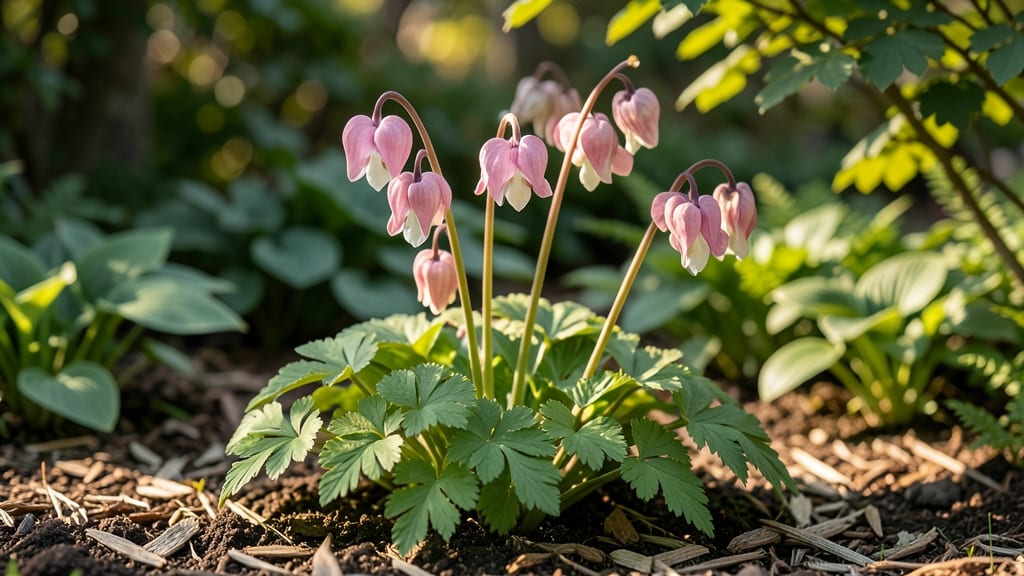
Bleeding hearts do not bloom all summer; their flowering season typically spans April to June, with occasional late-season blooms under ideal conditions. Classic varieties like Dicentra spectabilis shift focus to foliage after spring, while Dicentra eximia may rebloom sporadically with proper care.
Bleeding hearts are spring's star performers, but their show doesn't last all season. 🌸 The classic Dicentra spectabilis puts nearly all its energy into those heart-shaped blooms from April through June, then redirects resources to lush foliage.
What's fascinating is how Dicentra eximia—the fragrant variety—can sometimes surprise you with a second act in late summer if you deadhead regularly and keep conditions just right. Think of it like a garden diva: she gives her best performance once, but with the right backstage care, she might encore!
Here's the secret: these plants are perennials, not annuals, so they're built for longevity, not continuous blooming. The key to encouraging any late-season flowers lies in pruning and soil health.
When you remove spent blooms promptly, you're telling the plant, "Keep going!" rather than signaling it's time to rest. And don't forget about mulch—it helps maintain even moisture levels, which these plants adore.
💡 In This Article
- Bleeding Heart Bloom Cycles by Variety
- Extending Bleeding Heart Blooms: Pruning and Care Tips
Bleeding heart bloom cycles by variety
Bleeding hearts follow a biological rhythm tied to daylight and temperature, with Dicentra spectabilis (the classic variety) entering a dormant-like state after its primary bloom. This happens because the plant perceives shorter daylight hours and cooling temperatures as signals to conserve energy.
The heart-shaped flowers appear when days are 12-14 hours long, typically from late April through June, after which the plant shifts focus to foliage production. This isn't true dormancy—roots remain active—but the energy redirect is dramatic, often resulting in lush, fern-like leaves that can last all season.
The fragrant variety, Dicentra eximia, behaves differently due to its genetic makeup. While it also peaks in spring, its blooming cycle can stretch into late summer if you remove spent flowers immediately. This works because deadheading prevents seed production, which would otherwise trigger the plant's natural senescence (aging) process.
The key difference is that Dicentra eximia has a slightly longer critical day length threshold—sometimes responding to 14-16 hours of daylight—which can extend its window for sporadic reblooming when summer days remain long.
Hybrid varieties often fall somewhere in between, showing 50-70% of the classic bloom duration but with more consistent foliage. For example, Dicentra 'King of Hearts' may produce 30% more flowers in late summer if given partial shade (30-50% sunlight) and consistent moisture.
The trade-off is that hybrids typically have 20% shorter individual bloom stems (around 12-18 inches vs. 24-36 inches for classic types), making them better for container gardening where reblooming is more easily managed.
Temperature plays a subtle but critical role. Classic varieties need 50-65°F daytime temps to initiate blooming, while hybrids can tolerate up to 75°F without stress. The danger zone is above 80°F, where even fragrant types may shut down blooming entirely to prevent heat stress.
This is why late-summer reblooming is more likely in cooler climates (USDA zones 3-7)—the plant doesn't get the heat signal to pause.
Soil moisture is the final piece of the puzzle. Bleeding hearts have shallow root systems that require 1-1.5 inches of water per week during active growth.
When soil dries out, the plant conserves water by aborting flower buds, which is why consistent moisture is non-negotiable for extending any blooming season. The roots also need well-draining but moisture-retentive soil—think of it as a sponge that stays damp but doesn't sit in water.
What most gardeners miss is how Dicentra spectabilis actually produces secondary flower stalks in late summer if the primary blooms are removed early. These won't be as abundant, but they can appear 6-8 weeks after the main show if the plant has stored enough energy in its roots.
This is why dividing mature plants every 3-4 years (in early spring) can rejuvenate blooming—it forces the plant to rebuild its energy reserves.