
Blooming
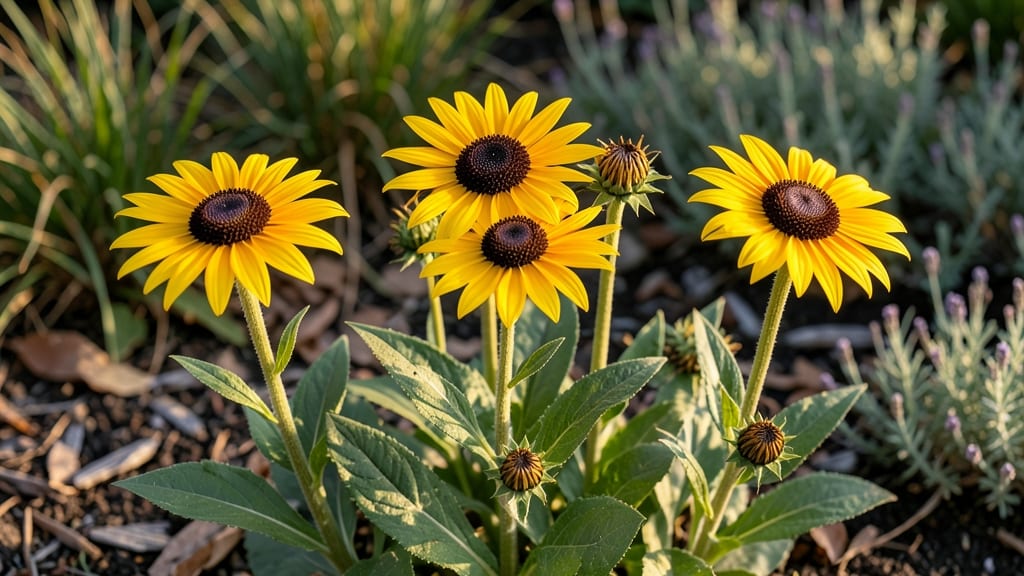
Black-eyed Susans do bloom all summer, but their peak flowering occurs in late summer before they gradually fade by early fall—particularly when facing intense heat or drought. Cooler climates or consistent care can help prolong their vibrant display.
These cheerful flowers thrive in warm weather, but their blooms often taper off as temperatures rise above 90°F or during prolonged dry spells. 🌞 The key to extending their season lies in maintaining 1-2 inches of soil moisture while avoiding waterlogged roots.
I've noticed that mulching with 2-3 inches of organic material can regulate soil temperature and retain moisture, giving them a second wind in late summer.
Another trick is deadheading spent blooms—removing faded flowers encourages new growth and can push the plant to produce more blossoms. In cooler regions like USDA Zones 3-8, they may even rebloom in fall if given consistent care.
For gardeners in hotter zones, providing afternoon shade can make a noticeable difference in how long they stay vibrant.
💡 In This Article
- Black-Eyed Susan Bloom Duration: Heat and Climate Factors
- Extending Black-Eyed Susan Blooms: Watering and Care Tips
Black-eyed susan bloom duration: heat and climate factors
Black-eyed Susans (Rudbeckia hirta) are hardy perennials that thrive in summer's warmth, but their blooming cycle is tightly linked to temperature and moisture levels. These plants enter dormancy when daytime temperatures consistently exceed 90°F for extended periods, which triggers a natural decline in flower production.
The heat stress causes their metabolic processes to slow down, reducing energy available for new blooms. In regions like the Southern U.S., where summer temperatures often hit 100°F+, you'll typically see peak blooming in July-August before a noticeable fade by September.
The plant's native range spans from USDA Zones 3-8, but their performance varies dramatically across these zones. In cooler northern climates (Zones 3-5), black-eyed Susans may bloom from early July through October, thanks to milder summers that don't push them into early dormancy.
Meanwhile, in hotter southern zones (6-8), their flowering period compresses into just 6-8 weeks during peak summer. The critical threshold appears to be around 85°F—below this, they maintain vigorous blooming, while above it, their energy shifts toward seed production rather than new flowers. 🌡️
Soil moisture plays an equally important role in their bloom duration. These plants have deep taproots that can access water from 12-18 inches below the surface, but during drought conditions, their roots struggle to compensate for surface moisture loss.
When soil moisture drops below 30% saturation, you'll often see wilting leaves and reduced flowering within 3-5 days. The plant's natural drought tolerance is impressive, but it comes at the cost of shorter bloom periods—typically 2-3 weeks less than when properly hydrated.
Another fascinating factor is photoperiod sensitivity—black-eyed Susans respond to day length changes. As daylight hours shorten in late summer, their internal clocks trigger the transition from flowering to seed production. This biological mechanism explains why they naturally wind down in fall, regardless of temperature.
However, in regions with longer summer daylight (like the Pacific Northwest), they may continue blooming into early October before the shorter days take effect. 🌅
For gardeners in transitional zones (like Zone 6), the challenge becomes managing this dual pressure of heat and shortening days. The solution often involves creating microclimates—planting in locations with afternoon shade can lower soil temperatures by 5-10°F, while reflective mulches help retain moisture.
This combination can extend the bloom season by 2-4 weeks compared to full-sun exposures. The key insight is that black-eyed Susans aren't failing you—they're following their biological programming, but smart garden design can help you work with their natural rhythms rather than against them.
Consider this comparison: In Zone 4 (cool summers), you might enjoy 12 weeks of continuous blooms, while in Zone 7 (hot summers), that same variety might only produce flowers for 8 weeks.
The difference comes down to how well you can mitigate the three main stressors: excessive heat, moisture loss, and photoperiod changes. Understanding these factors lets you make precise adjustments to your garden care routine. 🌿