
Blooming
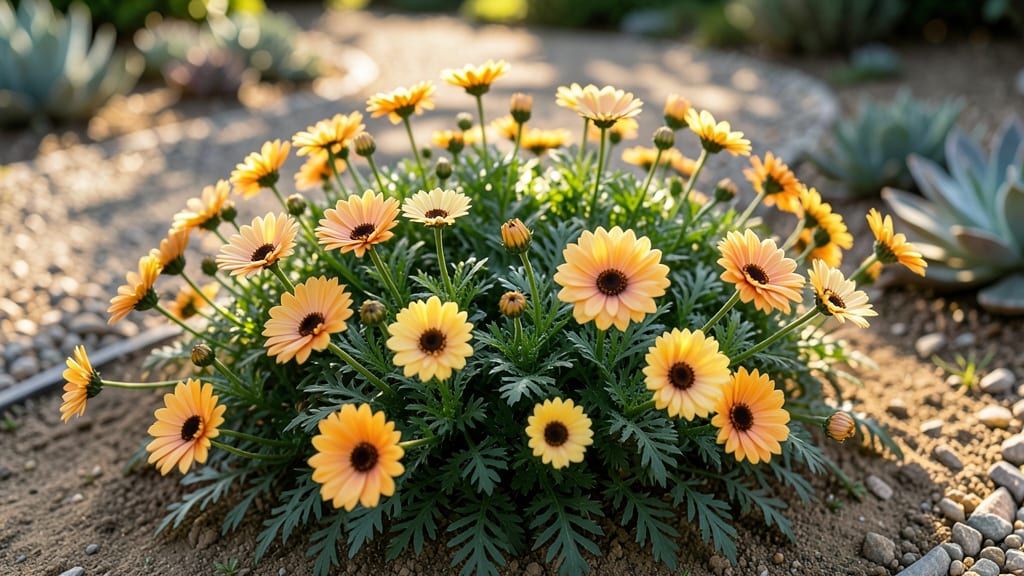
African daisies (Osteospermum) bloom all summer with proper care, thriving in heat and drought once established, but may slow in extreme humidity or late-season stress without deadheading and watering adjustments.
African daisies are summer's workhorses, designed to handle the heat while other flowers wilt. 🔥 Their secret lies in their thick, waxy leaves that conserve moisture and roots that dive deep for water, making them drought-tolerant once settled.
However, their blooming rhythm can falter when summer stretches into late August—humidity spikes or sudden temperature drops often trigger slower growth. The key to keeping them vibrant is consistent deadheading (removing spent blooms) and cutting back on water as the season winds down.
What sets these flowers apart is their continuous blooming biology—unlike annuals that peak and fade, African daisies produce new flowers along their stems all season long.
This means with the right care, you can enjoy fresh blooms from early June through Labor Day, provided you're vigilant about removing dead flowers and adjusting your watering routine as temperatures dip.
💡 In This Article
- Why African Daisies Stay Blooming Through Summer Heat
- Late-Season Care to Extend African Daisy Blooms
Why African daisies stay blooming through summer heat
African daisies (Osteospermum) thrive in summer heat thanks to their unique biological adaptations. Their thick, waxy leaves reduce water loss through transpiration, while deep taproots reach moisture up to 3 feet underground—far deeper than most annuals.
This drought-resistant system allows them to survive with minimal irrigation once established, unlike thirsty petunias or impatiens that require daily watering. 🔥 The plant's native South African habitat, with its arid summers and intense sun, has shaped these traits over millennia.
What makes their blooming so consistent is their continuous flowering habit. Unlike many annuals that produce flowers in a single flush, African daisies develop new buds along their stems throughout the season.
Each stem can produce 5-10 flowers sequentially, with the oldest blooms at the base and fresh ones emerging at the tips. This biological mechanism ensures a steady supply of flowers from early summer until frost, provided you maintain proper care.
The flowers themselves contain built-in heat protection—petals often have a slight waxy coating that reflects excess sunlight.
Regional climate variations significantly impact their performance. In dry, sunny climates like the Southwest U.S., African daisies often bloom prolifically with just 1 inch of water per week once established. However, in humid Eastern regions, their growth may slow due to fungal risks from excess moisture.
The key stress trigger is overwatering, which can cause root rot and stunt flowering. Poor drainage exacerbates this, as waterlogged roots struggle to absorb oxygen, leading to wilting despite abundant moisture.
Temperature plays a crucial role too. African daisies prefer daytime highs between 70-85°F but can tolerate brief spikes up to 95°F. Below 60°F at night, their metabolic processes slow, reducing flower production.
This is why late-season blooming often diminishes in cooler regions—what appears to be "slowing" is actually the plant conserving energy for survival. The contrast between their heat tolerance and humidity sensitivity explains why they thrive in desert landscapes but may struggle in muggy climates without proper airflow.
Another fascinating adaptation is their ability to close petals during extreme heat or drought as a protective mechanism. This "sleeping" behavior conserves moisture and energy until conditions improve, then they reopen when temperatures moderate.
Gardeners often mistake this for stress, but it's actually a survival strategy that allows the plant to endure harsh conditions while maintaining its blooming potential once conditions stabilize.
Consider these key factors when growing African daisies:
- Soil type: Well-draining mixes with 50% sand prevent waterlogging
- Sun exposure: 6+ hours of direct sun daily maximizes blooming
- Wind tolerance: Stems can flop in strong winds—stake tall varieties
- Color impact: Darker flowers absorb more heat and may need afternoon shade in extreme climates