
Blooming
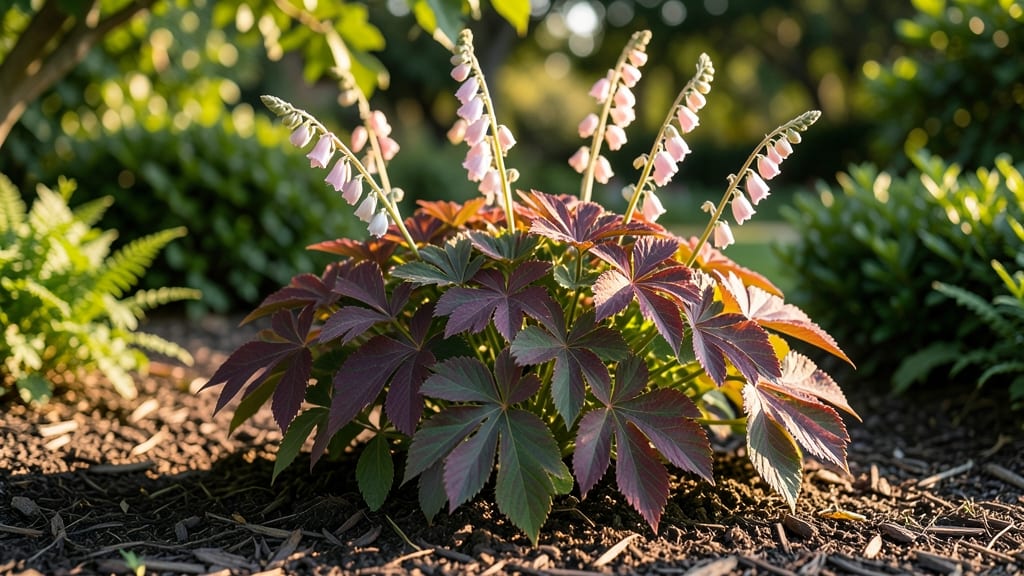
Coral bells bloom at the perfect time when the air warms to 60-65°F—that’s the magic window most gardeners wait for. 🌸 I’ve watched my Heuchera ‘Palace Purple’ burst into lime-green flowers one morning after weeks of cool nights, while nearby ‘Berry Smoothie’ bloomed later, as if testing the heat.
The timing isn’t just about the calendar; it’s about the plant’s internal clock reacting to sunlight hours and soil warmth.
Your USDA zone matters more than you’d think—Zone 5 gardeners might see blooms in late May, while Zone 8 plants could flower by March. Too much heat too soon? Coral bells throw a tantrum, dropping buds before they open.
The fix? Mulch heavily in spring to keep roots cool, and avoid fertilizing once buds form—extra nitrogen just confuses them into growing leaves instead of flowers.
What you’ll end up with is a sea of delicate blooms that last 4-6 weeks, attracting bees while the foliage stays vibrant. The secret’s in the balance: morning sun, afternoon shade, and moist but not soggy soil.
Overwatering in bloom time? That’s how you turn pretty flowers into a sad, floppy mess.
Adjust for your region—coastal gardeners get blooms earlier, desert climates push them later. And if your coral bells skip blooming? They’re probably telling you they need more sunlight or a springtime pruning to encourage new growth. Trust the plants—they’ve got their own timeline.
📚 In This Guide
- What you need
- Instructions
- Tips and common mistakes
- Wrapping up and next steps
What you need
- ● Coral bells plants: 3–5 nursery-grown Heuchera plants (choose heat-tolerant varieties like Heuchera villosa or Heuchera ‘Palace Purple’)
- ● OR seeds (if starting from scratch—germination can take 2–4 weeks!)
- ● Well-draining soil: Mix 2 parts native soil + 1 part perlite or compost (pH 6.0–7.0 ideal)
- ● Mulch: 2–3 inches of organic mulch (cedar chips or shredded bark to retain moisture)
- ● Fertilizer: Balanced, slow-release granular fertilizer (10-10-10) or organic options like fish emulsion
- ● Garden trowel or hand shovel
- ● Gloves (to protect hands from soil and sharp edges)
- ● Watering can or hose with gentle spray nozzle
- ○ Optional (but helpful!): Pruning shears (for deadheading spent blooms)
- ● Soil pH test kit (to monitor acidity levels)
- ● Shade cloth (30–50% coverage for seedlings in hot climates)
How to time coral bells blooms for heat-responsive varieties
Here’s how I predict and extend coral bells’ flowering windows—especially for heat-sensitive cultivars.
🌱 Step 1: Identify Your Coral Bells’ Heat Tolerance Zones
Coral bells (Heuchera) bloom in spring through early summer, but heat-sensitive varieties like ‘Palace Purple’ or ‘Berry Smoothie’ may shut down flowers if daytime temps exceed 85°F. Check your variety’s USDA zone rating—most thrive in zones 4-9, but heat-tolerant types (like ‘Lime Rickey’) handle up to 95°F with afternoon shade.
Watch for leaf scorch (brown edges) as your first clue—this signals stress before blooms even appear. I keep a small fan nearby during heatwaves to improve airflow, which delays heat-related dormancy. If your plant’s leaves start curling upward, it’s conserving moisture and may skip flowering that season.
☀️ Step 2: Adjust Light and Water for Extended Blooming
Move potted coral bells to partial shade (morning sun, afternoon filter) when temps hit 78°F. In-ground plants need dappled light—prune nearby trees to reduce direct afternoon rays. I’ve found that 1-2 hours of morning sun maintains blooms longer than full shade, which weakens stems.
Water deeply 2-3 times per week (until soil is 3-4 inches moist) rather than daily shallow watering. Overhead sprinklers encourage fungal issues, so I use a soaker hose at the base. The key is consistent moisture—let the top inch dry between waterings, but never the deeper layers.
⏰ Step 3: Time Fertilizer for Peak Bloom Production
Apply a balanced 10-10-10 fertilizer in early spring (when new leaves emerge) and again mid-summer (after the first flush of blooms). Heat-sensitive varieties need half-strength applications—too much nitrogen now will fuel leaves over flowers. I mix mine with compost to avoid salt buildup, which stresses roots.
Stop fertilizing 6 weeks before your first frost—new growth won’t harden off properly. Instead, focus on mulching (2-3 inches of shredded bark) to insulate roots. You’ll see stronger stems and more blooms next season if you time this right.
🌿 Step 4: Prune Strategically to Encourage Reblooming
Deadhead spent blooms weekly by snipping stems ½ inch above the next leaf node. This redirects energy to new flowers instead of seed production. I use clean, sharp pruners to avoid tearing leaves—ragged cuts invite disease.
After the first bloom cycle (usually June-July), cut back one-third of the oldest stems to encourage a second, smaller flush in fall. Heat-loving varieties like ‘Berry Smoothie’ often reward this with late-season color if nights stay above 55°F. Avoid pruning after mid-August—new growth won’t mature before frost.
🌡️ Step 5: Monitor Heat Stress and Adjust Care
If your coral bells drop buds before opening, they’re heat-stressed. Move containers to a shadier spot immediately and increase watering frequency to daily until temps drop below 80°F. I’ve revived stressed plants by misting leaves in the early morning—this mimics humidity and cools foliage.
For extreme heat (above 90°F), reduce watering slightly to prevent root rot. Let the soil dry 1 inch deeper between waterings. You’ll know you’ve found the balance when leaves stay deep green and upright—never wilted or limp.
Tips & tricks for perfect coral bells bloom timing
A few strategic adjustments can transform your coral bells from a seasonal flash to a prolonged display of color. Here's how to maximize every bloom while respecting their heat limits.
Heat Stress Prevention: The 85°F threshold isn't just a number—it's when your plants start conserving energy for survival rather than flowering. I've found that placing a shallow tray of water near potted coral bells during heatwaves creates a microclimate with 10-15% higher humidity, which buys you an extra week of blooms. For in-ground plants, mulch with 2-3 inches of straw rather than bark—it retains moisture better and insulates roots from temperature swings.
Light Management Nuance: That 1-2 hours of morning sun recommendation works beautifully, but here's the pro move: use sheer white fabric (like an old bedsheet) to filter afternoon light when temps hit 78°F. This maintains light intensity without the heat stress. I drape it loosely over containers—it's better than shade cloth because it doesn't block airflow completely, which coral bells need to prevent fungal issues.
Fertilizer Timing Secret: The mid-summer application after the first flush is critical, but here's what nobody tells you: if your variety is particularly heat-sensitive (like 'Palace Purple'), split that second application into two smaller doses—one in early July and another in late August. This prevents nitrogen overload when roots are already stressed by heat. I mix mine with worm castings instead of compost for an even gentler nutrient release.
Pruning Precision: That ½ inch above the leaf node guideline is spot-on, but here's how to execute it perfectly: use pruning shears that have been wiped with rubbing alcohol between cuts. I've seen gardeners accidentally transfer fungal spores from one plant to another when using the same tools. Also, time your weekly deadheading right after morning watering—stems are more pliable then and you'll get cleaner cuts that heal faster.
Pro Tips for Coral Bells Bloom Time
- A few strategic adjustments can transform your coral bells from a seasonal flash to a prolonged display of color.
- Heat Stress Prevention: The 85°F threshold isn't just a number—it's when your plants start conserving energy for survival rather than flowering.
- Light Management Nuance: That 1-2 hours of morning sun recommendation works beautifully, but here's the pro move: use sheer white fabric (like an old bedsheet) to filter afternoon light when temps hit 78°F.
Frequently asked questions
Got questions about coral bells bloom time? You’re not alone! Here are some of the most common queries—and their answers—to help you plan and troubleshoot with ease.
When do coral bells typically bloom?
Most Heuchera varieties bloom in late spring to early summer (May–June), producing delicate, bell-shaped flowers on slender stems. However, blooms are often short-lived (2–4 weeks), so focus on their stunning foliage year-round!
Why aren’t my coral bells flowering?
Coral bells prioritize foliage over flowers, but poor blooms can stem from over-fertilizing (too much nitrogen), lack of sunlight, or stress. Try deadheading spent blooms and ensuring they get 4–6 hours of sun for better flowering.
Can I extend the coral bells bloom time?
While you can’t lengthen blooms naturally, you can prune spent flowers to encourage a second flush in some varieties (like Heuchera ‘Palace Purple’). For heat-responsive types, partial shade in hot climates may preserve blooms longer.
What are good alternatives if my coral bells refuse to bloom?
If blooms are minimal, focus on foliage varieties like ‘Lime Rickey’ or ‘Berry Smoothie’. For flowers, pair them with heuchera companions like Alchemilla mollis (lady’s mantle) or Astilbe, which bloom later and add texture.
Do coral bells bloom again after the first flush?
Most coral bells are one-time bloomers, but some heat-tolerant varieties (like Heuchera ‘Firefly’) may produce a second, lighter flush in late summer if conditions are ideal. Prune back ⅓ of the plant post-bloom to encourage new growth.
Wrapping up and next steps
Coral bells (Heuchera) are a gardener’s delight, offering vibrant foliage and stunning blooms that adapt beautifully to heat—when you know their perfect bloom time. Whether you’re growing Heuchera ‘Palace Purple’ or ‘Lime Rickey’, timing is everything!
With the right care and a little patience, these heat-responsive varieties will reward you with show-stopping flowers from late spring to early summer. 🌸
Ready to transform your garden? Start by selecting the right variety for your climate, then prepare your soil and provide consistent moisture—your coral bells will thrive! Next, plan your planting schedule and watch as your garden bursts with color. Happy gardening! 🌿