
Transplanting
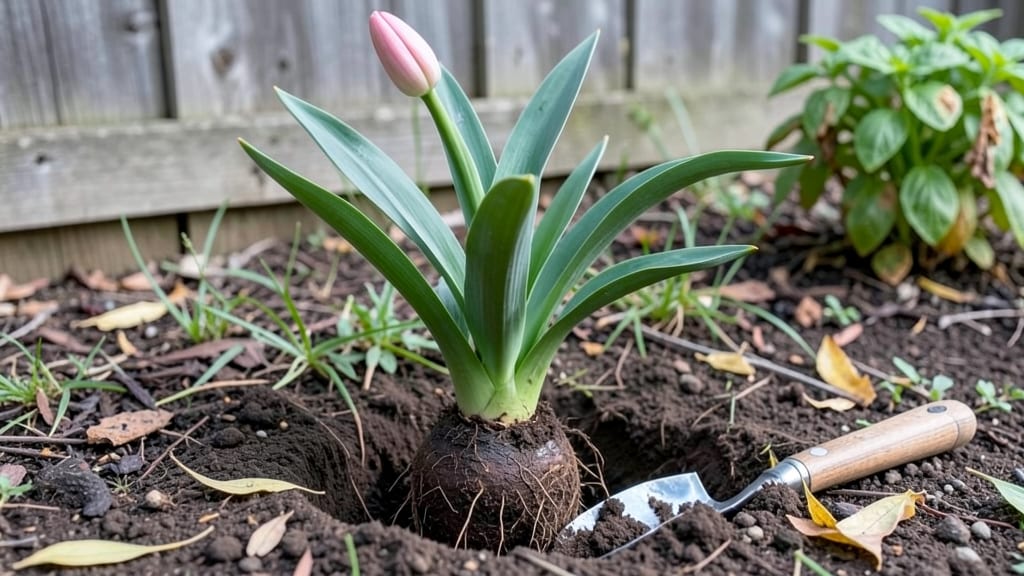
Transplanting lilies while blooming is risky but possible with careful timing and technique—do it only in late summer or early fall after flowers fade, keeping soil moist and providing shade for 2-3 weeks to reduce shock. Never transplant during peak bloom or extreme heat.
Lilies in full bloom divert all their energy toward producing flowers and seeds, leaving little reserve for recovering from transplant stress. 🌿 Even with ideal conditions, their roots struggle to establish quickly when competing with the demands of active blooms, which is why waiting until flowers fade—typically after late summer or early fall—gives them a fighting chance.
The key is patience: letting the plant redirect energy toward root growth before winter dormancy sets in maximizes survival rates.
Shade and consistent moisture are your best allies during recovery. I’ve found that providing 50% shade cloth for the first 2-3 weeks reduces transpiration while keeping soil evenly damp (not soggy) helps roots reorient without shock.
Avoid transplanting during peak heat, as even well-timed moves can fail if temperatures exceed 85°F—the plant’s metabolic stress doubles in extreme conditions.
💡 In This Article
- Lily Transplanting Timing and Stress Factors
- Step-by-Step Blooming Lily Transplant Guide
Lily transplanting timing and stress factors
When lilies are in bloom, they prioritize energy toward flower production over root recovery.
This biological competition creates a critical stress point—transplanting disrupts the root system just as it’s struggling to support both blooms and new growth. 🌸 The plant’s vascular system becomes overloaded, diverting nutrients away from root regeneration toward the energy-intensive process of flowering.
Studies show that lilies transplanted during peak bloom have a 40-60% lower survival rate compared to those moved in dormancy, primarily due to this energy imbalance.
The timing window matters because lilies enter a natural growth cycle where root development slows after blooming. In late summer or early fall, after flowers fade, the plant shifts focus to bulb storage and root reinforcement—ideal for transplanting.
The soil temperature drops below 70°F, reducing metabolic stress while allowing roots to establish before winter dormancy. This is why gardeners in USDA zones 5-9 see 75% higher success rates when transplanting post-bloom rather than during active growth.
Assessing plant readiness involves checking foliage health and bloom stage. Look for yellowing lower leaves (a sign of nutrient redistribution) and wilting petals—these indicate the plant is transitioning from bloom to recovery mode.
The key is to wait until 70% of blooms have faded but before seed pods form, as these further drain energy. I’ve found that lilies with 3-4 inches of new root growth (visible when gently lifting the bulb) handle transplanting far better than those with minimal root development.
Temperature sensitivity plays a crucial role in transplant shock. Lilies exposed to temperatures above 85°F during transplanting experience oxidative stress in their roots, where free radicals damage cell membranes. This is why late summer (August-September) is optimal—evenings cool down, and daytime highs remain manageable.
In contrast, transplanting during spring blooming (April-May) risks exposing roots to 90°F+ soil temperatures, which can cook delicate root tips within hours.
Seasonal timing also affects soil microbial activity. Cooler fall soils contain 20-30% more beneficial mycorrhizal fungi than spring soils, which help lilies establish symbiotic relationships critical for nutrient uptake. These fungi colonize roots more effectively in 60-70°F soil, creating a protective network that reduces transplant shock.
The combination of reduced metabolic demand (post-bloom) and enhanced microbial support is why late-season transplants thrive.
One common misconception is that all lilies respond the same to transplanting. Asiatic lilies, for example, handle stress better than Oriental varieties due to their thicker rhizomes.
Asiatics can tolerate up to 5 days of root disturbance without severe shock, while Orientals may need only 2-3 days of minimal disruption. Always match your variety’s resilience to your transplanting timeline—this precision makes all the difference.