
Blooming
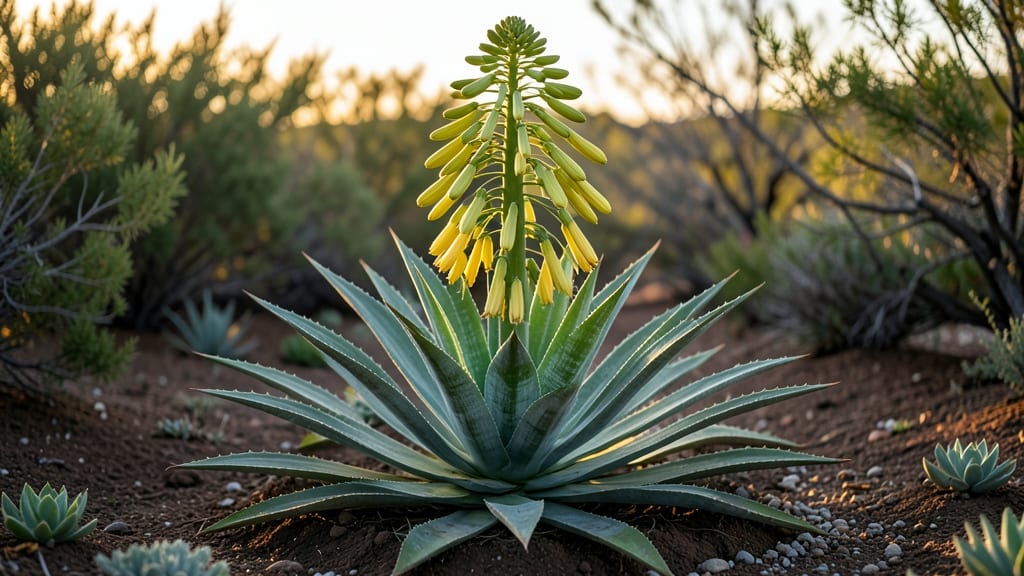
That purple agave bloom spike rising from your plant is nature’s way of saying "watch this." 🌵 After decades of silent growth, agaves finally show their flashy side—often just once in their lifetime—when heat and maturity align.
The dramatic 6- to 12-foot-tall stalk isn’t just showy; it’s a survival strategy that drains the mother plant’s energy, leaving gardeners wondering what comes next. The good news? Your agave isn’t dying—it’s preparing for its next chapter.
While the bloom spike itself is sterile (no seeds for most varieties), the real action happens at the base. Pups—baby agaves—often emerge around the mother plant’s roots, ready to take over.
This is your chance to propagate them before the parent plant’s energy fully depletes, usually within 6-12 months of blooming. You’ll want to adjust care during this time: reduce watering (agaves hate soggy roots) and fertilize lightly to support pup growth.
Prune the dead bloom stalk at the base once it turns brown, but leave the pups in place until they’re at least 1/3 the size of the mother plant. That’s when you can gently separate and replant them.
Here’s the plot twist: some agave varieties—like Agave americana—rebloom after pups mature, while others, like Agave parryi, may not. Either way, you’re now part of the plant’s lifecycle, not just its observer. Let’s make the most of it.
📚 In This Guide
- What you need
- Instructions
- Tips and common mistakes
- Wrapping up and next steps
What you need
- ● Mature agave plant (1+ years old) – Choose Agave americana, Agave parryi, or Agave victoriae-reginae for vibrant blooms.
- ● Heat source – A heat lamp (100W–200W) or grow light (full-spectrum LED) for consistent warmth.
- ● Thermometer (digital) – Ensure temps stay between 85°F–95°F (29°C–35°C) during daylight.
- ● Well-draining soil mix – Cactus/succulent blend (50%) + perlite/pumice (50%) in a 6”+ pot.
- ● Watering can with narrow spout – Bottom-watering method only (avoid soggy roots!).
- ● Pruning shears (sterilized) – For post-bloom care (sharp, clean cuts only!).
- ● Humidity tray – Keeps air moist for spike development (pebble tray + water).
- ● Fertilizer (balanced, 10-10-10) – Diluted to half-strength every 4–6 weeks.
- ● Staking materials – Bamboo stakes + floral tape to support heavy spikes.
- ● Bloom-boosting supplement – Phosphorus-rich fertilizer (e.g., bone meal) for root strength.
- ● Camera/timer – Capture the 24–48-hour bloom window in action! 📸
How to encourage a stunning agave bloom spike
Here's how I coax those dramatic purple spikes from my agaves—no fancy tricks, just heat and patience.
🌱 Step 1: Identify a Mature, Healthy Agave Plant
Blooming only happens once in an agave's lifetime, so you need a mature plant at least 10-15 years old. Look for a rosette that's 3-4 feet wide with thick, sturdy leaves. The center should appear slightly raised and compacted—this is where the bloom spike will emerge.
Skip any plants with brown edges or mushy centers. These signs mean the agave is stressed or diseased, and it won't bloom. I always check for yellowing leaves first—those are a red flag. Healthy agaves have vibrant green leaves with minimal dust or damage.
☀️ Step 2: Provide Consistent Heat and Sun
Agaves bloom in response to extreme heat, so place your plant in full sun where temperatures regularly hit 90°F or higher. I move mine to a south-facing patio in summer, where it bakes under direct sunlight for 8+ hours daily.
If you live in a cooler climate, mimic summer heat with a grow light on a timer set for 14 hours daily. Keep soil temperatures above 80°F—I use a soil thermometer to monitor. Without this heat trigger, the agave won't initiate blooming.
💧 Step 3: Water Sparingly During Bloom Initiation
Once the plant is in peak heat, reduce watering to every 2-3 weeks. Agaves store water in their leaves, so overwatering prevents blooming. I check by sticking my finger 2 inches into the soil—if it's still damp, I wait.
Watch for the center of the rosette to tighten and rise. This is your signal the bloom spike is forming. You might see a small bump or a slight purple tint emerging from the center. This can take 2-4 weeks of consistent heat and minimal water.
⏰ Step 4: Monitor for Spike Emergence
The bloom spike will shoot up suddenly—sometimes overnight! It starts as a purple or green bud that grows 6-10 feet tall in just days. I stake my agaves with bamboo canes before this happens to prevent the heavy spike from toppling the plant.
Once the spike appears, increase water slightly to every 10-14 days to support the new growth. The spike will open into a dramatic panicle of flowers, but the real magic is the pups forming at the base—these are your future agaves!
🌿 Step 5: Care for Pups and Prepare for Next Season
After blooming, the mother agave will die, but the pups at its base will thrive. Water the pups every 2 weeks and fertilize lightly with a balanced 10-10-10 mix in spring. These pups will bloom in 10-15 years, so enjoy the cycle!
Remove the dead bloom spike once it turns brown. I use sterilized pruners to cut it at the base, leaving the pups undisturbed. This keeps the area tidy and ensures the pups get all the nutrients they need to grow strong.
Tips & tricks for encouraging agave bloom spikes
Here's what I've learned from watching agaves transform over years of gardening—these tricks make all the difference.
Heat Consistency is Non-Negotiable: The 90°F threshold isn't just a suggestion—it's the biological trigger. I've seen agaves in full sun hit 100°F during the day but drop to 85°F at night, and that's when the magic happens. If your thermometer shows temperatures dipping below 80°F for more than a few hours, supplement with a heat lamp on a timer set to mimic those summer highs. The plant needs to experience that consistent heat stress to initiate blooming.
Visual Cues Over Guesswork: In Step 3, when you're watching for that purple tint or raised bump, don't rely on memory—take daily photos. The change happens gradually, and you might miss it if you're not paying close attention. I mark my calendar 2-4 weeks after moving the plant to full sun as my "bloom watch" period. That purple tint is your first sign the plant is committing to the bloom cycle.
Staking Strategy: Those 6-10 foot spikes might look sturdy, but they're surprisingly top-heavy. I stake my agaves with 3-foot bamboo canes tied loosely at the base before the spike emerges. Use soft plant ties or even old pantyhose cut into strips—they won't damage the leaves. The goal is to give the spike support without restricting growth. I've seen un-staked agaves topple over and snap their own spikes!
Pup Preservation: After the mother plant dies, the pups at the base become your future bloomers. When you're ready to separate them in Step 5, wait until they're at least 1/3 the size of the mother plant. I use a clean knife to slice through the roots, then let them callous over for 2-3 days before repotting. This gives them a better chance of establishing themselves without shock.
Pro Tips for Agave Bloom Spike
- Here's what I've learned from watching agaves transform over years of gardening—these tricks make all the difference.
- Heat Consistency is Non-Negotiable: The 90°F threshold isn't just a suggestion—it's the biological trigger.
- Visual Cues Over Guesswork: In Step 3, when you're watching for that purple tint or raised bump, don't rely on memory—take daily photos.
Frequently asked questions
Got questions about agave bloom spikes? You’re not alone!
Here are answers to the most common queries about these stunning, heat-triggered purple spikes—from timing to troubleshooting.
Why does my agave plant suddenly grow a tall purple spike?
The agave bloom spike (or inflorescence) is the plant’s dramatic way of signaling it’s ready to flower—often after years of growth! This spike produces nectar-rich blooms that attract pollinators. Once it blooms, the mother plant typically dies, but pups (baby agaves) form at the base for propagation. Fun fact: Some varieties, like Agave americana, can grow spikes <10+ feet tall!
How long does an agave bloom spike last before dying?
The bloom spike itself lasts 4–6 weeks before the flowers wither. However, the plant’s decline accelerates afterward—expect the mother plant to die within 6–12 months post-bloom. The good news? Pups (offsets) will be ready to transplant in 1–2 years, keeping your agave legacy alive!
Can I force an agave to bloom earlier with heat?
While agaves bloom naturally in response to heat and maturity (often after 5–10 years), you can’t reliably force an early bloom. However, providing consistent warmth (80°F+), full sun, and minimal stress may encourage faster growth—just be patient! Overheating or drought can delay blooming, not speed it up.
What should I do with the dead agave spike after it blooms?
Once the spike turns brown and crispy, cut it back to the base to redirect the plant’s energy to pups. Wear gloves—agave sap can irritate skin! Leave the dead foliage until it dries completely, then remove it. The pups will need 1–2 years to mature before transplanting, so avoid digging them up too soon.
Can I save the pups from a blooming agave?
Absolutely!
Pups are easy to propagate once they’re 1/3 the size of the mother plant. Gently dig them up with a knife, replant in well-draining soil, and water lightly. Keep them in bright, indirect light for the first few weeks to avoid sunburn. With patience, your pups will thrive—and you’ll have a new agave to enjoy for decades!
Why did my agave spike turn black or rot?
Blackening or rotting spikes often signal overwatering, fungal issues, or pest damage. Ensure your agave has dry, well-draining soil and avoid watering the spike directly. If mold appears, treat with neem oil or copper fungicide. For pests (like mealybugs), wipe the spike with soapy water or use insecticidal soap.
Wrapping up and next steps
The agave bloom spike is a stunning, heat-triggered spectacle that transforms your garden into a vibrant purple paradise—often signaling the plant’s final act before dying. Whether you’re a seasoned gardener or a curious beginner, embracing this rare event is all about timing, care, and a little patience.
Now that you’re armed with the right materials and answers, it’s time to watch, nurture, and celebrate this fleeting beauty.
🌱 Ready to take the next step? Start by monitoring your agave’s health, and if you’re eager to see more blooms, consider propagating pups or sharing the magic with fellow plant lovers.
The journey doesn’t end with the spike—it’s just the beginning of a new chapter in your gardening story! 🌿