
Blooming
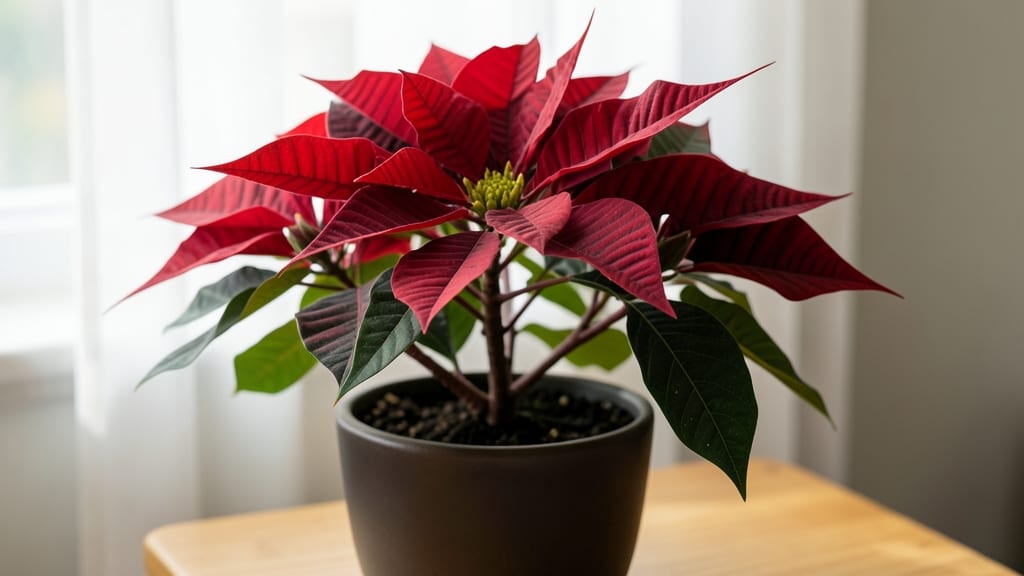
Poinsettias bloom naturally between late November and early January 🎄, when the days grow shortest and darkness stretches longest.
If you’ve ever wondered why poinsettias bloom only around the holidays—despite being grown year-round—you’re about to discover the plant’s secret: a light-triggered biological clock that’s far more precise than a calendar.
These vibrant plants from General (Tropical/Subtropical Regions) rely on a critical threshold of 12+ hours of darkness daily to kickstart blooming. Without this natural cue, they’ll stay leafy but never show their signature bracts.
Below, I’ll break down the exact timeline for different varieties, how to manipulate light for earlier blooms, and why your indoor poinsettia might be playing hard to bloom this season.
The science behind poinsettia blooming: short-day plant biology explained
Poinsettias are famous for their holiday timing, but their blooming isn’t magic—it’s science. These plants are short-day plants, meaning they flower only when daylight drops below 12 hours.
This biological clock triggers a cascade of chemical reactions that produce those vibrant bracts (the colorful leaves we call "flowers").
The key is darkness duration, not temperature or soil. Poinsettias need 14 hours of darkness daily for 4-6 weeks to start blooming. This explains why they bloom in December—when daylight hours shrink naturally in the Northern Hemisphere.
In tropical origins, their blooming aligns with the dry season, a survival strategy to attract pollinators.
Phytochrome pigments in poinsettia leaves act like tiny light sensors. When darkness lasts 10-12 hours, these pigments shift shape, signaling the plant to produce florigen, a hormone that kickstarts flower development. Even artificial light (like streetlights or TVs) can disrupt this process by extending perceived daylight.
Temperature plays a supporting role. Ideal blooming occurs at 60-70°F during the day and 55-60°F at night. Too much heat (80°F+) or cold (50°F-) can delay or prevent flowering.
This is why indoor poinsettias often bloom later than outdoor plants in USDA Zones 10-11, where cooler nights trigger the process naturally.
Light quality matters too. Poinsettias prefer bright, indirect light (like an east-facing window) during their growth phase. Direct sun can scorch leaves, while low light leads to weak stems and poor color development. The red and far-red wavelengths in sunlight are especially critical—they fine-tune the plant’s internal clock.
Artificial light disruption is the #1 reason poinsettias fail to bloom on schedule. Even 60 watts of incandescent light can prevent flowering if left on during the critical 14-hour darkness period. This is why growers use blackout curtains or move plants to dark closets after sunset during the induction phase.
| Factor | Critical Threshold | Effect on Blooming |
|---|---|---|
| Daylight Hours | ≤12 hours | Triggers florigen production; starts blooming cycle |
| Darkness Duration | 14+ hours | Essential for phytochrome activation; 4-6 weeks required |
| Temperature (Day) | 60-70°F | Optimal for metabolic processes; <70°F delays blooming |
| Temperature (Night) | 55-60°F | Cooler nights enhance florigen sensitivity; <55°F risks bud drop |
| Light Quality | Bright indirect | Red/far-red wavelengths regulate phytochrome; direct sun causes leaf burn |
| Artificial Light | Any light during darkness | Disrupts 14-hour dark period; prevents florigen production |
Understanding this short-day biology lets you control poinsettia blooming like a pro. For example, if you want a Christmas poinsettia, start the 14-hour darkness treatment in early October.
If you miss the window, don’t worry—poinsettias are perennial (though often treated as annuals). With the right light management, they’ll bloom again next year!
Pro tip: Use a timer-controlled grow light to simulate natural daylight changes. Set it for 10 hours of light daily starting in September, then reduce to 8 hours in November.
This mimics the fall equinox and ensures timely blooming. Just remember: consistency is key—even one night of extra light can reset the clock.
Next time you see a poinsettia in December, remember: it’s not just a holiday decoration—it’s a master of light biology, following a 14-hour darkness rule that’s been perfected over millennia. 🎄
Natural blooming timeline by poinsettia variety: when to expect color
Poinsettias are famous for their holiday-season color, but their blooming timeline varies by variety and region. Most varieties need 12+ hours of darkness daily for 4-6 weeks to trigger blooms.
In USDA Zones 5-11, natural blooming typically occurs between late November and January, but timing shifts based on your last frost date and daylight exposure.
For example, Eckespoint varieties like Premium Red often bloom 2-3 weeks earlier than White Christmas types. Southern growers in Zone 10-11 may see blooms as early as mid-November, while Zone 5-7 gardeners might wait until mid-December or later.
Understanding these patterns helps you predict and plan for vibrant holiday displays.
Comparison Table: Poinsettia Variety Blooming Windows
To predict bloom dates in your area, start by checking your local last frost date. For Zone 5-7 gardeners, count backward 14-16 weeks from your desired bloom date (e.g., December 1st) to determine when to begin dark treatment.
In warmer zones (8-11), where outdoor planting is possible, poinsettias may bloom 4-6 weeks earlier due to longer daylight exposure in autumn.
For indoor-grown poinsettias, place plants in a dark closet or covered with a blackout cloth from 5 PM to 8 AM daily starting in mid-September.
This mimics the short-day conditions they need to bloom. Artificial lights or streetlights can disrupt this process, so keep plants away from light pollution during critical hours.
Once you’ve mastered the light-dark cycle, you can control blooming dates with precision. For example, starting dark treatment in early October will yield Christmas-ready blooms, while delaying until mid-November pushes blooming to New Year’s. Experiment with timing to align poinsettias with your holiday decor schedule.
🎄