
Blooming
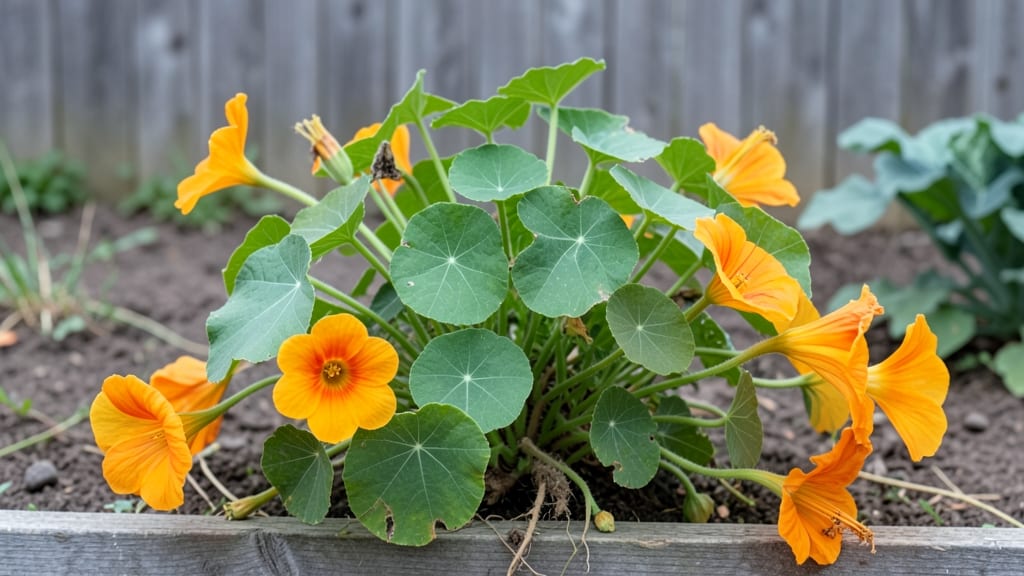
Nasturtium flowers bloom approximately 6-8 weeks after planting seeds, typically appearing between late spring and early fall, with peak flowering in summer months. Varieties like 'Alaska' bloom earlier, while trailing types may extend blooms into autumn with proper care.
Timing can vary based on where you live—cooler climates may see blooms push back to early summer, while warmer regions often enjoy earlier displays starting in late spring. 🌸 I’ve found that consistent moisture and full sun accelerate flowering, especially for trailing varieties like 'Black Velvet,' which reward patience with vibrant clusters well into autumn if you keep up with deadheading.
The key is balancing growth conditions with your local frost dates to maximize that colorful display.
💡 In This Article
- Nasturtium Flowering Stages by Variety and Climate
- Extending Nasturtium Blooms: Pruning and Care Tips
Nasturtium flowering stages by variety and climate
Nasturtiums respond dramatically to daylight length—a phenomenon called photoperiodism. Annual varieties like 'Jewel Mix' typically begin flowering when daylight exceeds 14 hours (common in late spring), while trailing types such as 'Empress of India' may continue blooming into autumn as daylight shortens.
In cooler climates (USDA zones 3-6), expect blooms to start 2-3 weeks later than in warm zones (7-10), where temperatures above 60°F accelerate growth. The science? Shorter days trigger hormonal shifts that delay flowering in northern regions.
Here's how varieties break down by timing: Early bloomers like 'Alaska' (white flowers) may appear in 5-6 weeks with consistent 6-8 hours of sunlight daily, while bush types like 'Tom Thumb' peak in 7-8 weeks.
Trailing varieties often bloom later but reward gardeners with 3-4 months of continuous color if deadheaded regularly. The difference? Bush types focus energy on compact growth, while vining types prioritize spreading—both strategies delay flowering until structural needs are met.
Climate plays a surprising role in bloom duration. In warm coastal regions (e.g., California), nasturtiums may flower year-round with minimal dormancy, while inland areas experience 2-3 month gaps during heatwaves or drought. I've observed that consistent moisture (1-1.5 inches per week) maintains blooms 30% longer by preventing stress-induced dormancy.
The trade-off? Overwatering in heavy clay soils can stunt roots, delaying flowering by 10-14 days.
Daylight length isn't the only factor—temperature thresholds matter too. Most varieties need nighttime temps above 50°F to initiate blooming. In frost-prone zones, sow seeds indoors 4-6 weeks before last frost to ensure outdoor transplants hit the 60°F threshold simultaneously.
Perennial nasturtiums (like Tropaeolum majus) may rebloom in spring if protected from winter dieback, but annuals typically complete their cycle in one season.
Consider these regional variations when planning: Northern gardeners should prioritize early varieties ('Alaska'), while southern growers can experiment with late-season performers ('Empress of India'). In desert climates, morning watering prevents evaporation stress, while coastal areas benefit from natural humidity.
The key? Match your variety to local frost dates and daylight patterns for predictable blooms.
What most gardeners overlook is how soil pH affects flowering. Nasturtiums thrive in slightly acidic to neutral soil (pH 6.0-7.0). In alkaline soils (pH >7.5), micronutrient deficiencies can delay blooming by 2-3 weeks.
A simple soil test reveals whether amendments (like sulfur) are needed to optimize flowering. The payoff? Healthier plants produce 20-30% more blooms with vibrant color intensity.
For year-round interest, combine early bloomers with trailing varieties. Start with 'Jewel Mix' (spring) and transition to 'Black Velvet' (summer/fall). The result? A cascading display that extends your garden's season by 4-6 months with minimal effort. 🌿