
Blooming
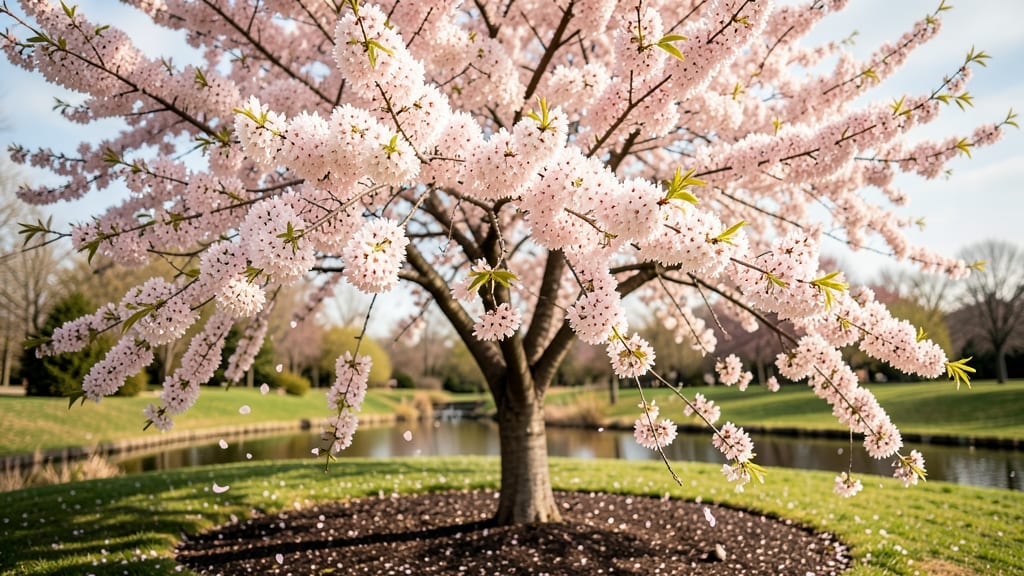
Michigan cherry blossoms typically bloom between late April and early May, with southern regions like Detroit often seeing flowers by mid-April and northern areas like Traverse City peaking in late May. Cooler springs can delay blooms, while warmer weather may bring earlier flowering.
Michigan's cherry blossoms—especially those from Prunus serrulata varieties—follow a predictable but flexible schedule tied to USDA hardiness zones 5-7.
Southern Michigan's milder winters and earlier spring warming often trigger blooms 2-3 weeks earlier than northern regions. 🌸 For example, Detroit's Belle Isle Park usually hits peak bloom around mid-April, while Traverse City's trees wait until late May.
This variation means planning your visit around historical forecasts for your specific location is key to catching the full spectacle.
What makes this timing so interesting is how temperature thresholds (consistent 50°F+ days) act as the main trigger. A late frost can damage buds, while an unusually warm March might push blooms into March instead of April.
I always recommend checking local weather patterns and garden reports in late March to time your trip perfectly—nothing beats seeing those pink canopies in person!
💡 In This Article
- Michigan Cherry Blossom Blooming Factors by USDA Zone
- Best Michigan Locations for Cherry Blossom Viewing
Michigan cherry blossom blooming factors by USDA Zone
Michigan's cherry blossom timing hinges on the state's USDA hardiness zones 5-7, which create distinct microclimates. Zone 5 (northern areas like Traverse City) requires consistent 50°F+ temperatures for 5-7 consecutive days to trigger blooming, often pushing peak season to late May.
Meanwhile, Zone 6 (Grand Rapids) and Zone 7 (Detroit) typically hit the 50°F threshold 2-3 weeks earlier, resulting in mid-April blooms. This gradient explains why Detroit's Belle Isle Park averages 10-14 days earlier than northern locations.
The science behind this involves sakura trees' (Prunus serrulata) photoperiodism and temperature sensitivity. These trees use a combination of daylight length and warmth to break dormancy.
In Zone 5, cooler nights and slower soil warming delay bud development, while Zone 7's milder winters create an earlier "wake-up call." 🌸 For example, a 40°F night can stall blooms in northern Michigan, whereas southern regions might experience 55°F nights by early April, accelerating the process.
This is why historical data shows Detroit's cherry trees often bloom within 3-5 days of reaching 50°F consistently.
Frost risk adds another layer of complexity. Northern Michigan's late-spring frosts (28°F or below) can damage newly opened buds, while southern areas rarely face this threat after mid-April.
The Great Lakes' moderating effect also plays a role—lakeside locations like Mackinac Island may bloom 5-7 days later than inland spots due to cooler lake breezes. This geographic variation means bloom forecasts can differ by up to 3 weeks across the state.
What most visitors don't realize is how tree age and variety affect timing. Younger trees (5-10 years old) often bloom 3-5 days earlier than mature specimens, while hybrid varieties like 'Kanzan' (a popular cultivar) may bloom 7-10 days later than standard Prunus serrulata.
For example, Ann Arbor's Matthaei Botanical Gardens—home to both old-growth and hybrid trees—can show a two-week spread in peak bloom dates within the same garden. 🌿
To predict blooms with precision, gardeners and enthusiasts track degree-day accumulation (a measure of heat exposure). Michigan's cherry trees typically need 200-300 degree-days above 40°F to bloom.
This metric helps explain why unusually warm Marches (like in 2012 or 2020) can push blooms into late March in southern Michigan, while cold springs may delay them until early June in the north.
For instance, the 2013 late spring saw Detroit's blooms delayed by 14 days due to prolonged 40°F temperatures.
Understanding these factors helps you plan visits more effectively. If you're targeting Detroit's Belle Isle, aim for mid-April for peak color, while Traverse City's late May timing requires patience. Checking local National Weather Service forecasts for 50°F+ consistency in late March can give you a 10-day window to anticipate blooms.
Pro tip: Many Michigan gardens now offer text alerts when their specific trees reach 70% bloom—a great way to time your trip perfectly. ✨