
Trees
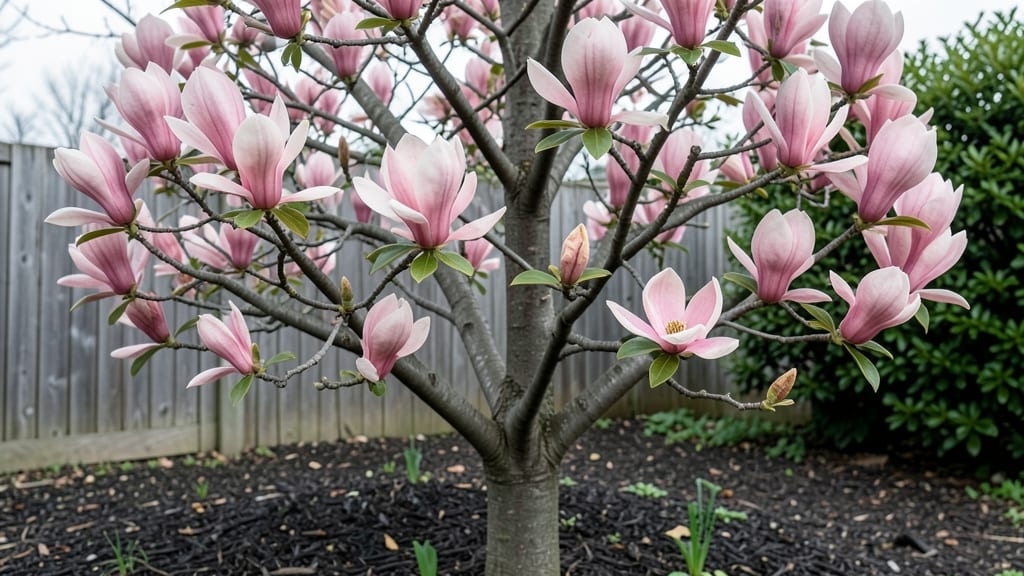
Your pink magnolia blooms 🌸 are the star of spring—but without the right care, their show cuts short by weeks.
Picture this: vibrant pink blossoms fading by early May, leaving your garden looking bare before summer even begins. That’s the heartbreak of unpruned magnolias, but here’s the good news: a few simple cuts at the right time can turn a two-week bloom into a month-long spectacle.
In USDA Zone 6a, timing is everything. Prune too early, and you risk cutting off next year’s flowers. Prune too late, and you miss the chance to shape your tree for bigger, brighter blooms.
I’ll walk you through the exact steps—when to prune, what tools to use, and how to spot the three signs your magnolia is begging for a trim.
By the end, you’ll know how to turn your pink magnolia from a fleeting spring highlight into the showstopper it’s meant to be—year after year.
When and how to prune pink magnolias for maximum blooms
Pink magnolias are legendary for their fragrant, show-stopping blooms, but their beauty relies heavily on proper pruning timing. Pruning at the wrong time can reduce flower production or stress the tree, while strategic cuts can extend bloom seasons by weeks.
The key lies in understanding when to prune—either in late winter or post-bloom—and how to make cuts that encourage larger, healthier flowers.
Magnolias bloom on old wood, meaning their flower buds form the previous year. This means pruning too late can remove next year’s blooms. However, light pruning after flowering can improve air circulation and reduce disease risk.
The goal is to balance bloom preservation with tree health. Let’s break down the science-backed approach to pruning for maximum pink magnolia blooms.
Step-by-Step Pruning Guide for Pink Magnolias
-
Step 1: Choose the Right Time
Late winter (just before buds swell) or immediately after blooms fade. Never prune during active bloom season.
-
Step 2: Gather the Right Tools
Use sterilized, sharp pruners (for cuts ½-inch above a bud) and a pruning saw for thicker branches. Disinfect tools with rubbing alcohol to prevent disease.
-
Step 3: Remove Dead or Weak Wood
Cut out dead, diseased, or crossing branches first. These compete with healthy growth for energy and can reduce bloom quality.
-
Step 4: Thin the Canopy
Selectively remove 10-20% of dense foliage to improve airflow. Focus on inner branches that block sunlight from reaching the center.
-
Step 5: Shape for Future Blooms
Avoid heavy topping or shearing. Instead, prune to open the tree’s center—this encourages larger flower clusters by reducing competition.
-
Step 6: Clean Up
Remove all pruned debris and sterilize tools again. Apply mulch around the base to retain moisture and protect roots.
Timing is everything with pink magnolias. If you prune in late winter (just as buds begin to swell), you’ll encourage stronger new growth for next year’s blooms. However, if you prefer post-bloom pruning, wait until after all flowers have fallen—typically 4-6 weeks post-bloom.
This timing ensures you don’t accidentally remove next year’s flower buds.
Never prune during active bloom season (spring). Doing so can severely reduce next year’s flowers since buds form on old wood. Even light pruning during this time can stress the tree and lead to fewer, smaller blooms.
Think of it as a sacred window—prune outside of it, and your magnolia will reward you with vibrant, long-lasting blooms.
When making cuts, always prune just above a bud that faces outward. This opens the tree’s canopy and directs energy toward larger, healthier flowers. Avoid flush cuts or stub cuts, as these can invite disease.
Instead, use the 45-degree angle technique for cuts larger than ¼-inch to prevent water from pooling.
One common mistake is over-pruning to encourage more blooms. Magnolias respond poorly to heavy cuts—they’re slow to recover and may skip blooming entirely if stressed. Stick to light, strategic pruning (no more than 20% of the canopy) to maintain both tree health and flower production.
After pruning, monitor your magnolia for signs of stress, such as yellowing leaves or wilting branches. If you see these, reduce watering slightly and apply a balanced fertilizer (like 10-10-10) in early spring to support recovery.
With the right approach, your pink magnolia will thank you with weeks-long bloom seasons and show-stopping color.
For maximum impact, combine pruning with proper watering and mulching. Deep water your magnolia once a week during dry spells, and apply 2-3 inches of mulch around the base (keeping it 6 inches away from the trunk).
This retains moisture and protects roots, ensuring your tree stays healthy enough to produce abundant pink blooms year after year.
Common pruning mistakes that shorten pink magnolia bloom seasons
Pink magnolia blooms are a garden’s crowning glory—but their beauty can vanish faster than you think if pruning goes wrong. Over-pruning or poor timing can slash bloom production by up to 50%, leaving your tree looking sparse and stressed.
The key is understanding what your magnolia needs to thrive, not just what it tolerates.
Many gardeners make well-intentioned mistakes that backfire, like cutting too late in the season or removing too many branches at once. These errors don’t just reduce flowers—they can weaken your tree’s structure and invite pests.
For example, pruning after mid-summer signals the tree to focus on new growth instead of next year’s buds.
- Pruning in late summer: New growth won’t harden before winter, leading to dieback.
- Removing more than 25% of branches: Over-stresses the tree, reducing next year’s flower buds.
- Cutting flower buds directly: Magnolias set buds the previous year—removing them now means fewer blooms next spring.
Let’s tackle the top 5 pruning blunders that rob your pink magnolias of their show-stopping blooms—and how to fix them. First, wrong timing is the #1 offender. Pruning at the wrong time forces your tree to prioritize leafy growth over flowers.
For example, cutting back after June can delay or even prevent next spring’s blooms entirely.
Another silent killer is improper cut angles. A jagged or uneven cut exposes raw wood to disease and pests. Always make cuts at a 45-degree angle, just above a outward-facing bud.
This ensures smooth healing and encourages healthy new growth. I’ve seen magnolias with ragged cuts develop fungal spots within weeks—ruining both aesthetics and health.
Don’t forget about deadheading (or not doing it). While magnolias don’t need aggressive deadheading like annuals, removing spent blooms redirects energy to next year’s buds. Simply snip off faded flowers with clean pruners—no need for heavy-handed pruning. This small step can extend your bloom season by 2-3 weeks.
Finally, ignoring branch structure leads to weak growth. Thin out crossing branches to improve airflow, but never remove more than 1/3 of the canopy in one session. A well-structured magnolia blooms more abundantly because it’s not struggling to support its own weight.
By avoiding these mistakes, your pink magnolia will reward you with longer, brighter bloom seasons year after year. Start with just one correction—like timing your pruning to late winter—and watch the difference in next spring’s display. 🌸