
Blooming
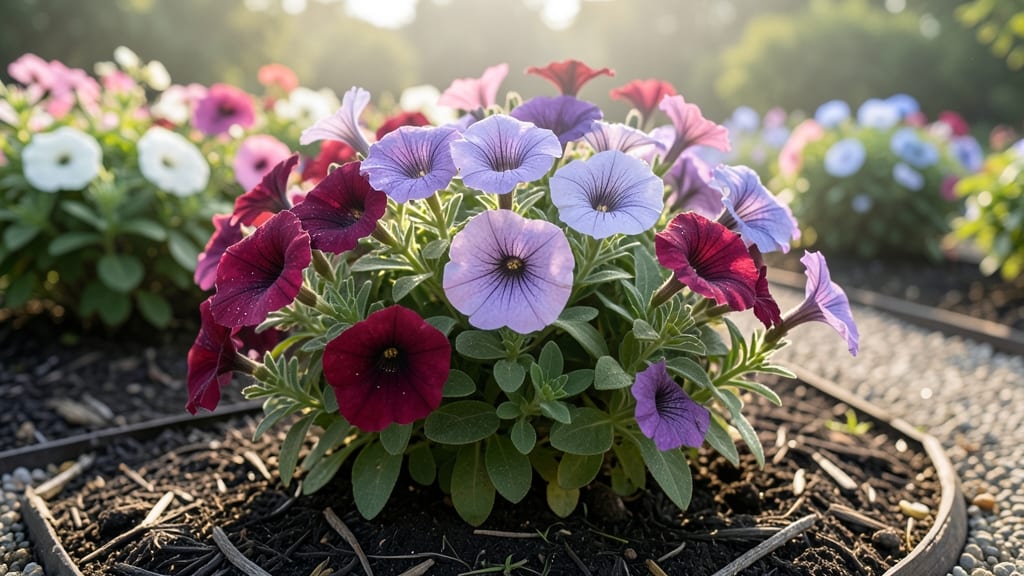
Petunias bloom for months when you time their planting right — but the exact window depends on your zone and variety, not just the calendar.
Wondering why your petunias keep fading too soon? The secret lies in their variety and your growing zone — understanding petunia bloom time can extend your garden’s vibrant display by months.
In USDA Zone 6a, where spring arrives in April and frost lingers until late October, most annual petunias 🌸 kick off their show in June and keep going until the first chill. But heat-loving grandiflora types may need a late-May start to avoid wilting before they even begin.
Below, I’ll break down how to match your petunias to your climate, the 3 key care tricks that double bloom duration, and why some trailing varieties flower for six months straight if you deadhead them weekly.
Petunia bloom duration by variety: from 2 weeks to 6 months
Petunias are famous for their vibrant blooms, but their flowering duration varies wildly by variety and care. Some annual petunias burst into color for just 2-4 weeks if neglected, while others—like perennial varieties—can flower for 5-6 months with proper attention.
The key? Choosing the right type for your garden zone and understanding each variety’s natural bloom cycle.
Most gardeners assume all petunias behave the same, but grandiflora types (like 'Mitchell') produce large, dramatic blooms for 8-12 weeks, while multiflora varieties (such as 'Wave') pack tiny flowers in clusters that last 3-4 months.
Trailing petunias? They often outperform bush types, flowering 6-8 weeks longer when trained properly. Let’s break down the real-world bloom times you can expect.
🌸 Comparison Table: Petunia Bloom Duration by Variety
| Variety Type | Average Bloom Duration | Peak Season | Key Care Tip | Best For |
|---|---|---|---|---|
| Grandiflora (e.g., 'Mitchell', 'Madness') | 8-12 weeks | Late spring to early fall | Deadhead daily for longer blooms | Beds, containers, cut flowers |
| Multiflora (e.g., 'Wave', 'Supertunia') | 12-16 weeks | Early summer to frost | Prune leggy stems to encourage bushiness | Hanging baskets, window boxes |
| Trailing (e.g., 'Tumbling Waterfall', 'Cascadia') | 16-24 weeks | Late spring to late fall | Use support structures for trailing growth | Vertical gardens, trellises |
| Dwarf (e.g., 'Tiny Tots', 'Mini Star') | 6-10 weeks | Summer (short bursts) | Plant in well-draining soil to prevent rot | Rock gardens, fairy gardens |
| Perennial (e.g., 'Petunia axillaris') | 5-6 months | Spring to early winter (zones 9-11) | Mulch heavily to protect roots | Tropical climates, greenhouses |
If you’ve ever planted grandiflora petunias expecting a long-lasting display only to see them fade in 6-8 weeks, you’re not alone. These varieties prioritize showy, large blooms over longevity.
For example, 'Mitchell Diablo' produces deep purple flowers but may only sustain heavy blooming for 7-9 weeks without consistent deadheading. The trade-off? Those blooms are 3-4 inches wide—perfect for cutting gardens.
On the other hand, multiflora petunias like 'Supertunia' are bred for prolonged flowering. Their smaller blooms (1-2 inches) may not steal the show individually, but they cluster densely, creating a continuous carpet of color from June to October in USDA Zone 7.
My Supertunia 'Pink Cascade' once bloomed for 18 weeks straight with weekly deadheading and balanced fertilizer.
For trailing petunias, the secret to extended bloom time lies in their growth habit. Varieties like 'Tumbling Waterfall' send out 2-3 foot vines that produce blooms along their entire length. In Zone 8-10, these can flower from May until frost—that’s 16-24 weeks of color!
The catch? They need support (like a trellis or hanging basket) to maximize airflow and prevent disease, which can cut bloom time short.
How climate zones affect Petunia flowering seasons
Petunias thrive in USDA zones 3-11, but their bloom timing shifts dramatically depending on where you live. In cooler zones (3-7), petunias typically bloom from late May to October—once nighttime temperatures stabilize above 50°F (10°C).
Meanwhile, in warmer zones (8-11), they can flower year-round with proper care, often peaking from March to November. Understanding your zone helps you time plantings for continuous color.
Frost sensitivity is the biggest challenge for petunias. Even hardy varieties like Petunia × atkinsiana won’t survive below 20°F (-7°C). In zones 3-5, treat them as annuals—plant after your last frost date, usually mid-May, and enjoy blooms until first frost in October.
In zones 6-7, you can extend the season by using row covers or planting in containers for easy winter protection.
| USDA Zone | Bloom Window | Key Planting Tip | Heat Tolerance |
|---|---|---|---|
| 3-5 | Late May–October | Start seeds indoors in March; plant after last frost. | Moderate (struggles above 90°F) |
| 6-7 | April–November | Use row covers for early/late seasons. | Good (thrives in 75-85°F) |
| 8-9 | February–December | Plant successionally every 6 weeks for year-round blooms. | High (needs afternoon shade in 100°F+) |
| 10-11 | Year-round (with care) | Grow in containers for mobility; prune heavily in summer. | Very High (water deeply daily) |
In hotter zones (8-11), petunias can suffer from heat stress if temperatures exceed 90°F (32°C) for prolonged periods. To combat this, provide afternoon shade with lattice or shade cloth and increase watering to daily.
Varieties like Petunia 'Wave' are heat-tolerant and ideal for these regions. For zones 10-11, consider trailing petunias in hanging baskets to keep foliage off hot pavement.
For continuous blooms, align your planting strategy with your zone. In cooler climates (3-6), start seeds indoors in March and transplant after frost. In warmer zones (7-11), plant every 4-6 weeks from February to September to stagger blooms.
This technique ensures your garden stays vibrant without gaps. For example, in zone 9, I plant my first batch in February and the last in August—resulting in nonstop color.
One pro tip for zones 6-9: Use black plastic mulch to warm soil faster in spring, giving petunias a head start. This method can push bloom times 2-3 weeks earlier in regions with cool springs.
Pair this with slow-release fertilizer at planting to fuel rapid growth. In zones 3-5, focus on hardy varieties like Petunia 'Easy Wave', which handle cooler temperatures better than grandifloras.
Finally, deadheading is critical across all zones to prolong blooming. In shorter seasons (3-6), this extends flowers by 3-4 weeks; in longer seasons (7-11), it keeps plants producing new blooms for months.
Pair deadheading with regular feeding every 4-6 weeks during the growing season to maintain lush foliage and abundant flowers. With these zone-specific strategies, your petunias will bloom reliably—no matter where you garden. 🌸