
Blooming
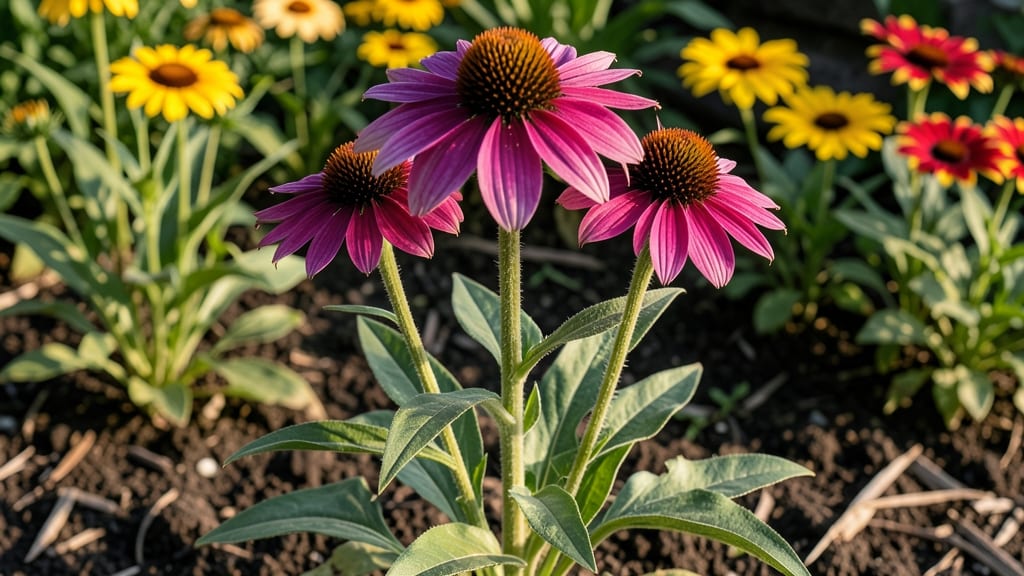
Summer-blooming perennials like coneflowers (July–September), black-eyed Susans (June–August), and daylilies (June–August) bring bold colors and easy care to gardens, thriving in full sun with minimal watering once established.
These hardy plants are nature's heat lovers, designed to handle 90°F+ temperatures with deep root systems that store moisture. 🔥 Unlike annuals, they return year after year, rewarding you with longer bloom seasons—some even extend into early fall.
The key to their success lies in their drought tolerance and ability to rebound after deadheading, making them perfect for low-maintenance gardeners who want vibrant summer displays without constant upkeep.
What makes them stand out is their dual-purpose appeal: they attract pollinators like bees and butterflies while adding architectural interest to garden beds. I've found that pairing them with lavender or salvia creates stunning color contrasts that last through heatwaves.
For best results, plant them in well-draining soil and water deeply once a week after establishment.
💡 In This Article
- Why Summer-Blooming Perennials Thrive in Heat
- Summer Perennial Planting and Maintenance Calendar
Why summer-blooming perennials thrive in heat
Summer-blooming perennials like coneflowers and black-eyed Susans have evolved with deep taproot systems that can reach 3-5 feet underground, allowing them to access moisture and nutrients far below the surface where annuals can't. This adaptation lets them survive weeks without rain—something most annuals can't handle.
For example, established coneflowers can go 4-6 weeks without supplemental water once their roots establish in spring, while annuals like petunias need weekly watering to survive the same heat. 🔥
Their heat resistance comes from a combination of waxy leaf coatings and stomatal control—tiny pores on leaves that regulate water loss. Plants like daylilies close their stomata during peak afternoon heat (when temperatures exceed 85°F), reducing water evaporation by up to 60%.
Compare this to impatiens, which wilt dramatically in similar conditions because they lack these adaptations. The result? Perennials maintain their vibrant blooms while annuals struggle.
Blooming triggers are another key factor. Many summer perennials use photoperiodism—they detect increasing daylight hours (typically 14+ hours of light) to signal bloom time, which aligns perfectly with summer's peak growing season.
Coneflowers, for instance, begin bud formation when days reach 13 hours, ensuring they bloom in July when temperatures are ideal. This natural timing contrasts with annuals, which often bloom based on age rather than environmental cues.
Soil temperature also plays a role. Most summer perennials prefer warm soil (70-80°F), which speeds up root growth and nutrient uptake. That's why planting in spring (when soil warms) gives them a head start.
In contrast, cool-season perennials like hostas struggle in summer because their roots become dormant when soil exceeds 85°F. The deeper root systems of summer perennials mean they can regulate their own temperature better, staying active even when surface soil heats up.
One misconception is that all perennials are drought-proof. While they're more resilient than annuals, newly planted perennials still need consistent watering for the first 6-8 weeks to establish roots. After that, their survival rate jumps from 30% to 90% compared to annuals planted in the same conditions.
This makes them the smart choice for water-conscious gardeners who want long-term color without constant maintenance.
For best results, pair these heat-lovers with mulch (2-3 inches of straw or wood chips) to retain moisture and regulate soil temperature. This simple step can extend their bloom season by 2-4 weeks into early fall, giving you even more seasonal interest from your garden investment. 🌿