
Blooming
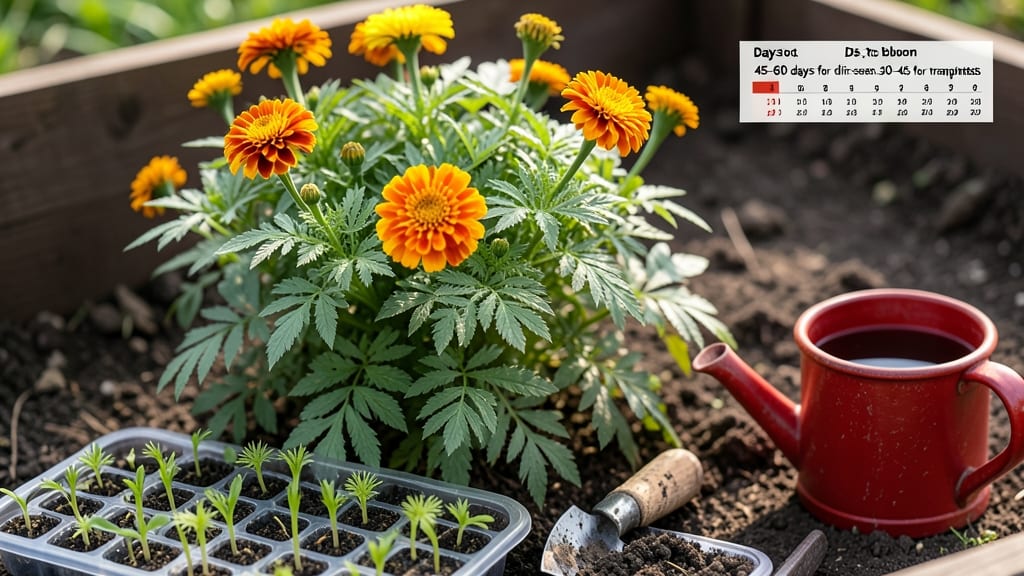
Marigolds bloom in 4 to 12 weeks from seed, but the exact timing depends on the variety, your climate, and a few care tricks most gardeners miss.
Picture this: you’ve just tucked those tiny seeds into warm soil, dreaming of golden blooms by summer. But instead of cheerful 🌼 faces lighting up your garden, you’re staring at leafy greens for what feels like forever.
The good news? With the right approach, you can shave weeks off that wait—and I’ll show you how.
Fast-growing varieties like French marigolds can bloom in as little as 6 weeks, while others take closer to 3 months. Soil temperature, sunlight, and even watering habits play a bigger role than you might think.
Skip the guesswork: I’ll break down the fastest ways to get those vibrant blooms without the delay.
Ready to transform your seed-to-bloom timeline? You’ll learn which marigolds beat the clock, how to prep soil for speedy growth, and the one mistake that keeps blooms from showing up on schedule. Let’s get those flowers in the ground—and in bloom—faster than ever.


Fastest marigold varieties from seed to full bloom
If you're eager to see those bright orange and golden blooms quickly, choosing the right marigold variety makes all the difference. Some varieties bloom in as little as 4-6 weeks, while others take up to 12 weeks or more.
The key is understanding which types thrive fastest in your growing conditions—whether you're in a hot southern climate or a cooler northern zone.
Marigolds are divided into three main types: French marigolds, African marigolds, and Signet marigolds. Each has its own bloom timeline, height, and care requirements.
For example, French marigolds like 'Bonanza' are known for their fast germination and quick flowering, while African marigolds like 'Tangerine' can take longer but produce larger, showier blooms. Let’s break down the fastest options to get you those vibrant flowers ASAP.
| Variety | Seed to Bloom Time | Height (ft) | Best For | Notes |
|---|---|---|---|---|
| French Marigold 'Bonanza Mix' | 4-6 weeks | 1-2 ft | Borders, containers, early blooms | Fastest germinating; compact and bushy |
| French Marigold 'Queen Sophie' | 5-7 weeks | 1-1.5 ft | Cut flowers, pollinator gardens | Double blooms; heat-tolerant |
| Signet Marigold 'Petite Gold' | 6-8 weeks | 0.5-1 ft | Containers, windowsills, small spaces | Dwarf variety; great for indoor growing |
| African Marigold 'Tangerine' | 8-10 weeks | 2-3 ft | Cut flowers, tall borders | Larger blooms; needs more sunlight |
| African Marigold 'Janie' | 7-9 weeks | 1.5-2 ft | Pollinator gardens, pest control | Disease-resistant; continuous blooming |
| French Marigold 'Gold Rush' | 4-5 weeks | 1-1.5 ft | Early-season color, containers | Fastest bloomer; great for cool climates |
As you can see, French marigolds like 'Bonanza' and 'Gold Rush' are the fastest bloomers, often reaching full bloom in just 4-6 weeks. These varieties are perfect if you're planting in early spring or need quick color for summer containers.
Meanwhile, African marigolds like 'Tangerine' take longer but reward you with larger, showier blooms that last all season.
Your growing zone and planting time also play a huge role. If you plant seeds in late spring (after the last frost), you’ll see blooms 3-4 weeks earlier than if you sow in early spring.
For example, in Zone 7, planting 'Bonanza' seeds in May could mean first blooms by June, while planting in April might delay them until late June.
Don’t overlook Signet marigolds like 'Petite Gold' if you're working with limited space. These tiny powerhouses bloom in 6-8 weeks and thrive in containers or windowsill gardens. They’re ideal for balcony gardens or indoor growing with a sunny window.
Just ensure they get at least 6 hours of sunlight daily to speed up their growth cycle.
For maximum speed, pair your fastest marigold varieties with warm soil (at least 60°F) and full sun exposure. If your soil is too cold or shady, germination and growth slow down significantly.
A simple trick? Cover your seed trays with clear plastic wrap to trap heat and speed up sprouting by 2-3 days.
Pro tip: If you’re in a hotter climate (like Zone 9 or 10), you can even plant marigold seeds in early spring and expect blooms by late April or May. In cooler zones, wait until <
Soil and sun secrets to speed up marigold blooming
Marigolds thrive when you give them the right conditions—sunlight, well-draining soil, and a few extra care tricks can cut your seed-to-bloom time by up to 30%.
Most varieties bloom in 6-8 weeks, but with these science-backed tweaks, you could see those cheerful orange and yellow flowers in as little as 4-6 weeks.
Start with full-sun exposure—marigolds need at least 6-8 hours of direct sunlight daily. Place them in the sunniest spot in your garden, like a south-facing bed, to maximize growth speed. Even just an extra 2 hours of sunlight can shave a week off your blooming timeline.
🌱 Marigold Bloom Accelerator Guide
Pro Tip: Mix in compost for faster germination and mulch to retain moisture.
Your soil pH plays a huge role—marigolds prefer slightly acidic to neutral soil (pH 6.0-7.0). Test your soil with a home pH kit and amend with lime (to raise pH) or sulfur (to lower it) if needed.
Well-draining soil is critical; marigolds hate soggy roots, so add perlite or sand to heavy clay soil.
Feed your marigolds with a balanced fertilizer (like 5-10-10) when they’re about 3 inches tall. A light application every 4-6 weeks during the growing season boosts flower production. Avoid over-fertilizing—too much nitrogen makes them grow leafy instead of bloomy.
Water deeply but infrequently—1 inch per week is ideal. Let the top 1-2 inches of soil dry between waterings to prevent root rot. Morning watering is best; it gives leaves time to dry, reducing fungal diseases that can slow growth.
Deadhead spent blooms regularly to encourage continuous flowering. Pinch off the old flowers with your fingers or snip them with clean pruning shears. This redirects the plant’s energy to producing new buds instead of seeds, speeding up your next round of blooms.