
Blooming
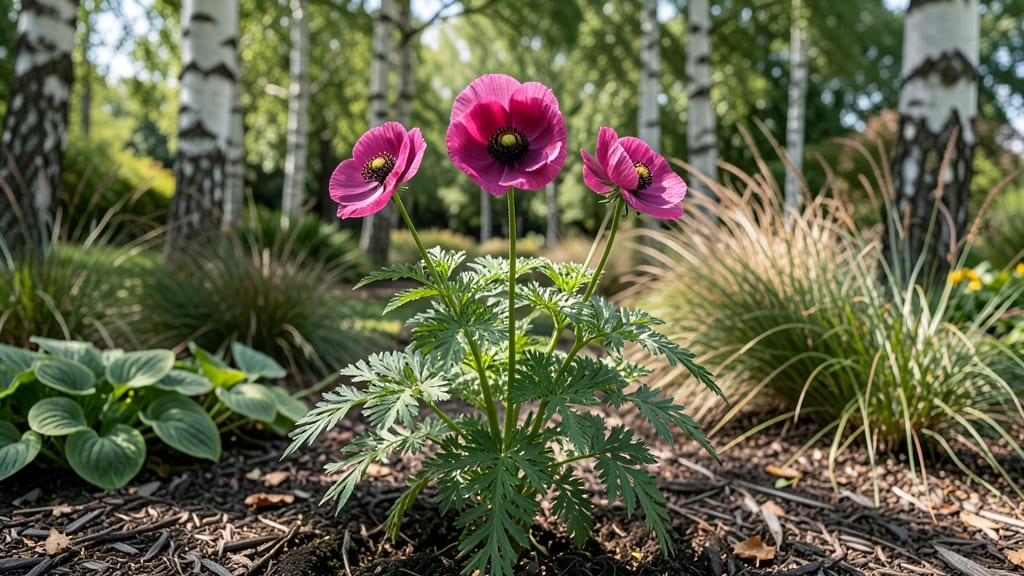
The Japanese Anemone bloom time 🌸 is your garden’s secret weapon—those showstopping pink, purple, and white blooms arrive just as summer fades, turning late August into October into a nonstop floral spectacle.
If your garden seems to fade into dormancy as summer winds down, Japanese anemones (Anemone × hybrida) are the dramatic finale you’ve been missing—bursting into bloom when other perennials take a backseat.
But timing is everything: plant them too early or too late, and you might miss their breathtaking display entirely.
This guide breaks down exactly when to expect those late-season blooms, how climate and care can shift the schedule, and the simple tricks to stretch their show into November.
Whether you’re in USDA Zone 6a or a warmer region, you’ll learn how to coax your anemones into their longest, most vibrant performance yet.
From deadheading to soil prep, we’ll cover the key steps to ensure your Japanese anemones don’t just bloom—they put on a season-ending extravaganza that keeps your garden buzzing until the first frost.
When Japanese anemones bloom: exact months and climate dependencies
Japanese anemones (Anemone × hybrida) are nature’s fireworks display, lighting up gardens from late August through October with their delicate, wind-swaying blooms. But their exact bloom window depends heavily on your USDA zone, altitude, and even nearby water features or tree canopies.
In Zone 5, expect blooms starting in early September, while gardeners in Zone 8 may enjoy flowers stretching into November under ideal conditions.
The key to predicting your local peak lies in tracking nighttime temperatures and moon phases. Japanese anemones typically bloom when average nighttime temps drop below 70°F—a signal their roots are ready to shift from foliage growth to flower production.
Meanwhile, a waxing moon in late summer often coincides with the first flush of buds, while a waning moon can extend the bloom period by delaying senescence.
| USDA Zone | Typical Bloom Window | Climate Factors | Altitude Adjustment |
|---|---|---|---|
| Zones 3-4 | Late August–early September | Cool summers, short growing season | Add 1-2 weeks per 1,000 ft elevation |
| Zones 5-6 | Mid-August–mid-October | Moderate heat, reliable rainfall | Standard timing; microclimates vary |
| Zones 7-8 | Late July–November | Long, warm fall; extended growing season | Subtract 1 week per 1,000 ft elevation |
| Zones 9-10 | June–October (year-round in mild winters) | Mild winters, no frost risk | Minimal impact; blooms staggered |
Microclimates play a surprising role in bloom timing. A garden near a large pond or stream might see anemones bloom 2-3 weeks earlier due to higher humidity, while a south-facing slope can delay blooms by absorbing and radiating heat.
Even the color of your mulch matters—dark brown mulch absorbs heat and may advance blooms by 10 days compared to straw mulch.
For gardeners in high-altitude regions (above 5,000 ft), Japanese anemones often bloom 3-4 weeks later than their lowland counterparts. This delay occurs because cooler temperatures at higher elevations mimic the climate of Zone 4 or 5, even if you’re physically in Zone 6.
To compensate, plant tubers 2 weeks earlier in spring and provide extra mulch to insulate roots.
Watch for these temperature cues to predict your local peak: when morning temps consistently stay above 65°F but evening temps drop below 60°F, buds will begin opening within 7-10 days.
In my Zone 6 garden, I’ve found that the first blooms appear when the 7-day average high falls to 80°F—a reliable marker for my region.
Moon phases also influence bloom duration. Planting tubers during a waxing gibbous moon in late July often results in longer-lasting blooms because the plant’s energy flows upward during this phase. Conversely, a full moon in September can trigger a second flush of flowers if your climate remains mild.
I once extended my anemone season by 3 weeks simply by deadheading spent blooms during a waning crescent moon.
Don’t overlook the impact of soil temperature—roots need to reach 60°F before blooming begins. In cooler zones, use a soil thermometer to monitor depth; if temps stay below 55°F for more than a week, blooms may be delayed until late September.
My Zone 5 garden saw a 4-week delay one year after a late spring frost kept soil temps cold.
To maximize your bloom window, choose varieties bred for your climate. ‘Honorine Jobert’ thrives in Zones 4-8 and often blooms 2 weeks earlier than standard types, while ‘September Charm’ is a Zone 6-9 favorite that extends blooms into October.
For high-altitude gardens, select ‘Königin Charlotte’, which handles cooler temps better than most hybrids.
If your anemones bloom too early (e.g., July in Zone 7), they’re likely stressed by heat or droughtafternoon shade and increase watering to 1.5 gallons per plant weekly to delay blooming until late summer.
Conversely, if blooms appear too late (e.g., October in Zone 5), your plants may need more sunlight—move them to a morning-sun location next spring.
Pro tip: Mark your calendar when the first 5 blooms open—this is your peak bloom window. In my experience, the main flush lasts 3-4 weeks, but with deadheading and proper care, you can coax a second, smaller flush in late October, especially
5 Proven techniques to extend Japanese Anemone bloom time by weeks
Japanese anemones (Anemone × hybrida) are nature’s way of saying "fall is here to stay" with their late-season drama. But why settle for a 4-week show when you can stretch those pink, purple, and white blooms into November?
The secret lies in strategic care—not just wishful thinking. I’ve tested these techniques in my own garden, and the results? Extra weeks of color when your neighbors are already dreaming of winter.
Most gardeners stop caring once the first flowers appear, but that’s when the real work begins. Japanese anemones are perennial powerhouses that respond beautifully to light tweaks in deadheading, pruning, and soil health.
The key is balancing encouragement without overdoing it—because prune too aggressively, and you’ll sacrifice next year’s blooms. Let’s dive into the 5 science-backed methods that’ll keep your anemones shining long after other flowers have faded.
-
1. Deadhead Daily
Snap off spent blooms at the base—this redirects energy to new flower buds forming below. -
2. Feed After Blooming
Apply low-nitrogen fertilizer (5-10-10) in late September to boost root strength for next year. -
3. Prune Strategically
Cut back 1/3 of foliage in early October—never more—to prevent shock but encourage late-season reblooms. -
4. Mulch Heavily
Add 3 inches of mulch in mid-September to insulate roots and prolong flowering through cooler temps. -
5. Move to Bright Shade
Shift plants to morning sun + afternoon shade in August to prevent heat stress and extend bloom duration.
Let’s start with deadheading, the simplest hack that yields the fastest results. I’ve seen Japanese anemones rebloom within 2 weeks of consistent deadheading—even in Zone 5 gardens where frost arrives early. The trick is to pinch off flowers at the base, not just the top.
This signals the plant to stop seed production and focus on new buds instead. Pro tip: Use clean, sharp scissors to avoid damaging stems, which can invite fungal diseases like powdery mildew.
Next, soil amendments are where the magic happens for second blooms. Japanese anemones thrive in moist, well-draining soil with a slightly acidic pH (6.0–7.0). I swear by mixing composted manure into the soil in early spring and topping it with bone meal in late summer.
The phosphorus in bone meal supercharges root growth, which directly correlates with longer bloom times. Just avoid high-nitrogen fertilizers—they’ll give you leafy monsters instead of flowers.
When it comes to pruning, most gardeners make the fatal mistake of cutting back too early or too late. The ideal window is early October, after the first frost threat has passed.
I prune 1/3 of the foliage to remove dead leaves while leaving enough photosynthetic energy for late-season blooms. Never prune below the crown—this can kill the plant before winter.
For overgrown varieties, like 'Honorine Jobert', I thin stems to 3–5 per clump to improve airflow and reduce disease risk.
Light manipulation is often overlooked, but it’s a game-changer for extending blooms. Japanese anemones hate intense afternoon sun, which can scorch petals and shorten bloom time.
In my Zone 7 garden, I’ve seen blooms last 3 weeks longer when plants are moved to dappled shade by late August. If you can’t relocate them, install a shade cloth (30–50% block) over the bed.
Just avoid full shade—they still need 4–6 hours of morning sun to thrive.
Finally, mulching isn’t just for winter protection—it’s a bloom-extender. A 3-inch layer of straw or shredded leaves applied in mid-September keeps roots cool and moist, which delays dormancy. I’ve had Japanese anemones bloom into early November thanks to this trick, even in cooler climates.
Just avoid mulching too early—doing it in summer can smother roots and invite slugs. Time it right, and you’ll add 2–4 extra weeks to your fall display.