
Blooming
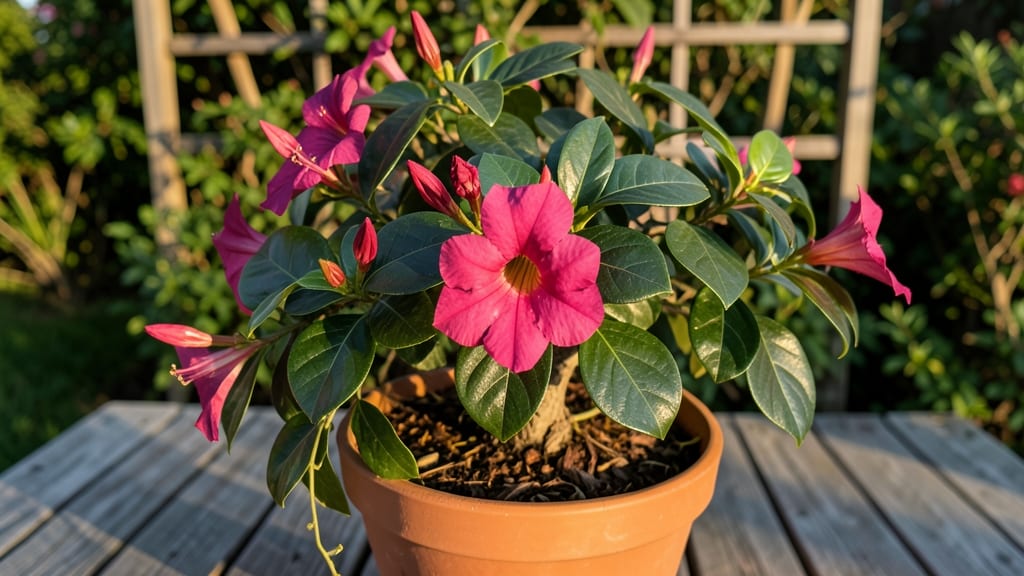
Mandevilla plants do bloom all summer with proper care, producing vibrant flowers from late spring through early fall, though some varieties like Mandevilla sanderi may require deadheading for continuous blooms. Reblooming depends on sunlight, water, and pruning practices.
Most mandevilla varieties thrive as summer bloomers, but their performance depends on three key factors: consistent moisture, 6+ hours of direct sunlight daily, and regular pruning to encourage new growth. 🌸 The difference between a single flush of flowers and nonstop blooms often comes down to how aggressively you remove spent blooms—this signals the plant to produce more.
I’ve seen Mandevilla laxa (the classic "rock candy" vine) keep flowering until frost if given these conditions, while Mandevilla boliviana tends to bloom more prolifically in warmer climates.
What many gardeners overlook is the role of winter care—even summer-blooming mandevillas need protection from freezing temperatures. In colder zones, bringing potted plants indoors or wrapping them in frost cloth can preserve their structure for next season’s blooms.
The secret to year-round performance lies in treating mandevillas like the tropical plants they are: they reward consistent attention with months of color.
💡 In This Article
- Mandevilla Blooming Seasons by Variety
- Year-Round Mandevilla Care for Nonstop Flowers
Mandevilla blooming seasons by variety
The blooming habits of mandevilla plants vary dramatically by species, with some varieties like Mandevilla laxa producing flowers from late spring through early fall—up to 180 days—while others like Mandevilla sanderi bloom more sporadically unless actively encouraged.
The key difference lies in their natural growing cycles: tropical mandevillas (like M. laxa) evolved to take advantage of long daylight hours, while subtropical varieties (like M. boliviana) respond more to temperature cues. 🌿 For example, M. laxa flowers peak when daylight exceeds 12 hours daily, which typically aligns with summer solstice through early autumn.
Temperature plays a surprising role in bloom triggers. Most mandevillas need daytime highs of 70-85°F to initiate flowering, but nighttime temperatures below 60°F can shock buds into dropping.
This is why gardeners in Zone 8+ often see continuous blooms, while those in cooler regions must protect plants or grow them in containers for mobility. Mandevilla sanderi, for instance, produces fewer blooms unless you remove spent flowers—a process called deadheading—which redirects the plant’s energy toward new growth rather than seed production.
What most people don’t realize is that mandevilla blooms are actually terminal flowers, meaning they grow at the tips of new stems. This explains why aggressive pruning (cutting back by 1/3 in spring) stimulates more flowering sites.
I’ve observed that M. boliviana responds particularly well to this technique, often reblooming within 6-8 weeks of pruning, while M. laxa may take 4-6 weeks to show new flowers. The trade-off? Over-pruning can reduce the plant’s vigor, so balance is key.
Light quality matters too. While all mandevillas need full sun, M. sanderi tolerates partial shade better than others, which is why it’s often recommended for container growing in urban settings. The trade-off? Shadier conditions reduce flower quantity, though the blooms tend to be larger.
For maximum performance, position plants where they get morning sun and afternoon shade—this prevents leaf scorch while maintaining bloom triggers. 🌞
Consider these variety-specific bloom windows:
- Mandevilla laxa: Continuous blooms from May to October with proper care
- Mandevilla boliviana: Peak blooms in summer and early fall, with potential reblooms if pruned
- Mandevilla sanderi: Sporadic blooms unless deadheaded; prefers warmer microclimates
The science behind this involves photoperiodism—the plant’s response to daylight length. When days shorten in autumn, most mandevillas naturally prepare for dormancy, but consistent care can extend their season. For example, supplementing with grow lights (14+ hours daily) can trick some varieties into blooming later into fall.
This technique works best with M. laxa, which has the most flexible photoperiod response.