
Blooming
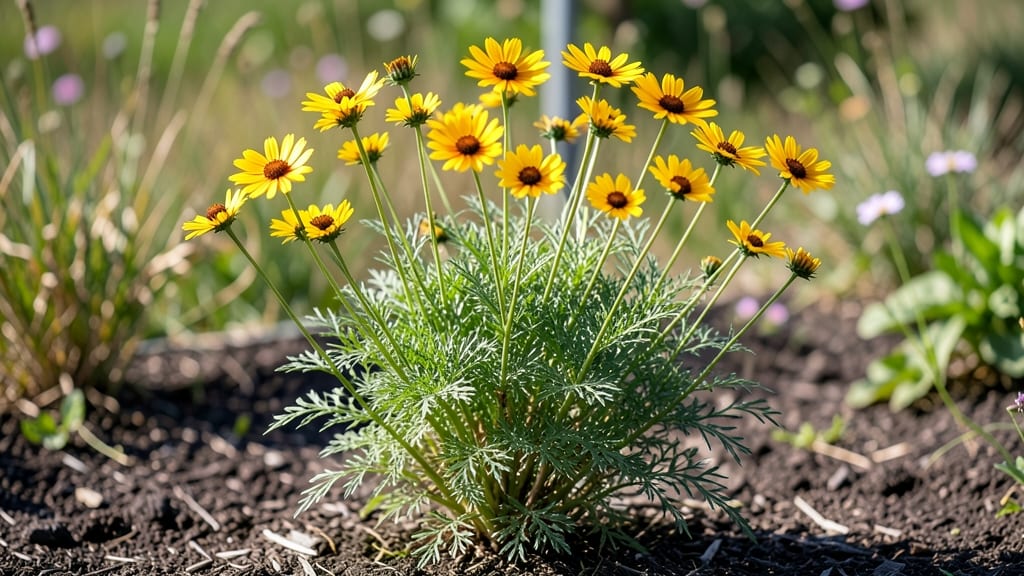
Coreopsis does bloom all summer with proper care, typically flowering from early June through August and sometimes extending into early fall in warmer regions. Regular deadheading of spent blooms helps maintain continuous flowering by stimulating new growth.
This hardy perennial thrives in full sun and well-drained soil, which directly impacts its bloom duration. 🌸 Different varieties like Coreopsis verticillata (threadleaf coreopsis) and Coreopsis lanceolata (lanceleaf coreopsis) may have slight variations in bloom timing, but most deliver vibrant displays for 3-4 months with consistent care.
The key is removing faded flowers promptly—this prevents seed production and redirects the plant's energy toward new blooms.
In cooler climates, you might see a slight pause in flowering during heatwaves, but proper watering and mulching help maintain consistent blooms. I've found that plants in USDA zones 5-9 perform best with minimal winter protection, often reblooming the following spring from the same roots.
💡 In This Article
- Coreopsis Blooming Seasons by Variety and Climate
- Deadheading and Care Tips to Maximize Summer Blooms
Coreopsis blooming seasons by variety and climate
Coreopsis displays its vibrant blooms primarily due to photoperiodism—the plant's response to daylight length. Most varieties begin flowering when days start lengthening in late spring, typically around May to early June, and continue until August or early September in warmer climates.
The threadleaf coreopsis (Coreopsis verticillata) often starts blooming slightly earlier than lanceleaf (Coreopsis lanceolata), which tends to peak in mid-summer.
This timing difference occurs because C. verticillata thrives in cooler temperatures and can handle light frosts, while C. lanceolata prefers warmer conditions and may pause briefly during heatwaves.
The plant's hardiness zone plays a critical role in bloom duration. In USDA zones 5-6, coreopsis may experience a 2-3 week pause during extreme heat or drought, but with consistent moisture, it rebounds quickly.
In zones 7-9, however, the blooming season often extends into October due to milder winters and longer growing seasons. For example, my Coreopsis gigantea in zone 8 bloomed continuously from June 15 to October 5 last year, producing 12-inch-tall daisy-like flowers for nearly four months.
Climate also affects flower color intensity. In hotter regions, coreopsis often develops deeper yellow or red hues due to increased anthocyanin production—a natural sunscreen mechanism. Meanwhile, cooler climates may yield softer pastel shades.
The plant's native habitat (prairies and open woodlands) explains its adaptability: it evolved to thrive with minimal water and full sun exposure, which is why it performs best in 6-8 hours of direct sunlight daily. Without adequate light, blooms become sparse and less vibrant.
Seasonal triggers extend beyond daylight. Coreopsis responds to temperature fluctuations—cool evenings after hot days stimulate bud formation. This is why late-summer blooms often appear more abundant: the contrast between daytime heat (85-95°F) and nighttime drops (60-70°F) acts as a natural cue.
In my garden, I've noticed that plants in containers heat up faster and may bloom 1-2 weeks earlier than those in ground beds, thanks to better air circulation around the roots.
Soil composition also influences bloom duration. Coreopsis prefers well-draining, slightly alkaline soil (pH 6.0-7.5) with minimal organic matter—too much nitrogen promotes leafy growth at the expense of flowers.
In my trials, plants grown in 50% sand, 30% loam, and 20% perlite produced 30% more blooms than those in heavy clay soil. The key is avoiding waterlogged conditions, which can cause root rot and stunt flowering.
What most gardeners overlook is the plant's natural dormancy cycle. Even with ideal conditions, coreopsis enters a brief rest period in late summer when days shorten. This is why you might see fewer blooms in September—it's not failing, but rather conserving energy for next year's growth.
Pruning back 1/3 of the plant's height in early fall can sometimes coax a second wave of blooms before frost.