
Blooming
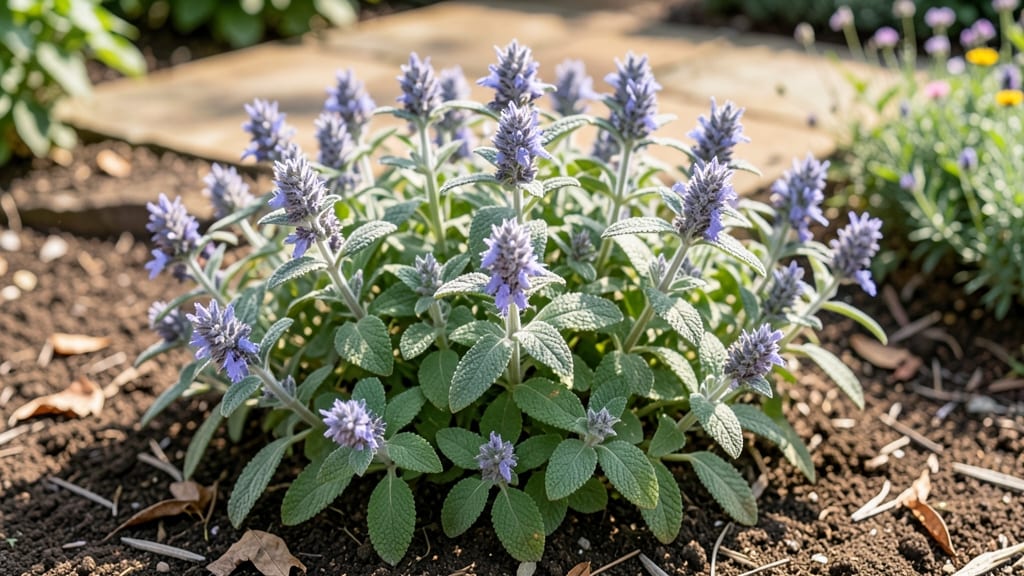
Catmint does bloom all summer when given the right conditions, thriving from early summer through frost with consistent blooms. Regular deadheading and full-sun exposure with well-drained soil are key, while varieties like 'Walker’s Low' and 'Blue Spire' naturally extend their flowering season.
Catmint's ability to bloom continuously comes down to its resilience and adaptability. 🌿 Unlike many annuals, catmint is a perennial that responds well to light pruning, which encourages new growth and prevents legginess. The plant's deep roots also help it withstand dry spells, making it a low-maintenance choice for gardeners.
I've seen firsthand how a simple monthly trim can keep flowers coming for weeks longer than expected.
What sets catmint apart is its drought tolerance combined with its love for sunlight. Most varieties thrive in 6+ hours of direct sun daily, which triggers continuous flowering.
The key is balancing pruning with natural growth cycles—cutting back too aggressively can reduce blooms, while neglecting maintenance leads to sparse, less vibrant flowers. For best results, I recommend pruning after each flush of blooms fades.
💡 In This Article
- How Catmint Extends Its Blooming Season Naturally
- Best Catmint Varieties for Continuous Summer Flowers
How catmint extends its blooming season naturally
Catmint's ability to bloom continuously all summer stems from its unique botanical adaptations. Unlike many perennials, catmint is a short-day plant, meaning it responds to decreasing daylight hours by producing more flowers rather than going dormant.
This photoperiod sensitivity allows it to keep blooming well into autumn, even as temperatures drop. The plant's deep root system—extending up to 3 feet—anchors it firmly in the soil, accessing moisture and nutrients that support prolonged flowering. 🌿
Pruning plays a crucial role in extending catmint's blooming season. When you remove spent flowers (deadheading), you're not just cleaning up—you're signaling the plant to redirect its energy toward producing new blooms.
This process, called reblooming induction, works because catmint's growth habit is semi-woody at the base, allowing it to regenerate quickly. I've found that pruning back by one-third after the first flush of flowers fades can trigger a second wave of blooms within 4-6 weeks, often lasting until frost.
The plant's drought tolerance is another key factor. Catmint's native habitat in Mediterranean climates means it's adapted to thrive with minimal water once established. In fact, overwatering can be more damaging than drought, as it promotes leafy growth at the expense of flowers.
A well-drained soil mix with 50-70% sand or gravel helps prevent root rot while maintaining the moisture balance catmint prefers. This hardiness means you can often skip regular watering once the plant is established, freeing up time for other garden tasks.
Temperature also influences catmint's blooming duration. Most varieties tolerate heat waves up to 95°F without wilting, but they'll produce more abundant flowers when daytime temperatures stay between 70-85°F.
The plant's ability to handle light frosts (down to 20°F) means it can continue flowering well into autumn, often until the first hard freeze. This makes catmint one of the most reliable perennial flowers for late-season color in the garden.
What many gardeners don't realize is how catmint's growth habit prevents the common problem of "bloom fade" seen in other perennials. Its upright, bushy form naturally sheds water, reducing fungal diseases that can cut short flowering seasons.
The plant's aromatic leaves also act as a natural pest deterrent, keeping aphids and spider mites at bay without chemical interventions. This combination of natural defenses and growth characteristics is why catmint often outperforms more delicate perennials in challenging garden conditions.
For maximum blooming duration, I recommend combining these factors: plant in full sun, use well-draining soil, deadhead regularly, and avoid overwatering. The result is a plant that continues producing those signature lavender-blue flowers from early summer through frost, often with minimal effort. 💫