
Blooming
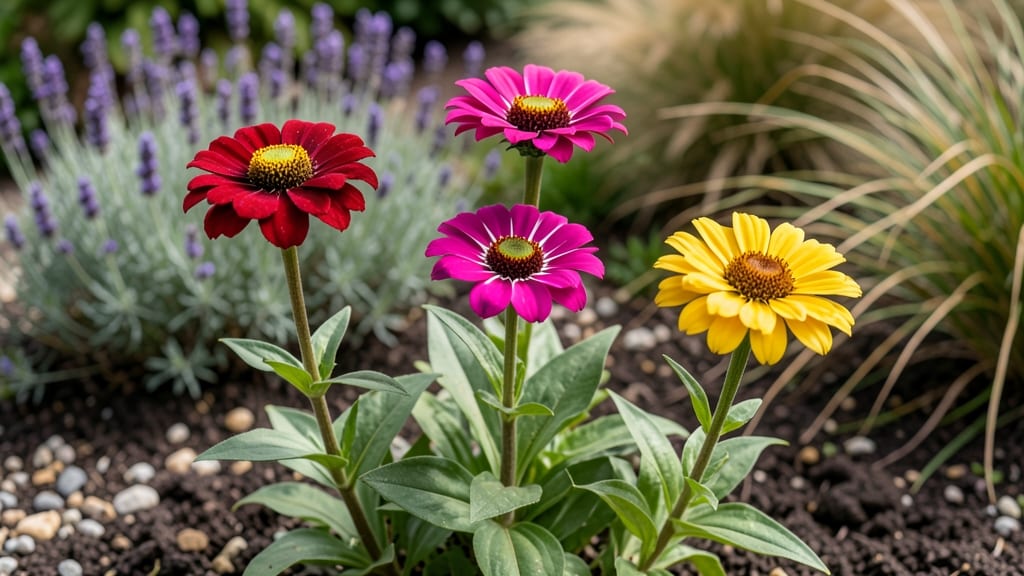
Zinnias bloom all summer long when you provide consistent care, including regular deadheading, full sunlight exposure, and well-draining soil. These hardy annuals can keep producing vibrant blooms from early summer until the first frost if you choose heat-tolerant varieties like 'Benary’s Giant' or 'Profusion'.
Zinnias thrive in summer because they're naturally heat-resistant and drought-tolerant, making them perfect for long, hot seasons. 🌞 The key to their continuous blooming lies in their rapid growth cycle—removing spent flowers (deadheading) encourages new buds to form within days.
I've seen zinnias in my garden keep flowering even when temperatures hit 90°F, as long as they get at least 6-8 hours of direct sunlight daily. Their ability to handle humidity also makes them ideal for southern climates where many flowers struggle.
What sets zinnias apart is their versatility across varieties. While 'Benary’s Giant' produces large, showy blooms perfect for cutting gardens, 'Profusion' series offers smaller flowers that bloom profusely in clusters. This variety is particularly well-suited for container gardening, where space might be limited but you still want maximum color.
The secret to their late-season success often comes down to soil preparation—amending with compost before planting helps maintain moisture while preventing root rot, which can become an issue as summer progresses.
💡 In This Article
- Why Zinnias Continue Blooming Through Summer Heat
- Late-Season Zinnia Care to Prolong Blooms
Why zinnias continue blooming through summer heat
Zinnias thrive in summer heat because their botanical structure is uniquely adapted to withstand high temperatures. Their thick, waxy leaves reduce water loss through transpiration, while their deep taproots reach moisture up to 12 inches below the surface—far deeper than most annuals.
This adaptation allows them to survive with less frequent watering, even when daytime temperatures exceed 90°F. The plant's natural growth habit focuses energy on flower production rather than leaf expansion, which is why you'll see continuous blooms instead of lush foliage during peak summer months.
The magic happens at the cellular level too. Zinnias produce ethylene gas when stressed, which triggers rapid flower bud formation.
This is why deadheading—removing spent blooms—stimulates new growth within 5-7 days in optimal conditions. 🌡️ Unlike many flowers that go dormant in heat, zinnias maintain active growth through a process called "thermomorphogenesis," where their stems elongate and thicken to support heavy blooms while conserving water.
Varieties like 'Benary’s Giant' have particularly robust stems that can support 3-4 inch flowers without flopping, even in humidity.
Sunlight plays a crucial role in their longevity. Zinnias require 6-8 hours of direct sunlight daily to photosynthesize efficiently, but they can tolerate up to 10 hours without scorching. Their dark green leaves contain high levels of chlorophyll that convert sunlight into energy even at high temperatures.
In my experience, zinnias planted in full sun continue blooming 2-3 weeks longer than those in partial shade, where they may produce fewer flowers and become more susceptible to fungal diseases.
Watering strategy makes all the difference during summer months. While zinnias are drought-tolerant, they perform best with 1 inch of water per week, delivered at the soil level rather than overhead. This prevents fungal issues while keeping roots cool.
The key is watering deeply 2-3 times per week rather than daily shallow watering, which encourages deeper root growth. Mulching with 2-3 inches of organic material helps retain soil moisture and regulate temperature fluctuations that can stress the plants.
Variety selection significantly impacts summer performance. Heat-tolerant varieties like 'Profusion' series produce flowers continuously from 60-90 days after planting, while 'Crystal' series offers frost-resistant blooms that can survive light frosts. The 'Zahara' series stands out with its velvety petals that maintain vibrant colors even in intense sunlight.
These differences come down to their genetic adaptations—some varieties have thicker cuticles on leaves to reduce water loss, while others develop deeper root systems more quickly.
What most gardeners don't realize is how zinnias' growth cycle works against pests. Their rapid flowering cycle means they produce flowers before many insects mature, giving them a natural head start. The plant's sticky leaves also deter some pests through a natural chemical defense.
However, when aphids or spider mites do appear (common in hot, dry conditions), they typically target stressed plants—another reason proper watering and deadheading are critical for maintaining healthy, pest-resistant zinnias throughout summer.