
Blooming
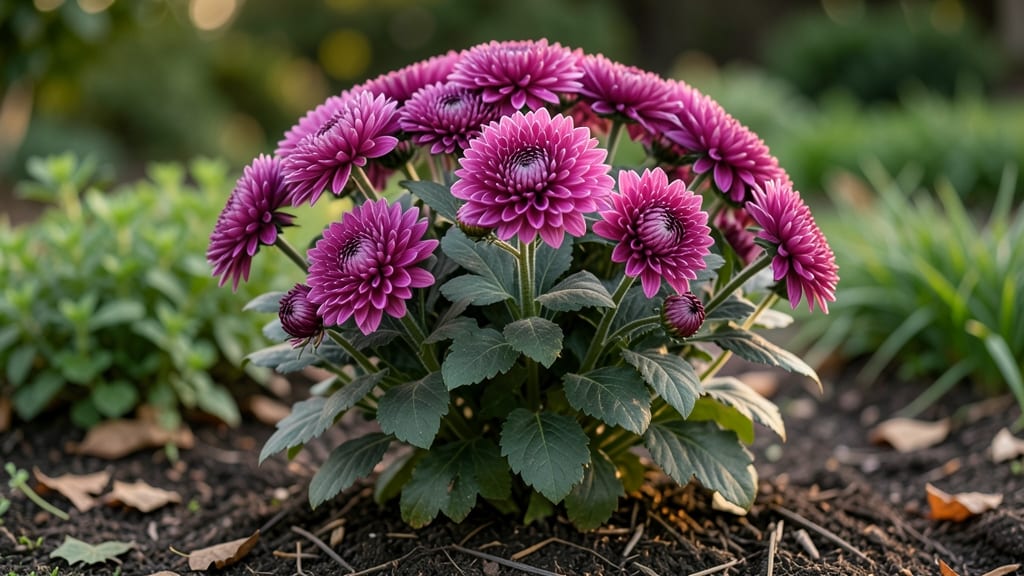
Mums (chrysanthemums) typically bloom in fall, not spring, though some hardy varieties like 'Autumn Joy' or 'Mammoth' may rebloom in spring under ideal conditions—cool nights, consistent moisture, and proper pruning.
Most chrysanthemums are genetically programmed to flower as days grow shorter in autumn, triggered by photoperiodism—their internal clock responds to light changes rather than calendar seasons. 🌿 That said, certain varieties like 'Autumn Joy' can produce a second flush of blooms in spring if you create the right conditions: cooler temperatures, regular watering, and strategic pruning after their first bloom cycle.
The key is mimicking their natural fall triggers while keeping them healthy through winter.
For spring blooms to happen, you'll need to prune back stems to 6 inches after the first frost, feed with balanced fertilizer in early spring, and protect from harsh winds.
I've seen 'Mammoth' varieties produce stunning spring displays when overwintered properly—just be patient, as it can take 6-8 weeks for new growth to emerge after dormancy.
💡 In This Article
- Why Most Mums Bloom in Fall Instead of Spring
- How to Encourage Spring Blooms in Mums
Why most mums bloom in fall instead of spring
Chrysanthemums are short-day plants, meaning their flowering is triggered by decreasing daylight hours—a phenomenon called photoperiodism.
When days shorten in late summer/early fall, these plants detect the shift and begin producing flower buds. 🌅 This natural programming explains why most mums bloom in autumn: their internal clocks are set to respond to 12-14 hours of daylight or less, which typically occurs in September-October in most climates.
The science gets even more precise: specific varieties like 'Autumn Joy' contain FT (FLOWERING LOCUS T) proteins that regulate this process. These proteins activate when day length drops below 13 hours, signaling the plant to stop producing leaves and start forming flower buds.
Spring, however, brings longer days (14+ hours), which suppresses this natural flowering mechanism in most mums—unless you're working with reblooming varieties that have been selectively bred to override this response.
Temperature plays a supporting role too. Mums need cool nights (50-60°F) combined with warm days to set buds properly. Spring temperatures often fluctuate wildly, creating stress that prevents consistent blooming. 🌡️ Even if you trick the plant with artificial light, the temperature mismatch can still disrupt the process.
This is why gardeners in Zone 5-7 sometimes see spring blooms on 'Autumn Joy'—it's not just about light, but also about recreating that perfect autumn temperature range.
Here's the botanical catch: most store-bought mums are non-reblooming varieties bred specifically for fall displays. These plants have been genetically optimized to produce one spectacular bloom cycle, then decline. Their energy goes entirely into that autumn show rather than storing reserves for spring.
Reblooming varieties like 'Mammoth' or 'Bonanza' have been selectively bred to store more carbohydrates in their roots, allowing them to produce a second flush when conditions are right.
Consider this comparison: a non-reblooming mum is like a firework—one brilliant display, then it's done. Reblooming varieties are more like a well-maintained bonsai tree, capable of multiple cycles when given proper care. The key difference lies in their root system development and ability to store nutrients through dormancy.
What most gardeners don't realize is that even reblooming mums need at least 6-8 weeks of cool weather after their first bloom to properly recharge.
This is why spring blooms often appear smaller or less vibrant—the plant is still recovering from its autumn display rather than putting full energy into new flowers. 💫