
Blooming
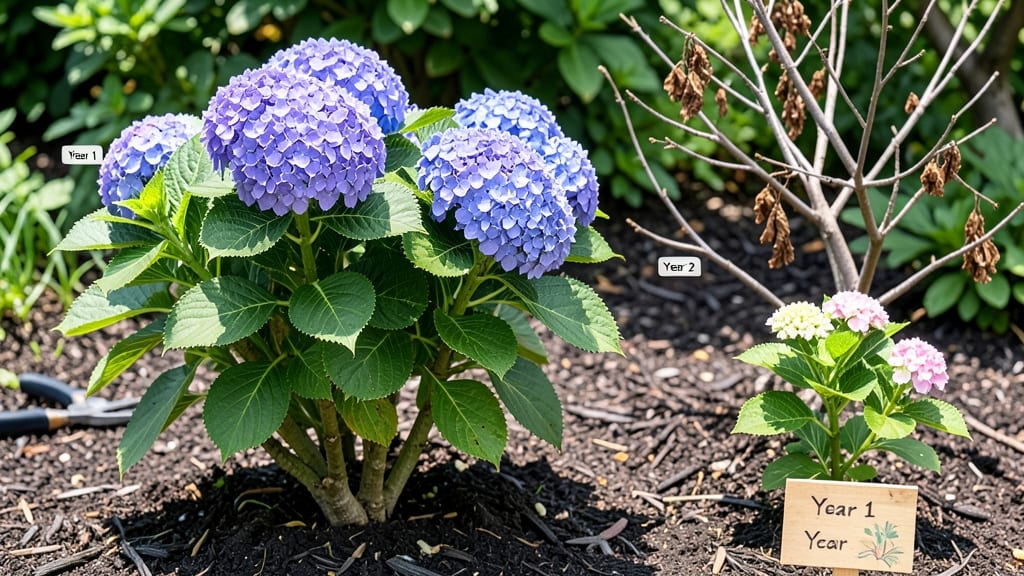
Hydrangeas do bloom every year, but whether they produce abundant flowers depends entirely on their type, how you prune them, and how well you protect them through winter. Some varieties like bigleaf hydrangeas (Hydrangea macrophylla) set buds on last year's growth, while others like panicle types (Hydrangea paniculata) bloom on fresh new stems—getting this right means consistent color annually.
Most hydrangeas are reliable bloomers when given the right care, but the key lies in understanding their growth habits. 🌸 Bigleaf varieties need gentle pruning after flowering to preserve next year's buds, while panicle types can handle harder cuts in late winter.
Cold climates? Mulching heavily in late fall and wrapping tender stems prevents winter dieback that can rob you of spring blooms. I've seen hydrangeas recover beautifully after harsh winters with proper protection—sometimes even reblooming stronger the following year.
What surprises many gardeners is how quickly improper pruning can turn a lush plant into a bare branch. For example, cutting back bigleaf hydrangeas in early spring removes the flower buds that formed the previous season.
Meanwhile, panicle types actually thrive when pruned back hard—they'll produce more robust blooms on new growth. The secret is knowing your plant's personality and timing cuts just right.
💡 In This Article
- Why Some Hydrangeas Skip Blooms: Old Wood vs New Growth Explained
- Winterizing Hydrangeas for Reliable Year-Round Blooms
Why some hydrangeas skip blooms: old wood vs new growth explained
The secret to hydrangea blooming lies in their growth habits. Bigleaf hydrangeas (Hydrangea macrophylla) form flower buds on old wood—the stems that grew the previous year. These buds develop in late summer and early fall, meaning any pruning after September risks removing next year's blooms.
In contrast, panicle varieties (Hydrangea paniculata) produce flowers on new growth, allowing them to bloom even after late pruning. This fundamental difference explains why some hydrangeas seem to skip blooms after aggressive pruning.
Temperature plays a crucial role in bud formation. Bigleaf hydrangeas need a period of dormancy (typically 4-6 weeks below 40°F) to set buds properly. Late frosts or unseasonably warm winters can disrupt this process, causing buds to form too early and get damaged.
For example, in Zone 5-6 climates, a sudden cold snap in April can kill premature buds, leaving stems barren. Panicle types are more forgiving—their buds form later in spring, making them less vulnerable to early frost.
Pruning timing is critical for old-wood bloomers. Cutting back bigleaf hydrangeas in early spring (March-April) removes last year's flower buds before they've had a chance to bloom. The solution? Prune these varieties immediately after flowering, in late summer (August-September), to preserve next year's blooms.
For panicle types, late winter pruning (February-March) encourages vigorous new growth that will produce abundant flowers. This timing difference is why some gardeners end up with hydrangeas that look like they've "forgotten" how to bloom.
Another factor is light exposure. Hydrangeas need 6-8 hours of sunlight daily for optimal bud formation. Shady spots can lead to sparse blooming, as the plant focuses energy on foliage rather than flowers.
I've noticed that bigleaf hydrangeas in partial shade often produce smaller blooms compared to those in full sun. Panicle types are more adaptable—they'll bloom even in morning sun with afternoon shade, though flower size may be reduced.
This adaptability is one reason they're popular in urban gardens where full sun isn't always available.
Late frosts can be particularly devastating. In Zone 4-5, a late May frost can kill newly opened buds on bigleaf hydrangeas, leaving stems without flowers. The solution? Choose late-blooming varieties like 'Endless Summer' that produce buds on both old and new wood, giving you a safety net.
For panicle types, the risk is lower since their buds form later, but severe frosts can still damage tender new growth. Understanding these vulnerabilities helps gardeners plan their landscapes to protect vulnerable blooms.
What most people don't realize is how quickly improper pruning can turn a lush hydrangea into a bare branch. For example, cutting back a bigleaf hydrangea by more than 1/3 in early spring removes the entire year's flower buds.
Meanwhile, panicle types actually thrive when pruned back hard—they'll produce more robust blooms on new growth. The key is knowing your plant's growth habit and adjusting your pruning schedule accordingly. 🌿