
Blooming
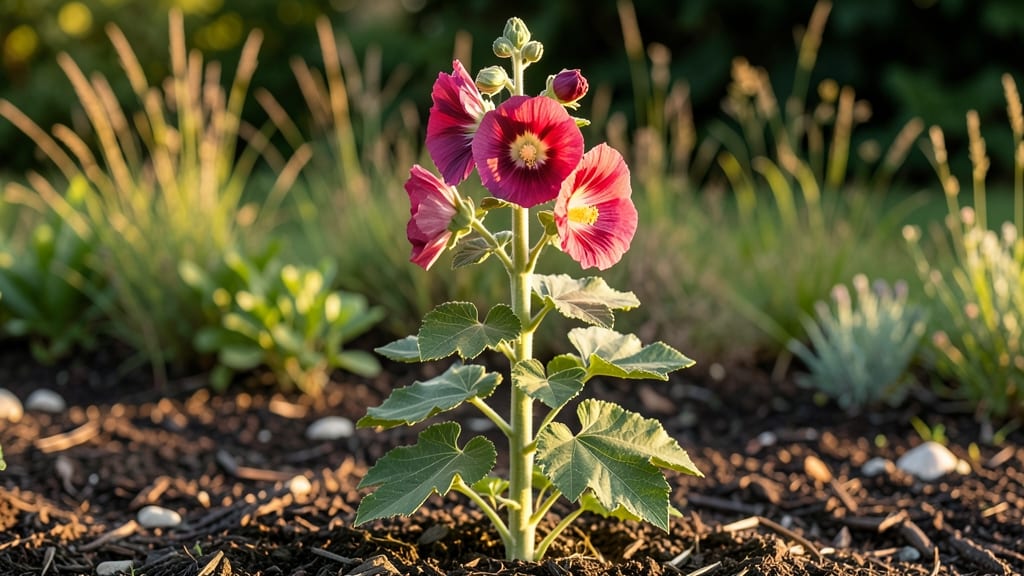
Hollyhocks don't bloom all summer continuously—they produce flowers from mid-summer through early fall in most climates, triggered by heat and daylight length. Peak blooming typically occurs in late July or August, lasting 4-6 weeks depending on variety and growing conditions.
These perennial plants rely on specific environmental cues to bloom, which is why their flowering isn't year-round. 🌸 The warm days of summer combined with longer daylight hours signal their blooming cycle, but once temperatures drop or daylight shortens, they'll naturally stop producing flowers.
Some varieties may rebloom lightly in spring if given proper care, but the main flowering window remains summer-to-fall.
What's interesting is how regional climates affect this timing. In cooler northern areas, hollyhocks often bloom slightly later and may produce flowers for a shorter window, while southern climates can extend their blooming into early fall.
The key is understanding your local growing zone and providing consistent moisture during their active blooming period.
💡 In This Article
- Heat and Light: How Hollyhocks Trigger Summer Blooming
- Extending Hollyhock Bloom Time: Pruning and Care Tips
Heat and light: how hollyhocks trigger summer blooming
Hollyhocks rely on two key botanical triggers to bloom: thermoperiodism (temperature cycles) and photoperiodism (daylight length). These biennial plants need consistent daytime temperatures above 70°F paired with cooler nights (50-60°F) to stimulate bud formation.
The contrast between hot days and cooler evenings acts like a biological switch, signaling the plant to produce flowers rather than just foliage. Without this temperature fluctuation, hollyhocks may produce leaves but fail to bloom.
The photoperiodism aspect is equally critical. Hollyhocks respond to increasing daylight hours, typically blooming when days reach 14-16 hours of sunlight—common in late July through August. This explains why they rarely bloom in spring, even if given ideal care.
The plant's internal clock measures daylight length through a process called "circadian entrainment," where specific proteins (like PHYTOCHROMEs) detect light duration and trigger flowering hormones. In northern climates, this daylight threshold occurs later than in southern regions.
Regional climate variations create noticeable differences in blooming windows. In USDA Zones 3-5, hollyhocks often bloom from late July through September, while in Zones 7-9, they may start earlier (June) and continue until October.
The heat tolerance of different varieties also plays a role—some southern-bred types can handle 90°F+ days without stress, while northern varieties may wilt above 85°F. This is why gardeners in hot climates sometimes see extended blooming periods.
What most gardeners overlook is how nighttime temperatures affect flower longevity. Hollyhocks exposed to consistent warm nights above 70°F often produce flowers that open quickly but last only 3-5 days.
In contrast, cooler nights (60°F or lower) can extend individual blooms to 7-10 days by slowing metabolic processes. This is why hollyhocks in coastal areas (with cooler marine-influenced nights) often have longer-lasting flowers than those in inland heat zones.
Another fascinating mechanism is how hollyhocks "bud" for the following year. The energy they store in their roots during summer blooming determines next year's flower production.
If summer conditions are too stressful (drought, extreme heat), the plant may prioritize survival over blooming, resulting in fewer or smaller flowers the following season. This is why consistent moisture during peak blooming (1-1.5 inches per week) is crucial for both current and future performance.
For gardeners in regions with early autumn frosts, the blooming window can be surprisingly short. Hollyhocks typically stop producing new buds when daytime temperatures drop below 65°F for more than 3 consecutive days.
This explains why some varieties in Zone 5 may finish blooming by early September, while those in Zone 8 can continue until mid-October. Understanding these temperature thresholds helps explain why hollyhocks never bloom all summer—they're following a precise biological calendar tied to their environment.