
Blooming
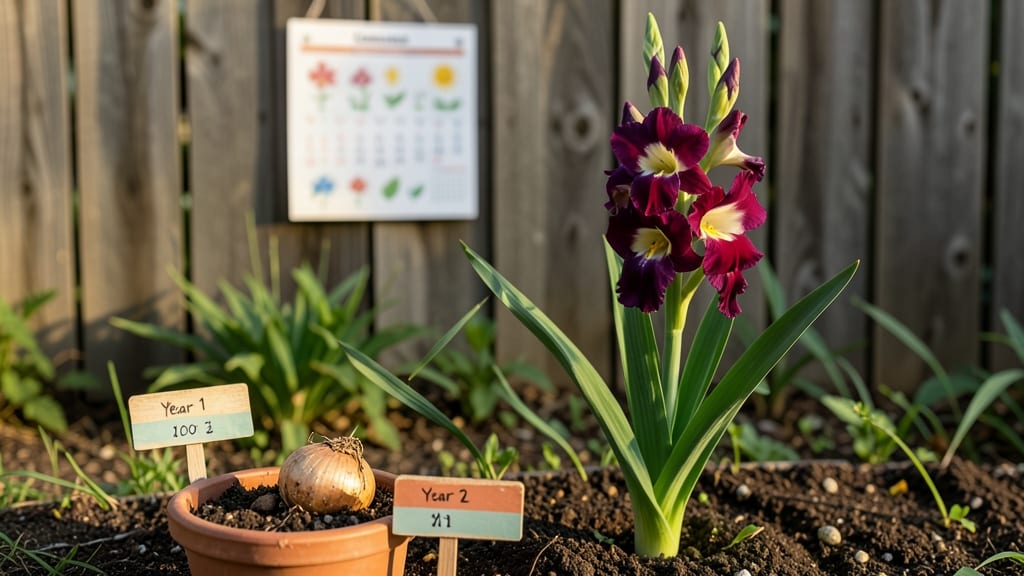
Gladiolus don't bloom every year as perennials; they typically produce one spectacular flower spike per season before their foliage dies back in colder regions, though their underground corms can regrow with the right care. Warmer climates may see repeat blooms if growing conditions remain optimal.
Gladiolus behave more like seasonal showstoppers than true perennials because their flowering cycle is tightly linked to temperature and daylight cues. 🌱 Once they've bloomed, the plant's energy shifts to storing nutrients in the corm—an underground storage organ—rather than producing new flowers.
In my experience, northern gardeners often see just one bloom cycle per year, while those in milder zones might coax a second round if they maintain consistent moisture and fertility. The key difference lies in how quickly the plant can recover and rebuild its energy reserves after flowering.
What many gardeners don't realize is that gladiolus corms actually go through a natural dormancy period after blooming. This isn't true dormancy like bulbs experience, but rather a recovery phase where the plant focuses on storing nutrients.
The length of this recovery period varies by variety—some aggressive growers like 'Telemon' can push out a second bloom if given ideal conditions, while others like 'Green Star' typically rest until next season. Understanding your specific variety's growth habits can help you set realistic expectations for your garden.
💡 In This Article
- Gladiolus Life Cycle: Why They Don’t Bloom Annually
- How to Encourage Gladiolus Reblooming in Your Garden
Gladiolus life cycle: why they don’t bloom annually
The gladiolus follows a unique growth pattern where its flowering phase is triggered by specific environmental cues rather than a simple annual cycle. Unlike true perennials that produce flowers repeatedly, gladiolus plants allocate nearly all their energy to a single dramatic flower spike each season.
This happens because their underground corms—thick, fleshy storage organs—must first build up sufficient nutrients before flowering can occur. The plant’s energy budget is finite, and once it commits to that stunning vertical bloom, it has little left for another round.
The biological mechanism involves a process called vernalization, where exposure to cold temperatures (typically 40-50°F for several weeks) helps break dormancy and initiate growth. However, once the plant flowers, it enters a recovery phase where it focuses on replenishing its corm rather than producing new blooms.
In colder climates, this recovery period coincides with the plant’s natural die-back in autumn, while warmer zones may see a second attempt if conditions remain favorable. The key difference is that gladiolus don’t store enough energy in their corms to support multiple flowering cycles without significant care.
Daylight plays a crucial role too—gladiolus are long-day plants, meaning they need 14+ hours of daylight to trigger flowering. This explains why northern gardeners often see just one bloom cycle per year, while those in milder climates might coax a second round if daylight remains sufficient.
The plant’s internal clock, governed by a process called photoperiodism, ensures it flowers at the optimal time for pollinators, even if that means sacrificing future blooms. This is why you’ll rarely see gladiolus reblooming in short-day climates like the deep south without intervention.
What most gardeners overlook is how the plant’s foliage serves as its primary energy source. After flowering, the leaves continue photosynthesizing to feed the corm, which is why you should never cut back foliage until it turns yellow.
This process can take 6-8 weeks—long enough that in many climates, the plant’s energy reserves simply run out before another flowering cycle can begin. The corm’s ability to regrow annually depends entirely on how well it can recover during this post-flowering phase.
Climate zones further complicate the picture. In USDA Zones 8-10, where winters are mild, some varieties like 'Picasso' or 'Green Star' may attempt a second bloom if given consistent moisture and nutrients.
But in Zones 5-7, the plant’s energy is typically exhausted by late summer, and the corm enters true dormancy until spring. This is why gardeners in colder regions often treat gladiolus more like annuals, replanting fresh corms each year rather than relying on regrowth.
Here’s the science behind it: Gladiolus corms contain stored starches that fuel both growth and flowering. After blooming, the plant prioritizes converting those starches back into usable energy for the corm.
If you’ve ever dug up a gladiolus corm after flowering, you might notice it’s significantly larger than when you planted it—this is the plant’s way of preparing for next season.
However, if the corm doesn’t have enough time to fully recharge, it may produce weak or no flowers the following year.