
Blooming
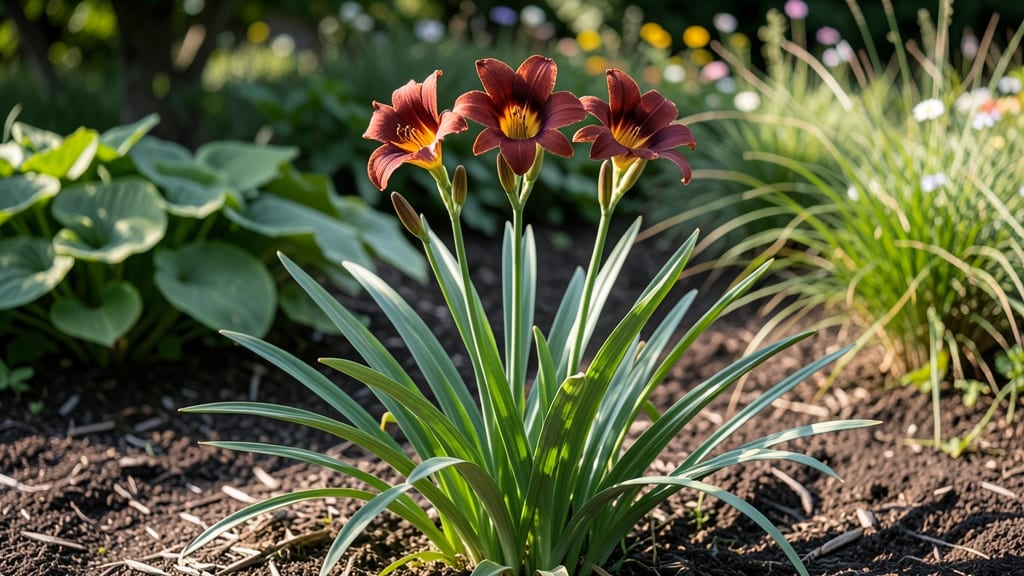
Daylilies do bloom all summer in many varieties, producing continuous flowers from early summer until frost when you deadhead regularly to encourage reblooming. Some reblooming types flower more heavily than others, depending on care and climate.
Daylilies earn their reputation as summer showstoppers because their perennial rhizomes store energy for continuous growth. 🌸 Unlike annuals that fade after one season, these hardy plants regenerate each year, with reblooming varieties producing 3-5 cycles of flowers from June through September.
The key difference between reblooming and non-reblooming types lies in their genetic focus—some prioritize early-season blooms while others conserve energy for late-summer displays. Proper care, especially deadheading spent blooms within 24 hours, signals the plant to redirect energy toward new flowers rather than seed production.
What sets daylilies apart is their adaptability. They thrive in USDA zones 3-9, handling both heatwaves and early frosts with remarkable resilience. For maximum impact, I recommend planting in full sun (6+ hours daily) and using a balanced fertilizer in early spring.
The trade-off? Non-reblooming varieties often produce larger, more dramatic blooms in their single summer flush, while rebloomers deliver smaller but more abundant flowers throughout the season.
💡 In This Article
- Why Daylilies Keep Blooming: Science Behind Reblooming Varieties
- Maximizing Daylily Summer Blooms: Deadheading and Care Tips
Why daylilies keep blooming: science behind reblooming varieties
Daylilies' ability to bloom continuously all summer comes down to their unique biology as perennial hemicryptophytes. Unlike annuals that complete their life cycle in one season, daylilies store energy in their thick, underground rhizomes—horizontal stems that act like natural batteries.
These rhizomes contain starch reserves that fuel regrowth after each bloom cycle, allowing the plant to produce new flowers even after the first flush. 🌱 The best reblooming varieties, like 'Stella de Oro' or 'Happy Returns', have been selectively bred to prioritize this energy redistribution, producing 3-5 bloom cycles instead of just one.
The science gets even more interesting when you consider their growth patterns. Daylilies follow a monocarpic habit—each flower stalk (scape) produces only one bloom before dying back. However, the plant's rhizome system constantly generates new scapes from dormant buds, creating the illusion of continuous flowering.
Non-reblooming types, such as 'Happy Hour', focus all their energy on a single dramatic bloom cycle in early summer, then shift resources to rhizome expansion for next year. This is why rebloomers may have slightly smaller individual flowers but offer a longer, more abundant display.
Light exposure plays a crucial role in triggering this extended blooming. Daylilies are photoperiod-sensitive, meaning their flowering cycles respond to daylight length. In northern climates, they often bloom earlier in response to longer summer days, while southern varieties may wait until late spring when temperatures stabilize.
The ideal light condition for continuous blooming is full sun (6+ hours daily), though they'll tolerate partial shade—just expect fewer blooms.
Temperature tolerance also varies by variety, with some rebloomers like 'Pardon Me' thriving in USDA zones 3-9 and handling both heatwaves (up to 95°F) and early frosts (down to -20°F) with proper care.
What most gardeners don't realize is that daylilies' blooming patterns are also influenced by their natural defense mechanisms. When a flower dies without being deadheaded, the plant diverts energy to seed production—a survival strategy that reduces the plant's ability to produce more blooms.
This is why removing spent flowers within 24 hours can extend the blooming season by 30-50%.
The plant perceives deadheading as a signal to focus on vegetative growth rather than reproduction, leading to more scapes and flowers. 🌿 This energy redirection is particularly noticeable in reblooming varieties, which can produce 20-50 new blooms per season when properly maintained.
The color and size of daylily blooms also reveal clues about their blooming habits. Reblooming varieties often have smaller, more delicate flowers (typically 3-4 inches wide) with vibrant colors that attract pollinators throughout the season.
In contrast, non-rebloomers may produce larger, showier blooms (up to 6 inches wide) in their single summer display. The trade-off between quantity and quality is a key consideration when selecting daylilies for your garden—rebloomers offer continuous color, while non-rebloomers provide dramatic, one-time statements.
For those in warmer climates (zones 8-9), late-season care becomes critical. As temperatures approach 85°F for prolonged periods, daylilies may enter a natural dormancy to conserve water. At this stage, reducing watering and avoiding heavy fertilization helps the plant focus on root development rather than blooming.
In cooler climates, the opposite occurs—daylilies may bloom later into fall if temperatures remain mild, sometimes producing a fourth bloom cycle in September or October.