
Blooming
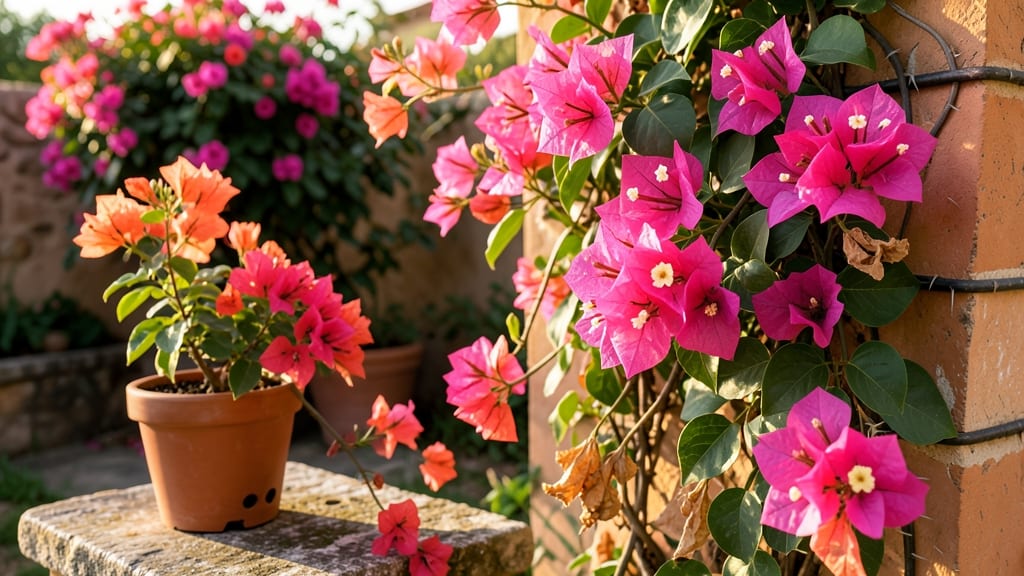
Bougainvillea does not bloom year round naturally, as most varieties produce vibrant flowers primarily in spring and summer with proper sunlight and care, though some tropical climates may extend blooming seasons slightly. Cold weather triggers dormancy, halting flowering until warmer conditions return.
Bougainvillea's flowering patterns are tightly linked to seasonal changes, especially temperature shifts. 🌸 In temperate zones, these plants enter dormancy when nights dip below 50°F, conserving energy until spring's warmth revives growth.
Even in warmer areas, most varieties follow a natural rhythm—producing peak blooms during longer daylight hours of summer months. The few exceptions that show year-round color typically grow in frost-free zones like Florida or Hawaii, where consistent warmth eliminates seasonal stress.
What's fascinating is how bougainvillea responds to light cycles—a phenomenon called photoperiodism. When days shorten in fall, most varieties signal their bracts (the colorful paper-like parts we call "flowers") to drop, even if temperatures remain mild.
This biological clock explains why gardeners in Zone 9 or higher sometimes see extended blooming, but rarely continuous color without careful intervention.
💡 In This Article
- Climate and Seasonal Factors Affecting Bougainvillea Blooms
- Tips to Extend Bougainvillea Blooming Seasons
Climate and seasonal factors affecting bougainvillea blooms
Bougainvillea's flowering cycle is governed by three key environmental triggers: temperature, daylight duration, and humidity levels. The plant's native habitat in Brazil's semi-arid regions explains why it thrives in warmth (70-90°F) and responds dramatically to seasonal shifts.
When nighttime temperatures drop below 50°F, bougainvillea enters dormancy—a survival mechanism where metabolic activity slows to conserve energy. This explains why most varieties in USDA Zones 9-11 experience peak blooms from late spring through early fall, while northern climates see only brief summer displays.
The science behind this involves photoperiodism, where bougainvillea detects changing daylight hours through a pigment called phytochrome.
When days shorten below 12 hours of sunlight, the plant's hormonal balance shifts from flowering to vegetative growth. 🌞 This is why bougainvillea in tropical climates (like Miami or Hawaii) can bloom nearly year-round—their consistent 12+ hour daylight and warm nights prevent this hormonal switch.
Even in these regions, however, most varieties still show reduced flowering during winter months due to slightly cooler temperatures.
Humidity plays a surprising role too. Bougainvillea's native dry climate means it's adapted to low moisture conditions (30-50% humidity). In overly humid environments (like Florida's rainy season), the plant may produce fewer blooms as its energy focuses on maintaining leaf health rather than reproductive growth.
The bracts (the colorful paper-like structures we mistake for flowers) are particularly sensitive to moisture—excess water causes them to wilt or drop prematurely, even when temperatures are ideal.
What most gardeners don't realize is how temperature fluctuations within a day affect blooming. Bougainvillea requires a 10-15°F difference between day and night temperatures to stimulate flowering. In coastal climates with stable temperatures, blooming may be sporadic unless you create this variation through strategic pruning or microclimate adjustments.
This explains why bougainvillea often flowers more prolifically in inland desert regions like Phoenix than in coastal areas with milder nights.
Consider these climate-specific blooming patterns:
- Tropical Zones (9-11): Near-continuous blooming with 2-3 month winter lulls during cooler periods
- Mediterranean Climates: Peak blooms March-July with complete dormancy in winter
- Desert Regions: Extended seasons due to hot days/cold nights temperature swings
- Northern Gardens (Zones 7-8): 3-4 month summer window only, with heavy pruning needed for next year's blooms
The most dramatic example is Bougainvillea spectabilis, which in San Diego's climate can produce blooms from February through November—a full 9 months—while the same variety in Chicago might only flower for 6 weeks in July.
This geographic variation shows how much climate dictates bougainvillea's flowering potential beyond just the plant's genetics. 🌿