
Blooming
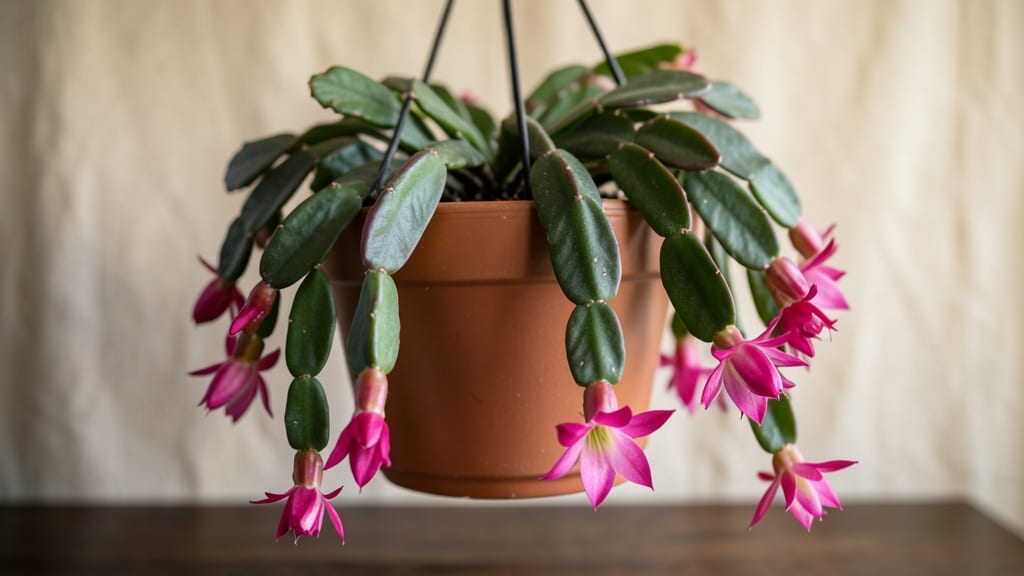
Christmas cactus bloom time depends entirely on light exposure—skip the dark days, and you’ll miss those jewel-toned flowers. 🌟 I’ve forced blooms as early as mid-November by mimicking fall’s shortening daylight, and the secret lies in timing those 12-hour light breaks just right.
The plant needs 12 hours of darkness nightly for 6-8 weeks to trigger buds. Too much light, and it stays leafy; too little, and buds drop. My trick? Move it to a cool (60-65°F), dim spot after sunset—no artificial light until morning.
By adjusting water too, you’ll see buds form in 4-6 weeks. Reduce watering when buds appear, and keep soil barely moist. Overwatering now sends roots screaming for oxygen instead of blooms. This works for Thanksgiving tables or holiday cheer—just start the light schedule in early September for December blooms.
No black thumb needed, just patience and timing.
📚 In This Guide
- What you need
- Instructions
- Tips and common mistakes
- Wrapping up and next steps
What you need
- ● Christmas Cactus (Schlumbergera spp.) 1 mature plant (3–5 years old for best results)
- ● Healthy, with no signs of pests or disease
- ● Grow Lights (for light manipulation) Option 1: Full-spectrum LED grow light (10–15 watts, 12–16 inches above plant)
- ● Option 2: Fluorescent grow bulb (cool white or daylight spectrum, 4000K–6500K)
- ● Timer (for light cycles) Digital plug-in timer (adjustable for 12–14 hours of darkness)
- ● Well-draining potting mix 50% peat moss or coconut coir
- ● 30% perlite or pumice
- ● 20% orchid bark or compost
- ○ Watering can with a narrow spout For gentle, bottom-watering (optional but recommended)
- ● Humidity tray or pebble tray Shallow tray + pebbles + water (to maintain 40–50% humidity)
- ● Fertilizer: Balanced liquid fertilizer (10-10-10 or 20-20-20, diluted to half-strength)
- ● Spray bottle: For misting leaves (if humidity is low)
- ● Thermometer/hygrometer: To monitor temperature (ideal: 60–70°F)
- ● Decorative pot (if repotting): Ensure it has drainage holes!
How to trigger Christmas cactus blooms early using light
Here's how I force my Christmas cactus to bloom weeks early—just by controlling light.
🌱 Step 1: Identify Your Plant's Natural Light Cycle
Christmas cacti bloom in response to shorter days and cooler nights. To force early blooms, you'll need to mimic these conditions. Start by observing your plant's current light exposure—most grow best in bright, indirect light during the day. If yours sits in a south-facing window, it's getting plenty of light; if it's in a north-facing spot, supplement with a grow light for 12-14 hours daily.
This plant thrives on routine, so keep its light schedule consistent. If you notice leaves stretching toward the window (a sign of legginess), your light source is too weak. Move it closer to the light or add a few extra hours of exposure. The goal is to keep the plant healthy and strong while preparing it for the bloom trigger.
☀️ Step 2: Initiate the Dark Period for 14 Hours Daily
About 8-10 weeks before your desired bloom time, begin the critical dark period. After the plant receives its usual 10-12 hours of light, move it to a completely dark space for 14 hours. This mimics the shorter days of late fall. Use a closet, a box with black plastic lining, or even a dark room—just ensure no light sneaks in. Even a tiny bit of light can disrupt the process.
Here's the thing—don't skip this step. I once forgot to cover my plant properly, and it never bloomed on schedule. Use an alarm or reminder to help you remember to move the plant to its dark spot each evening. After 14 hours, return it to its usual light source for the day. Consistency is key—stick to this schedule religiously for the full 8-10 weeks.
🌿 Step 3: Maintain Ideal Temperature and Humidity
While controlling light, keep your Christmas cactus in an environment with temperatures between 60-70°F during the day and slightly cooler at night (55-65°F). This temperature drop reinforces the dark period's effect. If your home stays too warm at night, move the plant to a cooler spot like a basement or near a window with cooler air circulation.
Humidity matters too. Aim for 40-50% humidity—dry air can cause the buds to drop. If your home is dry, place the pot on a tray filled with pebbles and water, ensuring the pot isn't sitting directly in the water. Mist the plant lightly once a week, but avoid getting water on the buds once they form. You'll see buds begin to form after about 6-8 weeks of this treatment.
⏰ Step 4: Watch for Bud Formation and Adjust Care
Once buds appear, usually after 6-8 weeks of the dark treatment, it's time to fine-tune care. Keep the plant in its usual light spot but avoid moving it around. Buds are sensitive to changes, and even a slight shift can cause them to drop. Water the plant only when the top inch of soil feels dry—overwatering can lead to bud drop or rot.
This is the moment that matters: resist the urge to fertilize now. Fertilizer can encourage new growth at the expense of blooms. Instead, focus on keeping the environment stable. If you notice leaves wilting slightly, it's often a sign the plant needs water—but don't overdo it. A quick dip in water for a few minutes can revive it without over-saturating the soil.
Tips & tricks for perfect Christmas cactus blooms
These small adjustments make all the difference when you're coaxing your Christmas cactus into early bloom.
The Light Factor: For Step 1, if your plant isn't getting enough natural light, a simple LED grow light placed 6-12 inches above the plant works wonders. I use a 12-hour light cycle during the day—this mimics natural daylight perfectly. The key is consistency: place the light on a timer so you don't have to remember to turn it on and off daily.
Dark Period Precision: In Step 2, when you're moving your plant to the dark space, make sure to cover all possible light sources. Even a tiny crack of light can prevent blooming. I use a black plastic storage box with the plant inside—it's foolproof. Set an alarm for the exact 14-hour mark so you don't accidentally leave it in the dark too long or too short.
Temperature Troubleshooting: For Step 3, if your home stays consistently warm at night, try moving the plant to a cooler spot like a basement or near an exterior door (but not in a draft). I've found that even a 5°F difference at night can make a big difference in bud formation. A simple thermometer near the plant helps monitor the temperature without guesswork.
Bud Formation Watch: During Step 4, when you first see buds forming, resist the temptation to move the plant around. Even turning it slightly can cause buds to drop. I mark the plant's position with a piece of tape on the windowsill so I don't accidentally rotate it during watering or cleaning.
Pro Tips for Christmas Cactus Bloom Time
- These small adjustments make all the difference when you're coaxing your Christmas cactus into early bloom.
- The Light Factor: For Step 1, if your plant isn't getting enough natural light, a simple LED grow light placed 6-12 inches above the plant works wonders.
- Dark Period Precision: In Step 2, when you're moving your plant to the dark space, make sure to cover all possible light sources.
Frequently asked questions
Got questions about timing, tricks, or troubleshooting your Schlumbergera? Here are some of the most common ones—plus expert answers to keep those blooms coming!
When is the best time to force a Christmas cactus to bloom early?
To encourage early blooms, start the light cycle 8–10 weeks before your target bloom date. For a Thanksgiving display, begin in early September. The key is consistency: 14 hours of darkness daily (like covering the plant with a box) for 2+ weeks, followed by bright, indirect light. Avoid interruptions—even a nightlight can disrupt flowering!
Why isn’t my Christmas cactus blooming on schedule?
Common culprits include inconsistent light/dark cycles, overwatering (root rot stalls blooms), or temperature swings (below 50°F or above 80°F stresses the plant). Check for pests (like mealybugs) too! If buds form but drop, it’s often due to too much water or heat. Try moving it to a cooler, stable spot and adjust care.
Can I make my Christmas cactus rebloom after the first flowers fade?
Yes! Once blooms fade, stop fertilizing and let the plant rest for 6–8 weeks. Then, resume light triggers (14-hour nights) in early fall. Healthy plants often rebloom 2–3 times per year if given proper care. Pro tip: Rotate the pot occasionally so all sides get even light—this encourages uniform growth and future blooms!
What if my Christmas cactus only blooms on one side?
Uneven blooming usually means light exposure isn’t balanced. Rotate the pot quarter-turns weekly to ensure all segments get equal sunlight. If buds only form on one side, the plant may be leaning toward a light source. Place it in a bright, indirect spot (like an east-facing window) and avoid dim corners.
Will cold drafts or AC vents ruin my Christmas cactus’s blooms?
Drafts, AC vents, and sudden temperature drops
stress the plant, causing buds to drop. Keep your cactus 55–75°F and away from heating/cooling sources. If you notice buds wilting, move it to a stable, warm spot (like a bathroom with a heated towel rack) and mist lightly to boost humidity.
Wrapping up and next steps
Mastering your Christmas cactus bloom time is all about understanding its light needs—just a few weeks of darkness can transform your plant into a stunning holiday showstopper! 🌟 With the right timing and care, you’ll enjoy vibrant blooms right when you want them, turning your home into a festive paradise.
Now that you’re armed with these tips, why not try forcing a bloom this season? Grab your plant, adjust the lighting, and watch the magic unfold—your future Christmas décor will thank you!