
Blooming
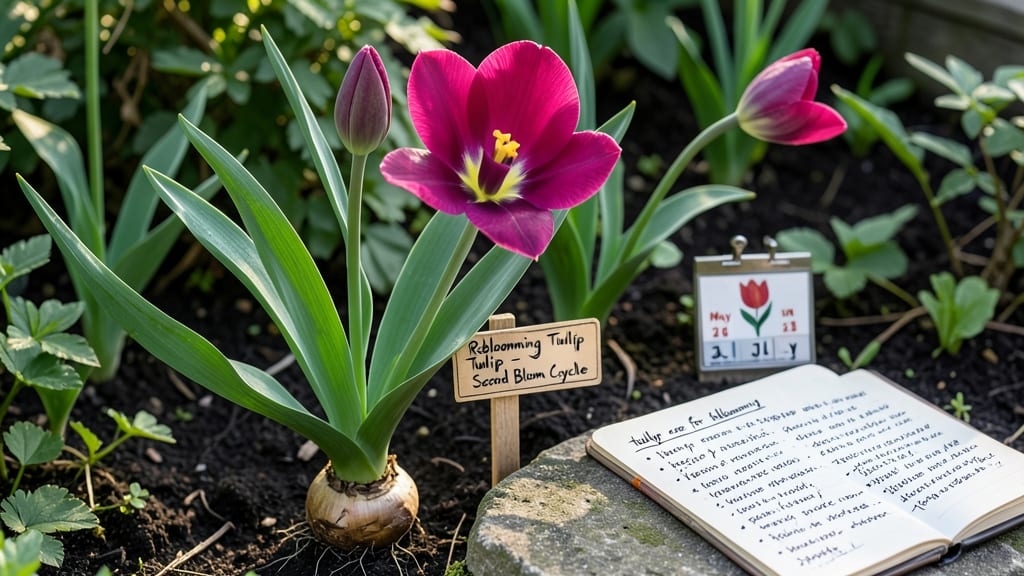
Can tulips bloom twice in one season? Most tulips bloom just once per year, but certain varieties like Darwin Hybrids or Parrot tulips can produce a second, smaller bloom with careful techniques—including bulb chilling, deadheading, and strategic fertilizing.
Tulips naturally follow a strict energy cycle where their first bloom exhausts stored nutrients, leaving little for a second round. 🌸 The secret to reblooming lies in preserving bulb vitality through proper care: removing spent blooms promptly, feeding with balanced fertilizer (high in phosphorus), and adjusting light exposure.
Even then, only specific varieties respond well—garden tulips typically won't rebloom, while hybrid types may surprise you with a late-season show.
For best results, I recommend starting with Darwin Hybrid or Parrot tulips—these are bred for resilience. After the first bloom, keep the foliage until it yellows naturally (about 6-8 weeks) to allow energy to return to the bulb.
In colder climates, mulching helps protect bulbs through winter, setting them up for potential reblooming the following spring.
💡 In This Article
- Why Most Tulips Bloom Only Once Per Season
- How to Encourage Tulip Reblooming: Step-by-Step Forcing Methods
Why most tulips bloom only once per season
Tulips are programmed by nature to focus all their energy on a single, spectacular bloom each season. When a tulip flower opens, it triggers a biological process where the bulb diverts its stored nutrients—primarily carbohydrates and proteins—to produce seeds.
This energy drain leaves little reserve for a second bloom, especially in standard garden varieties like Tulipa gesneriana, which are bred primarily for their first flush of color in spring.
The bulb's dormancy cycle plays a critical role here. After flowering, tulip bulbs enter a rest phase where they repair and rebuild energy stores. This process requires 6-8 weeks of foliage growth to fully recharge.
If you remove the spent bloom too early (a practice called deadheading), the plant perceives it as a failed reproduction attempt and redirects energy to seed production instead of bulb recovery. 🌱 The bulb simply doesn't have enough stored nutrients to attempt another bloom cycle in the same season.
Daylight exposure also influences blooming frequency. Tulips are short-day plants, meaning they flower in response to decreasing daylight hours in late winter/early spring. After their first bloom, the bulbs need a period of longer daylight exposure (14-16 hours) to reset their biological clock.
Without this reset—especially in regions with consistent summer daylight—the bulb won't initiate a second flowering cycle. This is why most tulips bloom only once per year, even with ideal care.
Temperature fluctuations further complicate reblooming attempts. Tulip bulbs require chilling periods (below 40°F/4°C for 12-16 weeks) to break dormancy and initiate flowering. After the first bloom, the bulb needs another chilling period to potentially rebloom, which typically doesn't occur until the following winter.
This natural cycle explains why forcing techniques—like artificial chilling—are necessary to coax a second bloom from certain varieties.
Not all tulips follow this one-bloom rule, however. Varieties like Darwin Hybrid and Parrot tulips are bred for stronger bulbs with more stored energy. These hybrids can sometimes produce a second, smaller bloom if given proper care.
The key difference lies in their genetic resilience: they've been selectively bred to withstand the energy demands of multiple flowering cycles within a single season.
Consider this analogy: Think of a tulip bulb like a rechargeable battery. The first bloom drains about 70-80% of its stored energy.
Most garden bulbs can't recover enough to power a second full bloom in the same season, but high-performance hybrids have larger "batteries" that can handle the strain with proper maintenance. 🔋