
Blooming
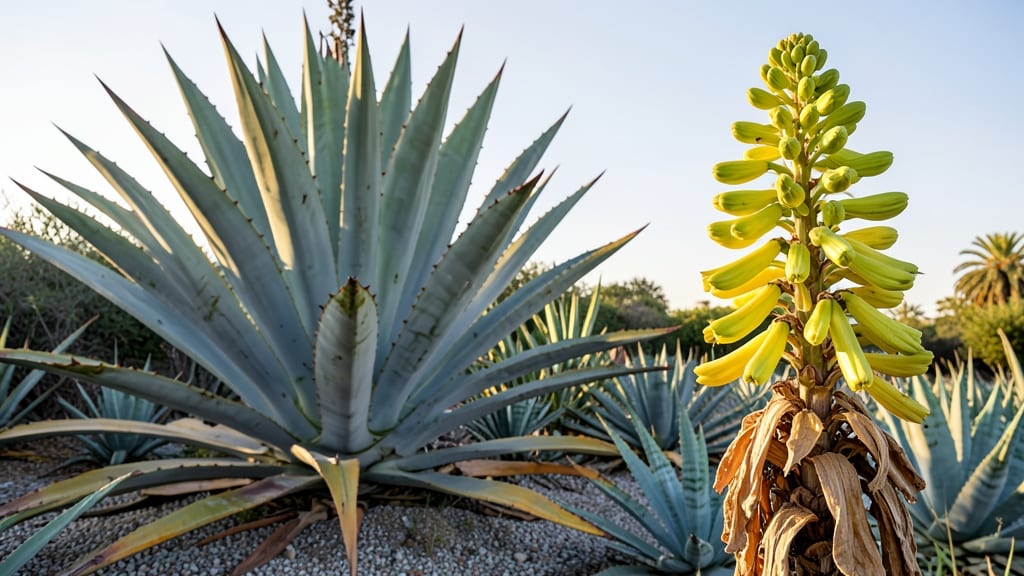
The agave bloom stalk is nature’s most dramatic statement—towering 10+ feet tall in just 6 weeks. 🌿 I’ve watched my own agaves send up these spectacular spikes, and the process is equal parts science and magic.
It’s not just about forcing a bloom; it’s about understanding the plant’s life cycle and giving it the perfect conditions to put on its one grand show.
Most agaves take decades to bloom in the wild, but with the right indoor setup—bright light, precise watering, and a little patience—you can trigger that dramatic transformation. The stalk itself is a architectural marvel, often branching into intricate flower clusters that last weeks.
What’s even more rewarding is what happens after: those pups at the base, ready to propagate your collection. You’ll end up with a plant that’s both a conversation starter and a living sculpture.
The key is managing the plant’s energy carefully—watering less as the stalk grows, protecting it from drafts, and deciding whether to let it go to seed or cut it back. Either way, you’re left with new agaves to share or replant.
This method works for any agave variety, from the iconic blue agave to smaller species. The payoff isn’t just the bloom—it’s the deeper connection to the plant’s lifecycle. Let’s get those stalks growing!
📚 In This Guide
- What you need
- Instructions
- Tips and common mistakes
- Wrapping up and next steps
What you need
- ● Mature agave plant (at least 5–10 years old, with a thick, sturdy rosette). Pro tip: 💡 Smaller plants may not bloom indoors.
- ○ Grow lights (full-spectrum LED, 10,000–15,000 lux, 12–16 hours/day). Optional: A sunny south-facing window (if natural light is strong).
- ● Watering can with a fine rose nozzle (to avoid overwatering).
- ● Well-draining potting mix (cactus/succulent blend or 50% potting soil + 50% perlite/pumice).
- ● Fertilizer (balanced 10-10-10 or low-nitrogen succulent fertilizer).
- ● Thermometer/hygrometer (to monitor temps: ideal range is 65–85°F (18–29°C)).
- ● Pruning shears (sterilized, for trimming dead leaves or stalks).
- ● Growth regulator (e.g., Paclobutrazol paste—apply sparingly to encourage stalk growth).
- ● Support stake or bamboo skewer (to prop up heavy stalks as they emerge).
- ● Spray bottle (for humidity control if air is dry).
- ● Camera or journal (to track progress—blooming agaves are a once-in-a-lifetime event!).
Step-by-step guide to forcing agave bloom stalks indoors
Here’s how to coax a dramatic agave bloom stalk from your potted plant in just 6 weeks—no greenhouse needed.
🌱 Step 1: Identify and Prepare Your Agave Plant
Choose a mature agave at least 3-4 years old—younger plants won’t produce a stalk. Look for a healthy rosette with no signs of rot or insect damage. Agaves only bloom once, so pick a specimen you’re ready to part with after flowering.
Move your agave to a bright, sunny spot (like a south-facing window) for 2-3 weeks before forcing. This jumpstarts energy storage in the leaves. If your plant has been indoors, expose it to direct sunlight for 6+ hours daily—you’ll see leaves perk up and turn a deeper green.
☀️ Step 2: Mimic Desert Conditions for 6 Weeks
Agaves bloom when they sense drought stress, so reduce watering to once every 3-4 weeks (let the soil dry completely between waterings). Use room-temperature water and soak the pot until water drains from the bottom—no soggy soil. Overwatering now will kill your chances of a stalk.
Place the pot in a warm, sunny location (ideal temp: 70-85°F). If your home runs cooler, a south-facing windowsill with a heat mat (set to 75°F) helps. Avoid drafts—agaves hate sudden temperature swings. Watch for leaf tips browning slightly—this is normal and signals stress.
🪴 Step 3: Supplement Light and Nutrients Strategically
If your agave isn’t getting enough light, add a full-spectrum LED grow light 6 inches above the plant for 12-14 hours daily. You’ll know it’s working when new growth appears sturdy and upright (not stretched or pale). Skip fertilizer entirely during this phase—agaves bloom best when slightly nutrient-deprived.
After 3 weeks of drought stress, switch to low-phosphorus fertilizer (like a 5-5-5 blend) diluted to half-strength. Apply once every 6 weeks to encourage flowering without promoting leafy growth. Too much nitrogen now will delay—or prevent—the bloom stalk entirely.
⏰ Step 4: Trigger the Bloom with a Cold Snap
After 4 weeks of drought and heat, simulate a desert cold snap by moving the agave to a cool room (50-60°F) for 7-10 days. This temperature drop tricks the plant into thinking winter has arrived, prompting the bloom response. Place it near a window (but not in direct cold drafts).
Return the agave to warmth and sunlight immediately after the cold treatment. Within 2-4 weeks, you should see a tight bud emerge from the center. If nothing appears after 6 weeks, repeat the cold snap—some agaves need two cycles to trigger blooming.
🌿 Step 5: Support and Care for the Bloom Stalk
Once the 3-10 foot stalk appears, stake it with a bamboo or wooden dowel to prevent snapping. Tie the stalk loosely with soft twine or cloth strips—agave stalks grow fast and can topple. Keep watering to every 2-3 weeks (let soil dry between waterings) to avoid rotting the base.
As the stalk matures, tiny yellow flowers will open along its length. This is your plant’s one-time reproductive event—enjoy the show! After flowering, the mother plant will die, but pups (baby agaves) will form at the base. Snip them off and repot to grow new plants.
Tips & tricks for forcing agave bloom stalks indoors
Here's what nobody tells you about getting that dramatic agave bloom—these tricks make all the difference.
Lighting is Everything: Those 12-14 hours of grow light aren't just about extra brightness—they're about replicating the intense desert sun. I position my grow light 6 inches above the plant and angle it slightly so the light hits the leaves directly, not just the top. If you notice your agave stretching toward the light with thin, pale leaves, it's not getting enough intensity. This is your plant's way of saying "more sun, please!"
Cold Snap Timing Matters: The 7-10 day cold treatment at 50-60°F is where the magic happens, but timing is everything. I've found that doing this after exactly 4 weeks of drought stress gives the best results. If you rush it, your agave might not respond. Think of it like waiting for the perfect moment to ask someone out—too soon and they're not ready, but at just the right time, everything clicks.
Watering Wisdom: The "once every 3-4 weeks" rule isn't about being lazy—it's about creating the right stress conditions. I use a moisture meter to check soil moisture before watering. When the meter reads completely dry (not just the top inch), that's when I water thoroughly until it drains from the bottom. Overwatering at this stage will drown your chances of a bloom stalk, no matter how much sun and heat you provide.
Stalk Support System: When that first bud appears, it's going to grow fast—like, 3-10 feet fast. I stake mine immediately with a sturdy bamboo dowel and tie it loosely with soft twine. The key is to give it just enough support so it doesn't snap, but not so tight that you restrict its growth. Think of it like training wheels for your agave—just enough help to keep it upright while it finds its balance.
Pro Tips for Agave Bloom Stalk
- Here's what nobody tells you about getting that dramatic agave bloom—these tricks make all the difference.
- Lighting is Everything: Those 12-14 hours of grow light aren't just about extra brightness—they're about replicating the intense desert sun.
- Cold Snap Timing Matters: The 7-10 day cold treatment at 50-60°F is where the magic happens, but timing is everything.
Frequently asked questions
Got questions about growing a dramatic agave bloom stalk indoors? You’re not alone! Here are some of the most common queries—plus quick, actionable answers to help you succeed.
Can I force an agave bloom stalk indoors if my plant is young?
Most agaves won’t bloom until they’re mature (typically 5–10 years old). Indoor forcing is only realistic with mature plants (10+ inches wide) that have stored enough energy. If yours is small, focus on care—bright light, well-draining soil, and patience!
How do I know when my agave is ready to bloom?
Watch for these signs:
- A tight rosette (leaves crowding the center).
- Leaves slowing growth or turning yellow at the base.
- A hard, woody base (feel for thickness near the soil).
What do I do if my agave stalk grows crooked or leans?
A leaning stalk is usually due to light imbalance or uneven heat. Rotate your plant quarter-turns weekly to encourage straight growth. If it’s already bent, use a soft tie (like a rubber band) to gently guide it upright—never force it or it may snap.
Can I reuse the same agave plant after it blooms?
Unfortunately, agaves bloom once and die (called "monocarpic"). However, many produce pups (baby plants) at the base before dying. Carefully separate and repot these to keep your agave family growing!
What’s the fastest way to encourage a bloom stalk?
Combine these three key triggers:
- Heat shock: Move to 80–90°F for 1–2 weeks.
- Bright light: 12+ hours of direct sun or grow lights.
- Water stress: Let soil dry completely between waterings.
Wrapping up and next steps
Watching your agave bloom into a stunning towering stalk is a rewarding experience—one that proves patience and care pay off! 🌱 With the right techniques, you can coax this dramatic display indoors in just six weeks, transforming your plant into a breathtaking centerpiece.
Whether you're a seasoned plant parent or a curious beginner, this process is well within reach.
Now that you’re equipped with the how-tos and FAQs, why not take the next step? Start your agave’s journey today—your future floral masterpiece is waiting! 🌟